When To Use Remote Camera Deployment for Claim Investigations
Key Takeaways
In this article, you’ll learn:
- When remote surveillance may be necessary during a claim investigation
- What the process of setting up and monitoring remotely deployed cameras looks like
- How this cost-effective approach can benefit adjusters
A camera discretely placed on lawful public vantage points or other legally authorized locations can capture evidence that may not have been easily obtained any other way—and is often more cost-effective than traditional surveillance. Adjusters handling workers’ compensation, auto and general liability, and property claims with high surveillance potential can benefit most from this approach when investigating noted inconsistencies.
But remote camera deployments for claim investigations must comply with all applicable federal, state, and local laws, including privacy and surveillance laws.
As a discreet, comprehensive, and financially responsible option for objectively documenting a claimant’s movements, remote camera deployments help insurance professionals resolve complex claims swiftly, whether used as a standalone technique or alongside other methods.
When To Use Remote Surveillance
Investigations based in more challenging environments or featuring “surveillance-aware” claimants provide a better opportunity to gather evidence through remote surveillance rather than traditional methods.
For instance, if a factory employee from a small town filed a workers’ compensation claim citing a sprained ankle, driving up in a large surveillance van to document the claimant’s movement patterns could raise suspicions or be easily identified.
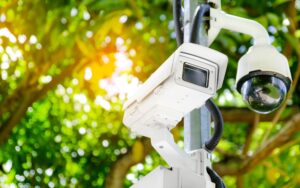
Adjusters may consider remote camera deployment for claim investigations in lower-traffic areas where it’s easier to spot a surveillance vehicle. Note: This image is for illustrative purposes only, not an example of VRC Investigations’ remote camera deployments.
Adjusters or investigators who know the claimant in question is “surveillance-aware,” such as those who have previously been under surveillance, might also lean toward remote camera deployment for claim investigations.
Surveillance near medical facilities, doctor’s offices, or treatment locations may raise additional privacy and sensitivity concerns and should be reviewed carefully prior to deployment.
Before deciding to refer a claim to an investigative partner for remote surveillance, insurance professionals should consider what’s involved with it, from set up and breakdown to costs, to ensure it’s the best fit and most fiscally responsible way to obtain evidence.
What’s Involved in a Remote Camera Deployment
Remote camera deployments require minimal set up from an investigator, and most of the legwork occurs off-site once recording begins.
The same legal and ethical investigative standards apply for this approach as with traditional surveillance, meaning devices must be located on lawful public vantage points. They are also strategically placed to blend in with the environment, which helps minimize the risk of detection. Camera placement should not involve entering private property, attaching devices to private property, or otherwise accessing restricted areas without proper authorization.
Systems are typically deployed for up to five consecutive days, allowing for uninterrupted recording of the claimant’s daily movements. If needed, recording devices can remain in place longer.
While the cameras are deployed and activated, an off-site desktop analyst trained in surveillance techniques monitors the video stream, logs activity, and submits daily updates. If activity occurs outside of business hours, the remote camera platform sends a notification so the footage can be reviewed the next day. They also download the video files for processing and prepare detailed notes or handling instructions to ensure the footage has been properly logged, documented, and preserved in case it’s needed as evidence, should a claim go to court.

An off-site analyst reviews remote camera activity, keeps detailed notes of the claimant’s movements, and downloads the footage for safekeeping.
However, adjusters should be aware that video- and audio-recording consent laws vary significantly by jurisdiction, possibly limiting how close a camera can be to a certain location and affecting whether audio can be legally acquired without the claimant’s knowledge. Audio recording should generally be avoided unless specifically reviewed and approved under applicable law.
Prior to the camera deployment, insurance professionals may consider asking their investigative partner if they always keep audio functions turned off, or if doing so occurs by request. Investigators who initiate the remote deployment may also run into issues with short battery life or unexpected technical glitches that interfere with continuous recording.
These potential concerns should be discussed with an investigative partner prior to moving forward, but often the benefits outweigh potential disadvantages.
How Remote Camera Deployments Benefit Insurance Professionals
Insurance professionals seeking a streamlined way to resolve their claims without sacrificing quality may consider remote camera deployments. Advantages of this tactic include:
- Extended Surveillance: This more subtle evidence-gathering approach extends the surveillance duration without gaps that can occur under traditional surveillance. A consistent visible record provides more opportunities to detect patterns, routines, and general movement. For example, an investigator procuring facts in a possible premium fraud investigation may document business activity, employee presence, or potential operational misrepresentation through remote means.
- Reduced Detection Risk: The lack of a physical presence or surveillance vehicle decreases the likelihood of claimants noticing their activity is being monitored. Direct confrontation or engagement with the investigator also occurs less often.
- Cost-Effective Coverage and Swift Documentation: Remote surveillance delivers multiple days of monitoring at a fraction of the cost of traditional surveillance due to limited travel and decreased labor hours required of the investigator. Real-time reviews of recorded activity also mean adjusters could receive reports, allowing them to resolve their claim faster.
However, the more complicated a claim, the more likely the adjuster may need to consider additional fact-gathering methods, including both traditional and remote surveillance.
When To Combine Remote and Traditional Surveillance
In some situations, remote deployment might be one element of a larger investigation that combines both surveillance types—particularly if there’s interest in documenting movement across a large geographical area—alongside other investigative techniques.
For instance, in-person surveillance may be useful at medical facilities when synced to treatment schedules or doctor’s visits, though privacy and sensitivity concerns could arise and deserve careful review. Meanwhile, a remote camera near the claimant’s home can capture how they perform activities that could be limited by a claimed injury.
When a person actively conducts surveillance, they can pivot from video to photography to ensure they clearly document the claimant’s identity or adjust the angle of a particular shot. Depending on a remote camera’s capabilities, the direction it faces could be adjusted from an off-site location, but moving the device itself would risk detection.
Used alongside canvassing, background checks, or other verification methods, these tactics deliver more comprehensive documentation and additional context for the adjuster to make a confident claim resolution. A strategy, ideally recommended by an investigator or agreed upon by the adjuster, that integrates the best of both surveillance methods sets the foundation for a comprehensive investigation that provides everything an adjuster needs to make a confident claim decision.

More complex claims could benefit from in-person surveillance and remote camera deployment.
The cost-effectiveness of remote camera deployments and lower detection risk make this offering enticing for adjusters when their claim needs surveillance to validate facts. VRC Investigations, part of Alpine Intel’s suite of services, offers remote camera deployment services along with field investigations, background checks, social media investigations, and several other services to address potential misrepresentation and enable our clients to make confident and timely decisions. Submit an assignment today.

Don’t miss insurance-focused resources and webinars about property, perils, and trends impacting claims nationwide by signing up for The Savvy Adjuster Newsletter.

Be sure to also tune in to The Savvy Adjuster Podcast to hear more from the experts themselves.
Alpine Intel’s content is meant to inform and educate readers using general terms and descriptions. They do not replace expert evaluations that determine facts and details related to each unique claim.
Related Resources

Types of Canvassing To Bolster Claim Investigations
Canvassing can help insurance professionals verify facts of a claim without sacrificing objectivity, accuracy, or fairness.

Scary Story: Recurring Claim
An adjuster needed support evaluating three HVAC systems for the initial claim. A few weeks later, the policyholder was worried about a noise coming from a furnace in one of the systems and wondered if it was related.

Workers’ Comp Investigations: The Role of Surveillance
Learn when to employ surveillance in workers’ comp investigations, best practices for doing so, and how the right investigative partner can help.