
3 Common Dishwasher Component Failures That Could Make a Case for Subrogation

Sometimes water damage claims, particularly to kitchen floors, cabinets, or nearby furniture, can be traced back to a leaking dishwasher. It’s important that adjusters consider what may have caused their policyholder’s dishwasher to fail in the first place.
Dishwashers sometimes fail due to how they were manufactured rather than user error. Thorough dishwasher evaluations, like those done at Donan’s Component Testing Lab (CTL) can help you decide whether to pursue subrogation. Learn more about three of the most common failure modes seen at CTL that may be linked with a manufacturing defect.
Heating Element Flange Corrosion
The heating element sits at the bottom of the dishwasher, warming water as it flows into the lower and upper spray arms. It also heats the dishes to dry them. Due to the construction of some heating elements that utilize a brass assembly flange, the heating element can spell trouble for the appliance in the form of galvanic corrosion. This develops when dissimilar metals (one known as an anode and the other as a cathode) are in contact with one another and are both in a conducting fluid. In this case, the brass flange is the anode, its steel sheath is the cathode, and water is the conducting fluid.
The brass flange corrodes under these circumstances, resulting in a leak beneath the dishwasher from the heating element seal. This corrosion is a direct result of the construction of the heating element. Manufacturers now opt for stainless steel flanges to mitigate the effects of galvanic corrosion.
In cases where a brass flange is used, degradation and leaking can occur as soon as two years after production. Unlike some other failures, heating element flange corrosion is not related to the type of detergent used.

This dishwasher’s heating element’s terminal flanges have been consumed due to galvanic corrosion and are no longer present, causing the dishwasher to leak.
An objective expert, such as a licensed forensic engineer, would be able to evaluate this complex failure and determine whether the cause was indeed heating element brass flange corrosion.
Thermoplastic Elastomer (TPE) Coupler Failure
Another dishwasher component that can fail and give rise to subrogation potential is the thermoplastic elastomer (TPE) couplers. Couplers are used to connect components beneath a dishwasher, but when they’re made from TPE and are not formulated correctly, water damage may occur.
Over time, hot water and the chlorine in detergent and the water supply can cause TPE materials to degrade on wetted surfaces if they are not properly formulated. Like heating element flange corrosion, this type of deterioration can occur as soon as 2 years after production and causes water leakage beneath the dishwasher.
As a result, TPE is not recommended for chlorinated water applications. Alternative materials are readily available to manufacturers, and an expert can help gather the evidence needed to show the water loss was due to TPE coupler failure and may warrant subrogation.
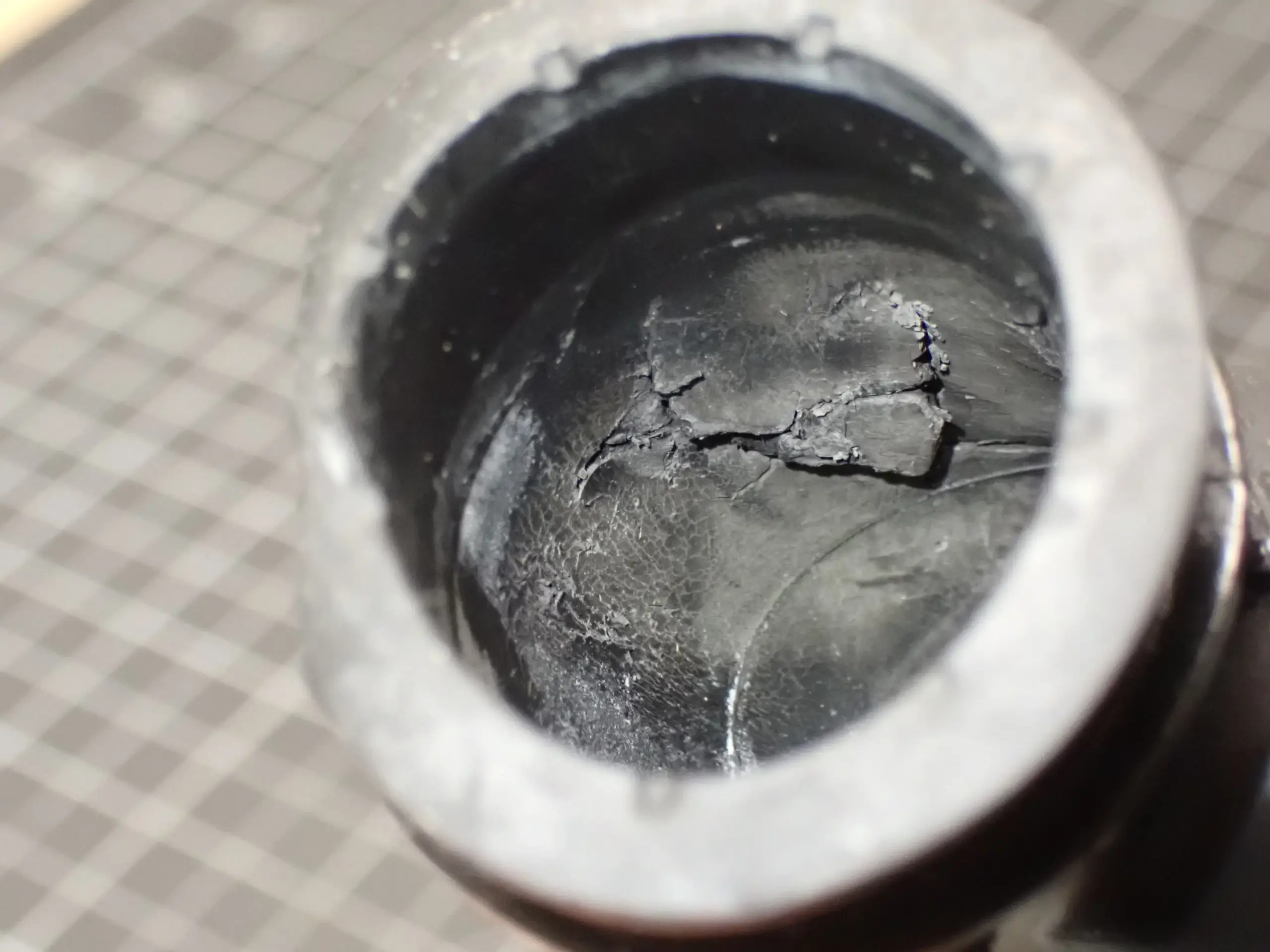
This TPE coupler is incompatible with chlorine found in dish detergent and has deteriorated as a result of repeated exposure.
Diverter Shaft Seal Leaks
The diverter motor of a dishwasher directs water into the spray arms during different cycles. A seal is used around the shaft to prevent water from leaking from the dishwasher. Due to the design of some diverter shaft seals, premature degradation or damage to the seal can occur. A single seal can be damaged by debris. Installation that leaves the garter spring exposed to wash water can also cause a leak underneath a dishwasher.
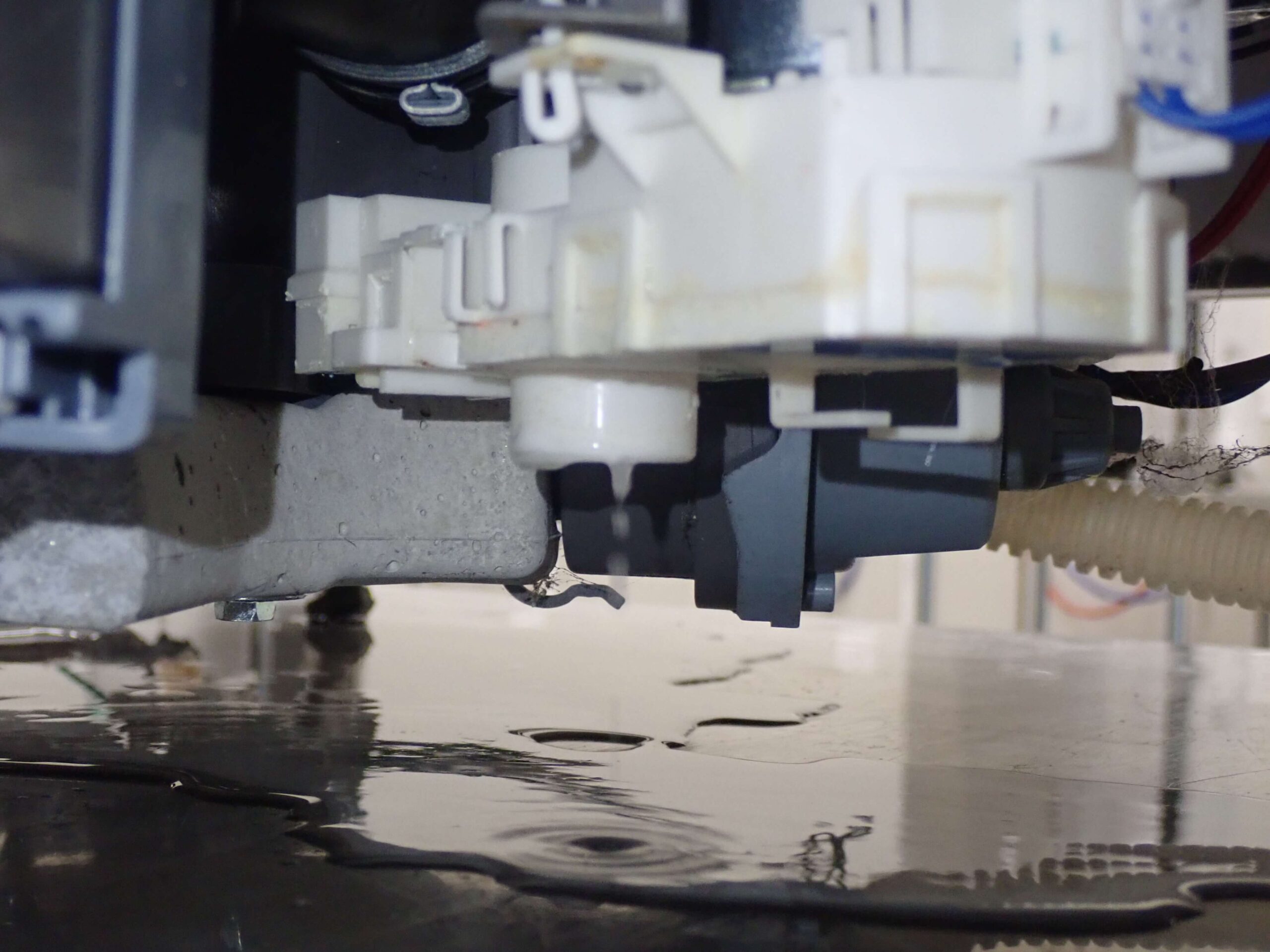
A compromised diverter shaft seal can lead to leaks at varying rates. Slower leaks often go unnoticed longer, causing more extensive damage to flooring and nearby cabinetry.
Engineers at Donan’s Component Testing Lab have found this defect in dishwashers. Other manufacturers have mitigated the issue by implementing multiple sealing lips with grease and a garter spring away from the wash water An expert would be able to determine which kind of diverter shaft seal is in a failed dishwasher.
Test to Be Sure
These three common types of component failures in dishwashers underscore the importance of fully investigating the cause of loss in cases of kitchen water damage. When the dishwasher is the culprit and an installer or manufacturer is the party responsible, you have the potential to cover the costs of settling the claim while making the insured whole through subrogation.
While you’re now aware of these common failures, the opinion of an objective expert will be invaluable in these scenarios, as will a dedicated shipping partner. CTL’s Loss Logistics evidence transportation service reduces the inherent risk of evidence spoliation by delivering unmatched evidence preservation. Once at one of the two CTL locations, a team of product failure experts will examine your policyholder’s failed dishwasher to provide an in-depth, reliable, and top-of-class report to empower you to make a confident decision regarding subrogation.
Submit an assignment to get the facts for any claim with suspected component failure.

Don’t miss insurance-focused resources and webinars about property, perils, and trends impacting claims nationwide by signing up for The Savvy Adjuster Newsletter.

Be sure to also tune in to The Savvy Adjuster Podcast to hear more from the experts themselves.
Alpine Intel’s content is meant to inform and educate readers using general terms and descriptions. They do not replace expert evaluations that determine facts and details related to each unique claim.
Related Resources

Dishwasher Water Loss Failure Case Study
In this case study, the handling adjuster turned to Donan’s evidence management services for single-chain-of-custody shipping and an expert assessment of a leaking dishwasher.
Dishwasher Components Guide
This guide shows some important components of a built-in, under-counter residential dishwasher and what damage adjusters should look for when they wind up in claims.