5 Questions to Ask in Auto Theft Claims Involving a Recovered Vehicle

Key Takeaways
Auto theft claims that involve recovered vehicles require adjusters to take a nuanced approach. Read about:
- Questions that may help verify claim details or identify potential inconsistencies
- How physical evidence, Event Data Recorder (EDR) data, infotainment data, and investigative tactics can validate facts
- Where to turn for expert support
According to the most recent information from the National Insurance Crime Bureau, more than 85% of passenger vehicles reported stolen in 2023 were eventually recovered, with more than one-third recovered within a day of the theft report.
Recovered vehicles can offer opportunities for auto adjusters to validate the facts of a vehicle theft claim, identify potential inconsistencies, determine whether additional investigation is warranted, and gather evidence to support a more accurate claim decision.
To help you navigate auto theft claims involving recovered vehicles, consider these five questions.
1. What Is the Overall Financial and Personal Situation Surrounding the Vehicle and Policyholder?
Building a complete picture of the vehicle’s history—and the insured’s relationship to it—can provide valuable context for a vehicle theft claim. While that may sound daunting, it often starts with a straightforward interview with the claimant. Adjusters may want to inquire about:
- The details of the vehicle purchase and payment terms
- Whether the insured has considered selling it
- Whether there have been recent repairs or modifications to the vehicle
- Any recent life changes for the insured
If red flags emerge, such as recent mechanical issues, significant changes in the claimant’s personal circumstances, or difficulty providing details about the vehicle, insurance professionals should understand that these don’t confirm fraud but may signal the need for further investigation. Working with an investigative firm with experience conducting social media investigations, canvassing, and surveillance can help adjusters follow up on potential inconsistencies and gather the information needed for more confident claim decisions.

Conducting policyholder interviews and asking the right questions can help adjusters determine when additional investigative strategies may be necessary to validate vehicle theft claim details.
2. Is There Video Evidence of the Reported Vehicle Theft?
Although video footage is not available in every auto theft claim, it can provide valuable insight into the reported incident when it is. Sources such as cell phones, private security cameras, CCTV, government entities, onboard vehicle cameras, and dashcams may help clarify timelines, validate details, or uncover additional facts.
Video evidence should be obtained through lawful and authorized means and preserved in a manner that documents its source, handling, and integrity. Experienced investigative professionals can assist when specialized collection or authentication is required.
3. What’s the Current Condition of the Recovered Vehicle?
Once recovered, the vehicle’s condition may help adjusters better understand the circumstances surrounding the loss. Examining the vehicle for signs of forced entry, such as shattered glass or damaged door cylinders, may reveal valuable evidence.
3D vehicle scanning can also preserve a virtual record of the vehicle’s condition at the time of recovery in case it needs to be revisited later in the claims process or during litigation. If the recovered vehicle has been burned, an origin and cause investigation can help determine the circumstances surrounding the fire.
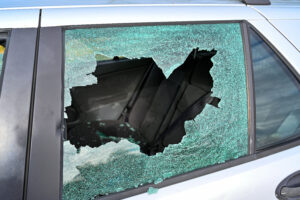
Auto claims adjusters should consider working with experts to document physical evidence in the event that reportedly stolen vehicles are located.
4. Where Has the Recovered Vehicle Been, and What Activities Has It Been Involved In?
Some vehicles store location data in their infotainment systems, including saved locations, active routes, and prior destinations. When available, data extracted via an infotainment download and analyzed by an expert can be compared with reported theft events to identify potential inconsistencies.
Other data points may be gathered from these downloads, including odometer readings, gear shift selector changes, ignition cycles, and key usage information. In some cases, experts can determine how many keys were programmed to the vehicle and whether one of those keys was used to start it during the reported theft.
Event Data Recorders (EDRs) may provide documentation about reported events or crashes that occurred while the vehicle was missing. EDRs are functions within many vehicles that record certain vehicle and occupant information for a short period of time immediately before, during, and sometimes after a crash or significant event. Experts can also retrieve and analyze this data for adjusters.
Properly collected, preserved, authenticated, and presented raw data from infotainment downloads and EDRs may also serve as admissible evidence in court, should claims progress to litigation.
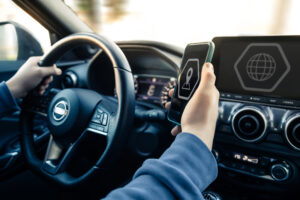
Cars and trucks with infotainment systems often record location information that can prove crucial for resolving vehicle theft claims.
5. What Devices Have Been Connected to the Recovered Vehicle Since the Reported Theft?
Because people carry phones with them almost everywhere, these devices connect with vehicles more often than ever. As a result, infotainment systems may be able to capture important data from these devices that can change the course of vehicle theft investigations.
For example, if a phone paired with the vehicle after the reported theft had also been connected before the loss, that could raise questions about who had access to the vehicle. Or, if a previously unknown device connected during the relevant time frame, investigators may be able to use that information as an investigative lead when assessing who may have accessed or occupied the vehicle.
Any of this information, along with the other data points that may be collected through infotainment downloads, can bring auto adjusters closer to understanding the events that occurred before and while the vehicle was missing.
If you have a recovered vehicle or need investigative support to answer any of these questions in a vehicle theft claim, Alpine Intel has you covered. Alpine Intel’s vehicle services, provided by Mecanica Scientific Services, Donan’s Component Testing Laboratories (CTL), National Fire Experts (NFE), and VRC Investigations, offer nationwide support and excellent customer service to help clients get the answers they need to make informed auto claims decisions. Adjusters rely on us for infotainment downloads, 3D vehicle scans, investigative solutions, and fire investigations, along with event data retrieval and heavy vehicle services. Submit an assignment to see how we can help with your auto theft claims and other claim needs.
Engineering services are provided by or subcontracted to Alpine Intel Commercial Solutions, LLC, Alpine Intel Commercial Solutions, PLLC, Donan Engineering, LLC, Donan Engineering NC, PLLC, Donan Forensic, LP, BSC Forensic Services, LLC, or BSC Experts, PLLC. National Fire Experts performs work in Indiana under Donan Engineering license PI20700047.

Don’t miss insurance-focused resources and webinars about property, perils, and trends impacting claims nationwide by signing up for The Savvy Adjuster Newsletter.

Be sure to also tune in to The Savvy Adjuster Podcast to hear more from the experts themselves.
Alpine Intel’s content is meant to inform and educate readers using general terms and descriptions. They do not replace expert evaluations that determine facts and details related to each unique claim.
Related Resources

Evidence in Vehicle Fire Claims Guide
Vehicle fire investigations include unique considerations. Learn what certified fire investigators consider when determining the most plausible origin and cause.

If This Car Could Talk: Vehicle Forensics in Auto Claims
Find out what 3D vehicle scanning, infotainment downloads, and event data retrieval can reveal about crash investigations and other types of vehicle claims.

When You Should Turn to Vehicle Forensics in Auto Claims | The Savvy Adjuster Podcast Ep. 35
In this episode, learn how experts leverage vehicle forensics and advanced investigative techniques to address key questions for auto claims adjusters and carriers.