Why Some Fire Losses Require More Than One Type of Expert

Key Takeaways
For insurance and legal professionals handling fire losses, this article covers:
- What information fire investigators provide
- When licensed electrical, civil, or structural engineers may offer important additional information
- How the right expertise can support more confident fire loss decisions
Determining the most plausible origin and cause is critical when investigating a fire loss. But the findings may raise additional questions that require further data, such as: If an electrical item or system malfunction was involved, what caused it to fail? How extensive was any structural fire damage?
Answering these questions can provide valuable context for handling claims, presenting cases, and assessing potential subrogation opportunities. Learn how experts across multiple disciplines can conduct independent, objective investigations to address the different questions a fire loss may raise.
Certified Fire Investigators Determine a Fire’s Most Plausible Origin and Cause
Following a fire loss, a certified fire investigator’s primary role is to determine the fire’s most plausible origin and cause through a systematic examination of the scene. In other words, they work to answer: Where and how did this fire start?
This process should adhere to National Fire Protection Association (NFPA) 921, which establishes standards for scientifically based fire and explosion investigations. Fire investigators carefully analyze fire dynamics and patterns, physical evidence, witness statements, and other available data to develop and test hypotheses before reaching a determination. They may also research products involved in the fire, including whether any relevant recalls have been issued.
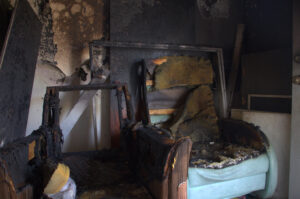
Certified fire investigators collect data about a fire before forming an expert opinion regarding the most plausible origin and cause.
The investigation can identify items that warrant preservation or further examination and raise questions that extend outside the fire investigator’s scope of expertise. In these cases, an expert from another discipline can provide additional insight.
For example, if an electrical item is associated with the fire’s most plausible cause, the fire investigator may recommend that an electrical engineer further investigate the item.
Electrical Engineers Investigate Electrical Failures Associated With a Fire
When an electrical failure is linked to a fire’s most plausible origin and cause, a joint investigation or product failure testing conducted by an electrical engineer may be an appropriate next step. They can answer: How did this product or component fail and contribute to the fire?
During an electrical fire investigation, engineers may examine items such as dryers, space heaters, dehumidifiers, and lithium-ion battery-powered products, as well as electrical systems. This allows them to better understand the failure and provide findings that can inform claim, subrogation, or litigation decisions. Depending on the circumstances, the examination may occur at the loss location or in a laboratory setting using non-destructive or destructive product failure testing.
If evidence is collected or transported for further examination, proper preservation, secure handling, and thorough documentation help maintain its integrity and establish a record of its custody, movement, and condition.
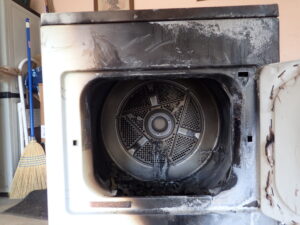
When an electrically powered item, such as a dryer, is linked to a fire’s cause, further testing by an electrical engineer may help insurance or legal professionals decide whether there is a subrogation opportunity.
However, determining why an electrical item failed is different from evaluating the fire’s impact on a structure.
Structural Engineers Assess Structural Damage After a Fire Loss
With some fire losses, it may be important to understand how much structural damage resulted from the fire. Licensed civil or structural engineers can perform on-site assessments to answer: What effect did the fire have on the building’s structural integrity?
Just like electrical engineers and certified fire investigators, civil and structural engineers take a systematic approach informed by the scientific method. They consider factors such as collateral indicators, construction characteristics, and historical images or property records. In doing so, they can distinguish damage associated with the fire event from pre-existing conditions or damage attributable to another cause. Civil and structural engineers can also provide information about the extent and severity of any structural fire damage.
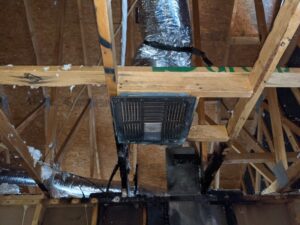
Understanding how a fire affected a structure, such as damaging attic framing, can provide important context after a loss.
The Right Expertise Depends on the Questions Raised by a Fire Loss
Not every fire loss requires multiple experts. The complexity of the loss, the evidence identified, and the questions that remain should guide whether additional expertise is needed. Recognizing when a question extends beyond the scope of the initial investigation can help ensure a professional with the appropriate technical expertise provides the answer.
National Fire Experts (NFE) investigators can identify recommended next steps based on their preliminary findings, including when additional investigation or testing may be warranted. They provide these insights to clients in verbal or written reports, depending on the client’s preference.
As part of Alpine Intel’s suite of services, NFE can also partner seamlessly with BSC Forensics, Donan Engineering, and Donan’s Component Testing Laboratories (CTL), helping clients address structural and electrical questions as the needs of a fire loss evolve. CTL’s in-house transportation service also makes securely transporting and storing evidence easy.
Submit an assignment to get the answers you need following your next fire loss.
Engineering services are provided by or subcontracted to Alpine Intel Commercial Solutions, LLC, Alpine Intel Commercial Solutions, PLLC, Donan Engineering, LLC, Donan Engineering NC, PLLC, Donan Forensic, LP, BSC Forensic Services, LLC, or BSC Experts, PLLC. National Fire Experts performs work in Indiana under Donan Engineering license PI20700047.

Don’t miss insurance-focused resources and webinars about property, perils, and trends impacting claims nationwide by signing up for The Savvy Adjuster Newsletter.

Be sure to also tune in to The Savvy Adjuster Podcast to hear more from the experts themselves.
Alpine Intel’s content is meant to inform and educate readers using general terms and descriptions. They do not replace expert evaluations that determine facts and details related to each unique claim.
Related Resources

Agricultural Fire Losses Guide
Prepare for agricultural fire losses with this guide on equipment that’s often involved, common fire hazards, and potential subrogation considerations.

Exploring Chimney Fire Losses Webinar
Learn to better handle chimney fire claims, including the factors that may contribute to a hostile fire and why a fire investigator or engineering investigation is key to accurately settling these claims.

Exploring Chimney Fire Losses Webinar Recording
Learn to better handle chimney fire claims, including the factors that may contribute to a hostile fire and why a fire investigator or engineering investigation is key to accurately settling these claims.