
Why Adjusters Should Have Impact Damage Assessed

Property adjusters who handle claims involving impact-related damage, such as a vehicle crashing into a garage or a tree falling through a roof or window, should seek an accurate assessment of the building’s structure.
Doing so can provide insights into the scope of loss and help adjusters more accurately resolve claims. This ensures all damage is accounted for and helps reduce the risk of claims needing to be reopened.
How Damage to a Structure Impacts Building Integrity
Insurance professionals will want a licensed engineer to examine the entire building—including framing, foundation, beams, and other interior and exterior elements—not just the site of impact and surrounding area.
While exterior damage to a garage door or roof is an obvious concern, structural damage can move throughout the home, sometimes leading to shifts in the foundation or other issues that may not be visible to the policyholder filing the claim. Issues from the impact will lessen as the distance from the point of impact increases. While damage can occur on the opposite side of a house from where a vehicle hit a wall, physics principles show that the likelihood of damage away from the point of impact lessens.
If adjusters aren’t proactive in verifying that all failures are accounted for, the damage could worsen, initiating a chain reaction that starts with the event’s point of impact and infiltrates other areas of the building, leading to additional claims.

Adjusters who accurately resolve claims that involve impact damage will partner with a licensed engineer to ensure they know the scope of damage.
Impact damage, which occurs when an external object or force propels one object into another, is assessed through two key concepts: Direct force and vibration damage.
Direct force, also called overloading, occurs at the main point of impact and may lead to fracturing and cracking or localized displacement of wall framing or foundation components. The closer to the site of impact, the more immediate the damage will be.
Vibration damage extends beyond the area of impact and affects weaker, more brittle material, such as drywall. The strength of the vibration and resulting damage decreases as it moves through the structure and away from the impact site.
Depending on how weak a structure’s framing or foundational elements became from the initial event, resulting damage could pose a safety risk or lead to further failures if not resolved.
Tree Impact Damage Assessments
An adjuster may refer a claim to an engineer if it involves a tree or limbs hitting a roof, deck, or the side of a home. In these instances, the engineer would assess the visible, external damage, as well as the interior of the home for signs of weakened walls and door frames or changes in the foundation.
Regardless of what caused the tree to impact a home, the energy imparted into the structure can be determined using the following criteria:
- The size and shape of the tree
- Its distance from the structure
- The angle at which the tree struck the structure
- Whether the tree struck other objects before hitting the structure
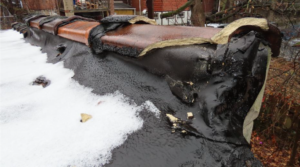
A tree impacting a roof could damage the roof membrane.
The largest amount of energy or force occurs at the point of impact, which typically breaks, displaces, or cracks building components at that exact area. As the impact forces dissipate through the structure, they send energy to other building components like rafters, ceiling and floor joists, wall framing, and exterior sheathing. Those components then distribute the energy to the foundation and supporting soil.
Consider this scenario: A large tree limb detached from a neighboring property’s tree and fell onto the policyholder’s garage roof. The adjuster handling the claim referred it to a forensic engineer to determine how much structural damage resulted from the tree impact.
Once the limb and debris were removed, the following damage was observed:
- Punctured roof covering and decking near a northeast corner
- A fractured clay tile capping the garage’s north wall
- A north wall was displaced outward
- Cracks in the garage’s walls and floor slab
The engineer reviewed the garage’s exterior and interior, accounting for tree impact damage, differential settlement, and site drainage, in addition to determining the age of damage to the building components. They found that all but the cracks to the garage’s walls and floor slab, which occurred due to differential settlement, resulted from the tree limb impact. It’s common for an assessment to identify damage that was not a result of the scenario cited in a claim.
The evaluation allowed the adjuster to confirm details and ensure they knew which damage the tree limb impact caused. The same can be done when vehicle impact damage appears in claims.
Vehicle Impact Damage Assessments
Structural damage from a vehicle typically occurs in a “head-on” fashion and can be more localized than tree-related damage. These impacts are likely to damage siding, foundation, porches, windows/doors, and garages, as well as interior elements.

When a vehicle impacts a garage door, it can cause vibration damage that extends throughout the home.
Consider this scenario: A car in a driveway lurched forward, impacting the concrete masonry unit (CMU) wall on the front of a residence and damaging the kitchen cabinets and stove. The policyholder also reported new cracks between the walls by the front door and in the entryway ceiling and water on the floor beside the dishwasher.
The engineer conducted an assessment using the scientific method to evaluate damage to the exterior and interior of the home against the concept of vehicle impact damage. They determined the vehicle impact:
- Damaged a portion of the unreinforced CMU wall
- Damaged several items in the kitchen, including the dishwasher, that were pushed into one another due to the force of the crash
- Caused the cracks near the front of the home
By adhering to an evidence-based approach when conducting the assessment, the engineer allowed the adjuster to confidently resolve the claim, knowing safety issues and the scope of damage had been identified for the policyholder.
How Engineers Assess Types of Structure Damage
Settling a claim without an inspection is risky for adjusters because it could lead to a resolution made without all the facts. The inspection identifies structural safety issues, determines that all damage is accounted for, and can also verify that all reported damage stems from the incident and wasn’t there previously.
Regardless of what the claimant reports as the cause of loss, engineers approach all assessments objectively and adhere to the scientific method, considering all perils. The assessment includes documenting the scene from on-site observations or provided images, interviewing the policyholder, reviewing building codes, and analyzing reputable weather data as needed.
That information is reviewed against the reported cause of loss, allowing engineers to provide adjusters with detailed information about weather- and non-weather-related losses.
Whether conducted on-site or via desktop review, this ensures the adjuster receives definitive insights that address the complexity of these types of claims.
Built on decades of experience, Donan Engineering delivers actionable intelligence through forensic engineering investigations with fast cycle times and exceptional reports that answer complex and challenging questions about property loss. To partner with our qualified experts, submit an assignment today.

Don’t miss insurance-focused resources and webinars about property, perils, and trends impacting claims nationwide by signing up for The Savvy Adjuster Newsletter.

Be sure to also tune in to The Savvy Adjuster Podcast to hear more from the experts themselves.
Alpine Intel’s content is meant to inform and educate readers using general terms and descriptions. They do not replace expert evaluations that determine facts and details related to each unique claim.
Related Resources

Tree Impact Case Study
A tree fell through the roof and wall of a policyholder’s bedroom during a storm. The carrier reached out to Donan for a scope of damage and to get repair recommendations.

Porch Roof Damage Case Study
Discover how Donan licensed engineers determined if wind damaged a porch roof, providing the adjuster with necessary information to settle the claim.
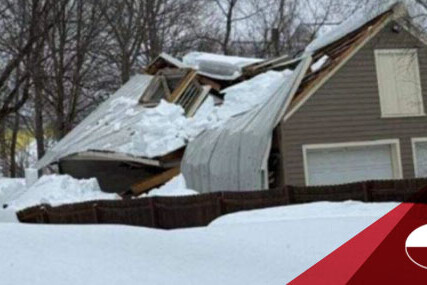
Snow Load Damage Claim Case Study
Donan’s forensic engineers provided an adjuster with assessments related to two claims on the same property that cited snow load damage. Find out the results.