Tools Experts Use for Your Product Failure Investigations

If you’re deciding whether to pursue subrogation or have already started the process, you know there isn’t room for doubt or error. That means you need to be sure that the licensed engineers you trust to perform your product failure testing are using expert knowledge and state-of-the-art technology to deliver opinions rooted in science.
Component Testing Laboratories (CTL) forensic lab facilities are equipped to provide you with the data-driven actionable intelligence you need for confident subrogation decisions. Here are a few of the tools that help our engineers determine accurate causes of failure.
1. Instruments
These aren’t your high school microscopes, and which one CTL engineers use depends on the need.
Scanning Electron Microscopes (SEM) provide high-magnification views into even the smallest piece of evidence. This microscope uses electrons instead of light to enhance the microscope’s ability.
Energy Dispersive Spectrometry (EDS) is used to determine the elemental composition for a variety of items, including metals, ceramics, coatings, corrosion products, and unknown samples.
Stereo Optical Microscopes are used to give a 3-Dimensional view of the evidence with high magnification.
Fourier Transform Infrared Spectroscopy (FTIR) analyzes plastic materials to determine their composition and identification. This instrument also has the ability to identify degradation and compounds.
X-Ray Is a valuable tool to examine the inside of the component without compromising the integrity of the evidence.
Specialized instruments and other technology enable engineers to view components, fractures, and materials that shouldn’t be in a product.
Each instrument provides pieces to the puzzle during the analysis. When you combine them with subject matter experts who know how to interpret what the instrument is showing during product failure testing, insights include:
- Performing fractography to identify fractures
- Compositional elements not appropriate for its function
- Information about or identification of undistinguishable burned evidence
2. Cleaning and Mounting Tools
Before evidence can be analyzed, it may need to be cleaned. However, evidence needs to be preserved as much as possible during this process.
Specialized CTL equipment can remove sediment by ultrasonic cleaners, which can decontaminate industrial components like pipes. By removing obstacles that aren’t related to the failure, engineers can have a clearer working space to see the evidence that really matters and document it.
Mounts are an important tool to preserve the shape and integrity of the evidence while cutting or polishing. This allows the CTL engineers to be able to see fine detail with other instruments to obtain more accurate information.
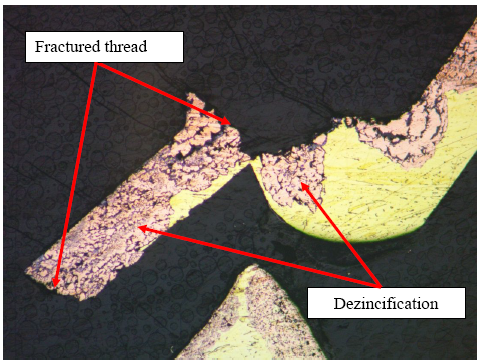
By using the proper tools, a metallurgical analysis of a brass fitting may show dezincification, as it did here.
3. Tools To Recreate the Condition
Failures occur under numerous different circumstances – a pipe that leaks when filled with water or a malfunction that only occurs during freezing conditions. Insurance professionals and adjusters considering subrogation need investigators to observe the failures under similar circumstances. From water tables to freezers to troughs, CTL engineers have various tools and innovative methods to recreate conditions without compromising evidence.
A frequently used method in a product failure investigation is conducting a pressure test to determine if the failure is associated with overpressurization. Another is using specialized equipment to recreate freezing conditions without having to wait for frigid winter temperatures.
By reconstructing the reported failure conditions, engineers can base their opinions on the scientific method and not speculation.
4. Locations Are Tools, Too
Just as important as the tools are the CTL facilities that house them. Located in areas that offer convenience to subrogation professionals nationwide, Component Testing Laboratories facilities have rooms custom built for joint inspections, evidence pickup and preservation through their Loss Logistics shipping service, storage with 24-hour surveillance, and rooms dedicated to specific testing types.
CTL team members are trained to handle evidence from tiny components like valves and filters to major appliances such as water heaters, dishwashers, and more. But their expertise doesn’t end there. A tour of one of our labs might involve less common items that were part of subrogation claims, including electric wheelchairs, exercise equipment, and lithium-ion battery-operated toys.
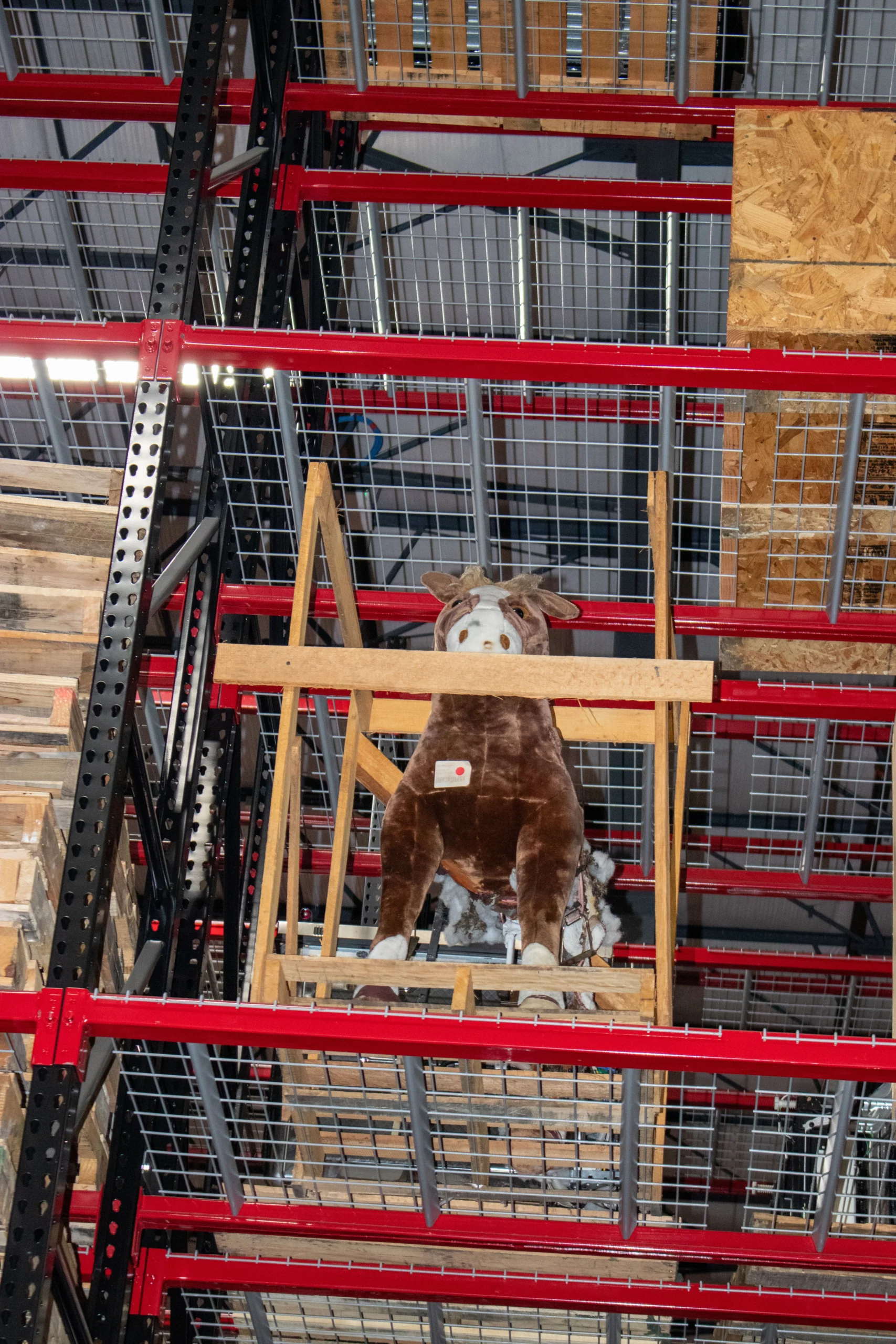
Electric toys, appliances, and toilets are among the thousands of pieces of evidence carefully stored and preserved at CTL.
Your decision whether to pursue subrogation requires comprehensive product failure testing based on the scientific method, and the specialized tools and expertise needed to provide sound opinions.
Component Testing Laboratories professional engineers understand the importance of feeling confident in the decision to pursue or not to pursue subrogation. Our team of product failure experts provides in-depth, reliable, and top-of-class reports to help you achieve that confidence. Submit an assignment to experience it firsthand. If you’re unsure and would like to speak to an engineer first, email ctl@donan.com to start a dialogue.

Don’t miss insurance-focused resources and webinars about property, perils, and trends impacting claims nationwide by signing up for The Savvy Adjuster Newsletter.

Be sure to also tune in to The Savvy Adjuster Podcast to hear more from the experts themselves.
Alpine Intel’s content is meant to inform and educate readers using general terms and descriptions. They do not replace expert evaluations that determine facts and details related to each unique claim.
Related Resources
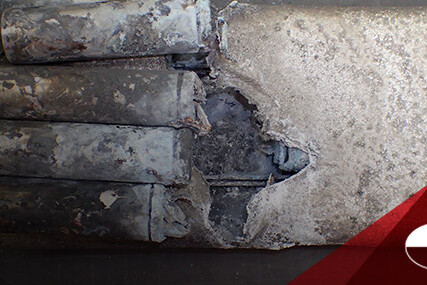
Lithium-Ion Battery Product Failure Testing Case Study
An adjuster sought conclusive evidence from CTL’s professional engineers and testing to determine a lithium-ion battery fire cause and subrogation potential.

Investigating Freeze Damage in Product Failures
Learn what the experts look for to confirm freeze failure in certain components and how lab assessments can ensure more accurate conclusions.
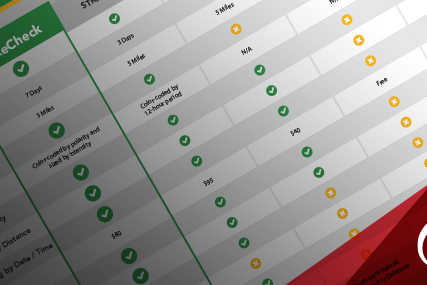
Lightning Report Product Comparison
We’ve put together a comparison of the features of the top leading lightning reports.