Three Unique Considerations in Commercial Vehicle Fire Claims

Commercial vehicle fires may involve a variety of vehicle types, such as tractor trailers, cargo vans, and buses. Carriers may even classify certain sedans covered by a policy as commercial, depending on their primary use. No matter the vehicle type, these claims bring some unique challenges adjusters should be aware of when they want to reach a fair and accurate settlement. Here are three things to consider when handling a commercial vehicle fire claim.
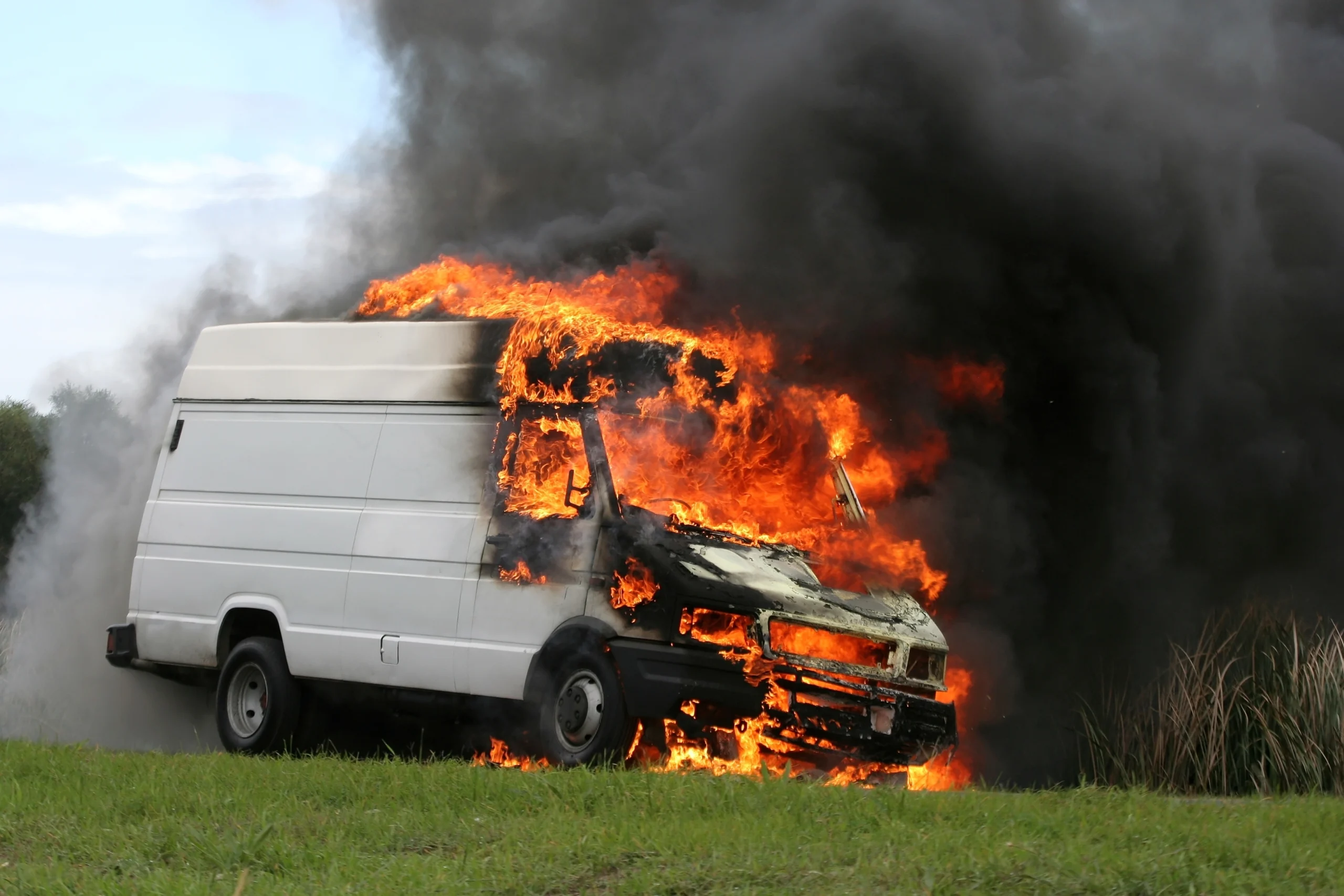
Commercial vehicles, like this cargo van, often require special consideration from adjusters trying to resolve a claim.
Consideration #1: Multiple Parties Involved
While each claim is different, many commercial vehicle fires involve more parties than personal vehicle fires because the owner, lessee, and operator are more likely to be different people. Some parties that might be involved in these claims include:
- Insurance companies and their representatives
- The driver/operator
- Any witnesses at the time of the fire
- The company leasing the vehicle
- The fleet management company
- Repair facilities
- The manufacturer’s representative
- Attorneys and public adjusters
- Assessment vendors for one or more parties
As soon as you know who is involved, it’s key to start gathering pertinent information. For instance, the most accurate witness statements are often taken as close to the event as possible, so learning who (if anyone) was on scene can help you identify key details about the events leading up to the fire. These statements can be compared with physical evidence later in the process. You can also ask responsible parties to gather vehicle maintenance records, which may provide valuable insight toward determining the origin and cause.
Joint inspections are likely to occur in a commercial vehicle fire claim. When you hire a certified fire investigator to determine the origin and cause, they’ll need to know who to coordinate with and with whom they can share information. Because they are onsite to get answers for your claim, an objective vendor can help show your commitment to a fair and accurate resolution grounded in the facts about the fire.
Hear more about how adjusters and fire investigators approach fire claims by listening to The Savvy Adjuster Podcast’s Parallel Fire Investigations episode.
Consideration #2: A Number of Potential Causes
Obtaining maintenance and service records is important because many commercial vehicle fires stem from a lack of equipment maintenance. The Technology & Maintenance Council of the American Truckers Association identified brakes, wheel bearings, air leaks, and tires as the four most common causes of truck fires.
The list of potential issues doesn’t end there; commercial vehicle fires can also occur due to electrical malfunctions in the engine or cab, cracked and worn fluid hoses, and other failed components. Records, in combination with a vehicle investigation, can help determine if neglect or a manufacturing error contributed to the fire.

Escaping gases from this improperly connected exhaust gas recirculation pipe ignited the foam hood insulation. Leaks like this one are a common cause of commercial vehicle fires.
According to the Engine Technology Forum, 95.4% of commercial trucks manufactured after 2010 use advanced diesel technology. While diesel fuel is less flammable than gasoline, it is easier to ignite on a hot surface.
Commercial cargo vehicles carrying hazardous materials introduce other potential ignition sources. A well-known cargo risk is lithium-ion batteries; one doesn’t need to look far to find examples of these batteries catching fire, but a fire involving trucks carrying them was not necessarily caused by damage during shipment. While most cargo is unlikely to ignite without exposure to an existing flame, an investigation can determine what role, if any, it played in the fire.
Check out our article, 3 Fires Related to Lithium-Ion Batteries and Why They Happened, for additional insight into the dangers surrounding certain shipped materials.
Consideration #3: The Investigation Process
The process for commercial fires is similar to any vehicle fire investigation, but there is likely to be extra emphasis on communication and information gathering from witnesses, owners, and other parties. Certified fire investigators adhere to National Fire Protection Association (NFPA) guidelines, considering oral, written, and physical evidence and their knowledge of fire behavior. Onsite, they use fire patterns and look for evidence of:
- Oxidants
- Competent ignition sources
- First material ignited
- Ignition sequence
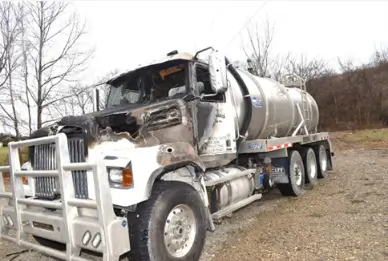
A commercial vehicle fire investigation often requires a joint inspection; for evidence to be shipped, stored, and/or tested; and data to be examined by a certified investigator.
The vehicle is likely to have been relocated at the time of the study, which means some of the evidence at the fire scene is not present or has been altered. Along with an origin and cause investigation, a Crash Data Retrieval (CDR) service can be a key component of understanding what happened leading up to the fire by using the vehicle’s Event Data Recorder, often called the “black box.”
Adjusters should also be aware of the subrogation potential in commercial vehicle fire claims, so evidence collection and management are key to preserving evidence. Proper evidence management becomes increasingly to the origin and cause investigation process when the claim includes more interested parties.
To understand how a single-line chain of custody can help your fire claim, check out our illustrated guide, Fire Claims: From Investigation to Litigation.
Fire investigators with National Fire Experts (NFE), part of Alpine Intel, are familiar with fire behavior and commercial vehicles, follow NFPA guidelines, and use an 11-step process to determine the origin and cause of commercial vehicle fires and more. Alpine Intel’s suite of services can also provide a single-line chain of custody for evidence through Component Testing Laboratories and its shipping service, Loss Logistics, as well as CDR services upon request. Submit an assignment.

Don’t miss insurance-focused resources and webinars about property, perils, and trends impacting claims nationwide by signing up for The Savvy Adjuster Newsletter.

Be sure to also tune in to The Savvy Adjuster Podcast to hear more from the experts themselves.
Alpine Intel’s content is meant to inform and educate readers using general terms and descriptions. They do not replace expert evaluations that determine facts and details related to each unique claim.
Related Resources

Evidence in Vehicle Fire Claims Guide
Vehicle fire investigations include unique considerations. Here are a few things investigators consider when determining an accurate origin and cause.

Commercial Electronic Equipment Claims Guide
Which electronically powered item is the most important? To commercial policyholders, all impact how their business runs, from office networking equipment to retail point of sale components.
Commercial Large Loss Fire Case Study
Discover how National Fire Experts identified the origin and cause of a commercial large loss fire through joint inspections and collaboration with CTL.