Protecting Evidence in Large Loss Fire Investigations

Key Takeaways
This article for insurance and legal professionals covers:
- Why preserving evidence should be a priority in large loss fire claims and throughout potential subrogation or litigation processes
- What evidence preservation practices certified fire investigators use to protect physical, digital, and witness evidence
- How rapid response and specialized resources help support accurate large loss fire investigations
“Large loss fire” definitions can vary between carriers and firms, often depending on factors like property size, injuries or fatalities, or the dollar value of the loss. For their part, the National Fire Protection Association (NFPA) defines them as “fires or explosions that result in property damage of at least $10 million.”
Regardless of the definition used, large loss fire scenes are inherently more complex than smaller incidents. They often involve an extensive amount of evidence that must be carefully analyzed and preserved to determine the probable cause of the fire. This evidence may also play a critical role in supporting conclusions if litigation or subrogation is pursued. Keep reading to learn more about why evidence preservation is so important in large loss fire investigations and how certified fire investigators and large loss response teams expertly manage this essential responsibility.

Large loss fires may encompass several properties and typically entail significant, widespread damage.
Why Time to Site Matters in Large Loss Fire Scenes
The initial hours and days after a large loss fire are crucial for preserving evidence. This is when an investigative partner with a national presence and a dedicated large loss fire team is likely to be an invaluable asset. With a larger footprint and established processes for objective investigations, they can be on-site quickly, no matter the location.
Securing the Scene
During this time, the scene must be secured from public access and protected against adverse weather conditions. These tasks can be far more complex in large loss fires, which can span extensive areas, sometimes entire city blocks. Any missteps in the first days of an investigation, such as delays in the handoff between public investigators (like fire departments) and private investigators, can leave the scene vulnerable to weather damage or tampering, undermining the integrity of the evidence.
A large loss fire response team may recommend specific measures to protect evidence, such as securing doors and windows, covering openings with tarps or sheathing, or enlisting help to fence off large areas. In some cases, posting signage or hiring security guards could also be necessary.

Protecting evidence in large loss fire investigations begins with closing off the scene from outside interference.
Interviewing Witnesses
Witness testimony can offer critical insight into a fire and its potential causes. However, memories fade quickly, and identifying witnesses can become increasingly difficult over time, especially in large loss fires where numerous individuals may have indirect involvement. This makes it essential for fire investigators to engage with witnesses as soon as possible after the incident. Early interviews enable investigators to gather background information about the large loss fire, which can then be compared and analyzed alongside findings from the on-site investigation.
Retrieving Digital Evidence
Any on-site or nearby surveillance systems that survived a large loss fire can provide valuable information for investigators. But these devices tend to only store video evidence for a limited period before overwriting footage. This can sometimes happen within days, and vital data from fire alarm and suppression systems could also be lost if not captured promptly.
Safeguarding Evidence During the Large Loss Fire Investigation Process
Once on-site, certified fire investigators follow a structured approach to evidence collection and documentation. At this early stage, it’s impossible to predict which items or information will later become critical, so every detail should be carefully preserved and documented. This includes recording interactions with witnesses and tracking all comings and goings at the loss site.
Investigators can also use technology, such as 3D imaging, to capture a visual record of the scene. This approach creates an interactive 3D model of the fire scene at the time of the scan, allowing insurance and legal professionals to walk through it virtually. If properly preserved and authenticated, these models may serve as visual evidence in litigation or subrogation proceedings, even years later.
Established guidelines and protocols also play a vital role in helping investigators safeguard evidence during large loss fire investigations. NFPA 921 serves as the benchmark for conducting scientifically based fire and explosion investigations. Additionally, ASTM International creates voluntary consensus standards that provide technical guidance across an array of materials, products, systems, and services, further supporting the investigative process.
Experience and the ability to manage multiple parties effectively are also indispensable when investigating large loss fires. These often involve a growing list of stakeholders as new evidence emerges, necessitating careful coordination and timely communication. A lead investigative firm with a strong track record of handling joint investigations, a network of in-house experts, and specialized processes for handling large loss fires can ensure seamless collaboration and efficient progress.
Where Evidence Goes Next Matters for the Fire Claim and Beyond
During a large loss fire investigation, experts may uncover evidence requiring additional analysis. For example, suspected ignitable liquids often need chemical testing to confirm or expand upon initial findings. Your investigative partner should be equipped to properly package such evidence, using containers like sealed, unlined metal paint cans for smaller items. Product failure testing for things like electronics, appliances, or other components can also be instrumental in revealing more about a fire’s origin. This evidence may demand specialized packaging and careful handling during transport.
A single-entity chain of custody, in which evidence is handled by one custodian, should ideally be maintained as fire evidence transitions from the scene to a testing facility and eventually to secure storage. Accurate documentation of this process can prove invaluable, particularly in supporting litigation or subrogation efforts.
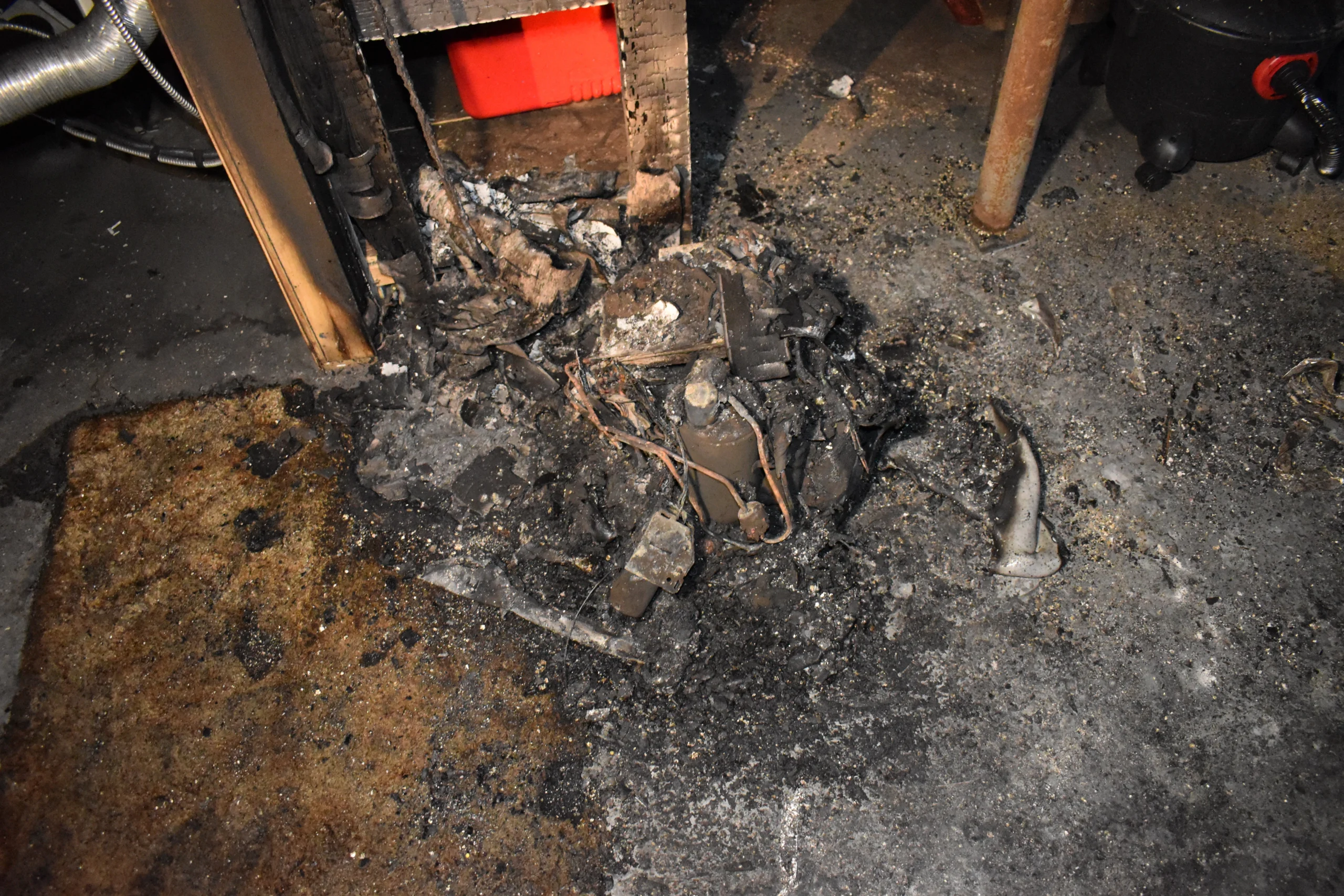
The components of this melted dehumidifier from a fire’s area of origin were carefully gathered, packaged, and shipped for testing. Research later revealed this model had been recalled for posing fire hazards to consumers.
Selecting the Right Large Loss Fire Investigation Partner
While time is of the essence for all fires, it’s never truer than in a large loss fire investigation. That’s why the National Fire Experts (NFE) Large Loss Response Team provides rapid-response services to secure a fire or explosion scene, assess immediate needs, document conditions, and develop an investigation plan. Our certified fire investigators mobilize quickly and adhere to NFPA guidelines and standards to evaluate the evidence through our 11-step investigation process.
As a part of the Alpine Intel suite of services, the NFE Large Loss Response Team also leverages engineering, product failure, and evidence management support through Donan Engineering and Donan’s Component Testing Laboratories (CTL). Engineers can travel on-site for joint investigations, and evidence specialists can ship evidence to one of CTL’s two facilities for accurate testing and storage. CTL’s in-house transportation service, Loss Logistics, enables the team to provide a single-entity chain of custody for this evidence.
Submit an assignment now for expert support on any fire claim, no matter the size.

Don’t miss insurance-focused resources and webinars about property, perils, and trends impacting claims nationwide by signing up for The Savvy Adjuster Newsletter.

Be sure to also tune in to The Savvy Adjuster Podcast to hear more from the experts themselves.
Alpine Intel’s content is meant to inform and educate readers using general terms and descriptions. They do not replace expert evaluations that determine facts and details related to each unique claim.
Related Resources

Large Loss Fire Claim Case Study
Fire claims are never simple, and this case study describes how the StrikeCheck team handled a large loss inspection.
Commercial Large Loss Fire Case Study
Discover how National Fire Experts identified the origin and cause of a commercial large loss fire through joint inspections and collaboration with CTL.
Take 10: Large Loss Fire Investigations | The Savvy Adjuster Podcast Ep. 10
They cover large loss fire specifics, involve other stakeholders, and emphasize selecting adept assessment partners for handling these intricate claims.