
Leveraging Crash Data Retrieval as an Auto Claims Adjuster

Resolving auto insurance claims can feel like piecing together a complex puzzle. Physical evidence from the scene offers one piece, while witness statements may provide another. Vehicle data—such as change in speed, braking, and more—can fill other gaps, supplementing the information already collected to help you verify details and reach fair conclusions.
Crash Data Retrieval (CDR) offers an objective, data-driven method for gathering these facts by extracting insights from a vehicle’s Event Data Recorder (EDR). Let’s explore how this technology not only delivers reliable information but also serves as compelling evidence in litigation.
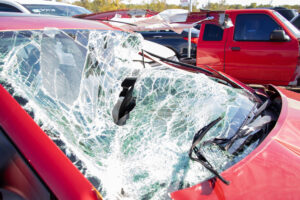
After vehicle collisions, physical evidence and witness accounts may not cover all the information needed to confidently settle an auto claim.
How Does Crash Data Retrieval Work?
Most modern vehicles store crash data in an airbag control module, commonly bolted to the floor under the center console. “EDR” is a generic term for the technology that captures this critical data moments before, during, and after a crash. CDR is the process by which trained technicians download EDR data from a vehicle. They can typically perform these downloads without need for removal, though severely damaged vehicles may necessitate disassembling the interior to access the airbag module.
What Can an EDR Download Tell Auto Claims Adjusters?
An EDR download can provide an array of metrics. The data may include, but is not limited to:
- The vehicle’s recorded speed prior to impact
- Steering, accelerator, airbag, or braking
- Seatbelt status
- Changes in vehicle speed (Delta V)
- Vehicle odometer mileage at the time of a crash
- Whether passengers were present in the vehicle
- If cruise control was in use
- If the vehicle was in drive, park, reverse, or neutral
The full utility of EDR data as it relates to understanding a crash often lies in expert interpretation. Professional Engineers with specialized training in crash data analysis can consult with auto claims adjusters about what EDR data means so that they can make more informed claims decisions.
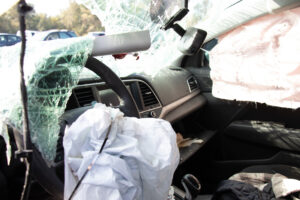
EDR data can reveal critical information about airbags, speed, and a range of other factors that could have contributed to a collision.
Verifying Crash Details
The application of CDR insights can vary depending on the specifics of a claim, but in general they can help verify the details of a crash. The data extracted through CDR can validate or challenge a witness’s or policyholder’s account of the incident and clarify scenarios where the sequence of events remains unclear.
Analysis of CDR may reveal whether the insured party or another driver took actions to avoid the collision. It can also pinpoint contributing factors such as vehicle malfunctions, unsafe driving behaviors, or other conditions. With this level of information, auto claims adjusters are better positioned to reach fair, accurate resolutions.
CDR Use Cases for Auto Claims Adjusters
The potential applications of CDR for auto claims adjusters are as diverse as the scenarios they encounter. That said, CDR may prove especially useful in claims involving conflicting accounts, an unknown order of events, or a vehicle hit while parked. A claim with a single-vehicle event in which only one person’s account is available may also benefit from CDR.
Additionally, when a policyholder attributes a collision to mechanical failure, such as faulty brakes, unexpected acceleration, or another vehicle malfunction, CDR can either corroborate or challenge these claims. Data from your insured’s vehicle can illuminate the true facts of the incident, whatever they may be.
CDR and Litigation
Data recovered during CDR not only aids auto adjusters in resolving claims but also strengthens their ability to defend settlements if litigation arises, as raw EDR data is admissible as evidence.
Moreover, CDR data can play a crucial role in identifying whether third parties, such as manufacturers or car servicing companies, are responsible for a loss. When this is the case, EDR data can serve as vital evidence if the carrier decides to pursue subrogation. Subrogation offers significant benefits for both auto insurance carriers and policyholders. Carriers can reduce indemnity leakage by holding the responsible parties accountable, all while improving customer service. Meanwhile, policyholders can be made whole, gain reassurance that accountability is being enforced, and potentially avoid an unnecessary rise in premiums—a particularly valuable advantage given the 16.5% average rise in auto insurance rates in 2024.
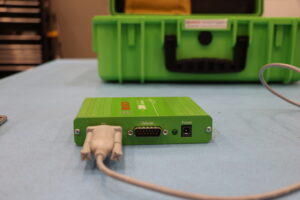
Securely storing the raw data from EDR downloads can be crucial for defending settlements should litigation arise.
Because litigation can be pursued years after settlements are reached, partnering with a reliable CDR vendor is essential to ensuring the integrity of critical evidence. Component Testing Laboratories (CTL), part of the Alpine Intel suite of services, excels in maintaining a single-line chain of custody and safeguarding data. CTL offers end-to-end CDR services, from evidence collection as close to the first notice of loss as possible to data analysis by Professional Engineers, with detailed reports and consultations available on request. Trust CTL for dependable insights and expert support on your next auto claim. Submit an assignment today.

Don’t miss insurance-focused resources and webinars about property, perils, and trends impacting claims nationwide by signing up for The Savvy Adjuster Newsletter.

Be sure to also tune in to The Savvy Adjuster Podcast to hear more from the experts themselves.
Alpine Intel’s content is meant to inform and educate readers using general terms and descriptions. They do not replace expert evaluations that determine facts and details related to each unique claim.
Related Resources

Crash Data Retrieval and Litigation Guide
Learn how Crash Data Retrieval services can help strengthen your litigation efforts on vehicle claims through explanations of the significance of retrieved data, expert testimony, and more.
What To Expect From Your Crash Data Retrieval Assignment
Knowing what happened in the minutes before a crash requires retrieving key information from the vehicle(s) involved. Check out what types of vital crash insights you can receive.

Case Study: Retrieving Crash Data
Learn how CTL’s Crash Data Retrieval services delivered answers about the events leading up a crash for an adjuster looking to make an accurate settlement decision.