Investigating Fire Suppression Systems After Commercial Fires

When a fire ignites in a commercial space, Automatic Extinguishing Systems (AES), such as sprinkler systems, can help control flames and limit damage. This equipment can also save lives, reduce financial losses, and minimize downtime for businesses like warehouses, manufacturing plants, restaurants, and hospitals.
But these systems aren’t perfect. When they fail or perform ineffectively, the resulting losses can be significantly higher. This naturally raises questions for insurers and attorneys who need to determine why a malfunction occurred and whether the systems were designed, installed, and maintained as required. While a lack of AES maintenance might not directly cause a fire, it can still represent a violation of policy terms if it could have prevented the extent of damage. Read on to find out more about these systems and how Certified Fire Protection Specialists (CFPS) can help uncover the root cause of any failures.
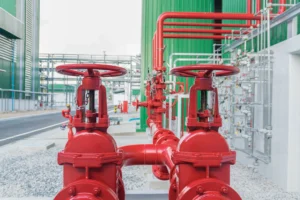
Large commercial facilities sometimes employ multiple fire suppression systems. Specialized investigators can evaluate this equipment when it fails to determine why.
The Importance of Fire Suppression Systems in Commercial Properties
There are different kinds of AES, including dry and wet chemical, clean agent, gas, foam, and sprinkler systems. Because this complex equipment can be broken down even further into subcategories, we’ll focus on sprinkler systems here, which a National Fire Protection Association (NFPA) report, “Fire Protection Systems: U.S. Experience with Sprinklers,” noted was the most common type of AES found in reported structure fires from 2017-2021.
More specifically, the report showed that sprinkler systems were present in an annual average of 73% of structure fires in spaces used for manufacturing, 71% of hotel and motel structure fires, 60% of hospital structure fires, and 51% of warehouse structure fires in the U.S. from 2017-2021. It’s also important to note that some properties, such as commercial kitchens, use both sprinklers and specialized systems like hood ventilation to manage fire risks more effectively.
So how well do sprinkler systems work? The same NFPA report indicated that sprinkler systems were effective in 89% of fires large enough to trigger them during the same five-year span, with fire spread limited to the room or object of origin in 94% of reported cases. While these statistics underscore their reliability, instances where sprinkler systems fail warrant closer investigation. Such losses require a thorough evaluation, not only to determine the fire’s most plausible origin and cause, but also to find out what went wrong with the safety mechanisms in place. This assessment should be conducted by a CFPS fire investigator.
Sprinkler systems are commonly found in many commercial applications and are designed to help suppress and contain fires.
Challenges in Fire Suppression System Performance
Sprinkler systems failed to operate in 8% of reported structure fires that should have been large enough to activate them and operated ineffectively in 3% during the five years studied by NFPA. Causes included:
- System Shutdowns: If a system is off or shuts down at the time of the fire, it’s rendered useless.
- Manual Intervention: Deliberate actions, such as disabling the system, can defeat its purpose.
- Damaged Components: Damage to system parts can prevent proper operation.
- Neglected Maintenance: Without regular upkeep, systems may not function as intended.
- Inappropriate System: Using the wrong type of system for a specific fire situation can lead to ineffectiveness.
- Agent Delivery Issues: Fires may not be contained if the suppression agent doesn’t reach the flames or if insufficient amounts are discharged.
Some of these causes of failure point to human error, while others could be the result of mechanical malfunctions. Each of these may impact how carriers resolve claims.
The Role of Certified Fire Protection Specialists in Post-Fire Investigations
Without a thorough, objective investigation, interested parties like insurers and attorneys are unlikely to have the answers they need about what went wrong with a fire suppression system, even if they’ve determined the fire’s origin and cause. In order to accurately resolve claims or make settlements, they’ll need to know if poor maintenance, improper system selection, or design flaws contributed to the extent of a commercial fire loss. This information is also crucial for evaluating whether there is any potential for subrogation.
Fortunately, CFPS professionals can help. CFPS is an NFPA credential that reflects proven knowledge in the subject of reducing physical and financial losses due to fire. CFPS professionals are also well-versed in federal, state, and local fire and life safety regulations.
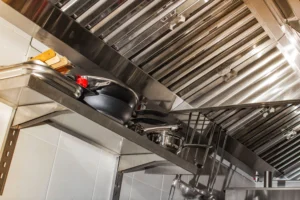
In addition to sprinkler systems, CFPS professionals inspect other equipment meant to reduce fire risks, including hood ventilation systems in commercial kitchens.
While many CFPS professionals work in fire suppression system design and installation, some specialize in investigations. These experts assess fire suppression systems, alarms, building construction, and hazardous storage conditions to determine how effectively the systems mitigated or failed to mitigate a fire. You can engage a CFPS professional from National Fire Experts (NFE), part of Alpine Intel’s suite of services, for onsite or virtual inspections after a fire loss. To get started, simply submit an assignment.

Don’t miss insurance-focused resources and webinars about property, perils, and trends impacting claims nationwide by signing up for The Savvy Adjuster Newsletter.

Be sure to also tune in to The Savvy Adjuster Podcast to hear more from the experts themselves.
Alpine Intel’s content is meant to inform and educate readers using general terms and descriptions. They do not replace expert evaluations that determine facts and details related to each unique claim.
Related Resources

Commercial Vehicles: Investigating Fire Claims Guide
When handling commercial vehicle fire claims, adjusters should be ready for many involved parties and some unique considerations about origin and cause.
Commercial HVAC Systems Cheat Sheet
Adjusters, use this one-page reference sheet to gain a better understanding of commercial HVAC equipment – from system functions to common causes of loss.
Commercial Large Loss Fire Case Study
Discover how National Fire Experts identified the origin and cause of a commercial large loss fire through joint inspections and collaboration with CTL.