How Common Heating Problems May Be Linked To Wear and Tear
As the first chilly morning hits and your policyholders reach to turn on the heat, some might face an unwelcome surprise. Furnace or boiler issues that went unnoticed during the warmer months could leave them cold and frustrated.
But before settling claims for these HVAC systems, make sure you verify the cause of loss. The following common heating problems may be linked back to wear and tear.

Heating system claims require swift, accurate resolutions so that your policyholders don’t have to brave the cold for long.
No Heat and a Foul Smell
The most common heating system problem that could be tied to wear and tear is heat exchanger failure. Heat exchangers are used in both boilers and furnaces to transfer heat between two mediums. However, rust or corrosion of heat exchanger tubes over time can cause holes or cracks to form. Additionally, repeated heating and cooling cycles can lead to thermal fatigue, which weakens the metal and causes it to crack.
When this happens, the furnace or boiler will cease to operate. Along with losing heat, policyholders might notice an unpleasant odor, like rotten eggs. This is because heat exchangers are responsible for sealing in toxic gases, and a crack can result in a gas leak, potentially even setting off a carbon monoxide alarm.
Smoke and Soot in the Vents
Smoke and soot can understandably be an alarming sight for policyholders. If they observe these substances flowing out of their boilers, furnaces, or vents, they may conclude that a fire has occurred. But if you see smoke and fire listed as perils in a boiler or furnace claim, you may want to have an HVAC expert take a closer look.
Smoke, soot, and sometimes even a loud bang are often signs that a boiler or furnace puffback has occurred. A puffback happens when unburned fuel accumulates and then ignites, causing a backfire from the burner rather than a clean burn. This can result in smoke or soot being released throughout the heating system or into the ductwork, potentially causing a significant mess in addition to a heating system failure. There are at least seven known causes of puffbacks, some of which could be linked to wear and tear.
Policyholders may also unknowingly contribute to a puffback if they manually reset their furnace too many times after it initially fails to ignite. In these cases, it would be important to fully examine the system to determine what led to the ignition failure and if impatience was the catalyst for a puffback.
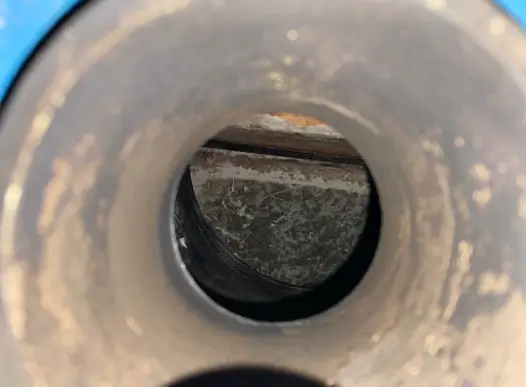
This flue pipe shows signs of residue from a boiler puffback.
The Thermostat Is Malfunctioning
Sometimes when the heat won’t turn on, it may not be due to a problem with the furnace or boiler themselves but rather the thermostat. Just like other parts of an HVAC system, thermostats can wear out over time, if something electrical, such as a high voltage surge, isn’t to blame. That’s why it’s important not to assume that just because a policyholder reports their system won’t power on that the system requires an extensive repair or replacement.

A failed or malfunctioning thermostat could cause policyholders to believe there is a larger heating system issue afoot.
Air Quality Is Poor and Home Isn’t Staying Warm
Coughing and sneezing are common in fall and winter, but if poor indoor air quality is the cause and the house isn’t staying warm, policyholders might claim a heating system failure. However, instead of needing a replacement, some of these systems may simply require maintenance.
Furnace air filters should be replaced regularly, with the frequency depending on the size of the furnace and the home. Insureds with air filters that haven’t been changed may report higher energy bills in addition to lower air quality and colder indoor temperatures. This is because dirty air filters can cause a furnace to work less efficiently. Air filters that are dirty can also lead a furnace to overheat due to lack of airflow. The furnace may then cycle on its high limit switch, which can result in catastrophic failure.
Verify the Cause of Loss When Common Heating Problems Arise
Some common heating problems may be linked to wear and tear. Homeowners may not realize that their furnace or boiler has simply reached the end of its useful life when they try to turn on the heat this winter. In fact, the average age of residential boilers assessed by HVACi’s expert team in 2024 was 28 years, while the average for residential furnaces was 23 years.
Before settling a heating system claim, enlist HVACi to perform an objective onsite assessment so that you can decide how to handle a claim with just the facts. Our fast cycle times will help you resolve your claims without keeping your policyholders in the cold. Submit an assignment today.

Don’t miss insurance-focused resources and webinars about property, perils, and trends impacting claims nationwide by signing up for The Savvy Adjuster Newsletter.

Be sure to also tune in to The Savvy Adjuster Podcast to hear more from the experts themselves.
Alpine Intel’s content is meant to inform and educate readers using general terms and descriptions. They do not replace expert evaluations that determine facts and details related to each unique claim.
Related Resources

Common Winter Heating Losses
However, the additional stress on HVAC equipment in the winter can lead to serious losses. Learn more about four of the most common winter heating losses.

Common Heating System Losses Guide
The guide delves into a few of the damages heating systems sustain, including thermal fatigue, puffbacks, malfunctioning low water cutoffs, and wear and tear.
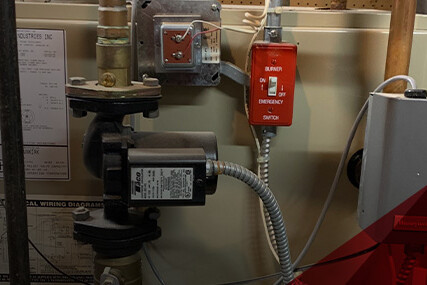
Boiler Glossary
When they break, it’s not always immediately clear what damaged them, if the loss can be covered, or whether they can be repaired.