Expert Witness Selection in Insurance Claims: Reducing Risk in Litigation and Subrogation

Key Takeaways
This article covers ways to reduce risk in litigation and subrogation by describing:
- Why expert witness selection is such a critical factor
- How courts evaluate not just conclusions, but methodology, under Daubert and Rule 702
- Four essential traits and qualifications expert witnesses should have
- The value of litigation-ready support from the outset of a claim investigation
When an insurance claim advances to deposition, mediation, arbitration, or trial, the effectiveness of your expert witness can directly influence litigation outcomes, claim exposure, and subrogation potential.
For insurance adjusters, attorneys, SIU professionals, and subrogation specialists, the challenge isn’t understanding the role of an expert witness, but rather selecting one who can deliver defensible, litigation-ready findings that hold up under scrutiny and reduce risk.

Expert witnesses should be carefully selected due to the impact they can have on claims litigation.
Why Expert Witness Selection Matters in Claims Litigation
Under Federal Rule of Evidence 702 and the Daubert Standard, courts evaluate not only an expert’s conclusions, but also the reliability of their methodology.
This means opposing counsel will examine:
- How the investigation was conducted
- Whether industry standards were followed
- If conclusions are supported by testing and data
- Whether findings can be reproduced and defended
If your expert’s work doesn’t meet these standards, it can weaken your claim resolution strategy, litigation defense, and subrogation recovery efforts.
Bottom line: Expert witness selection is a critical component of risk management in complex insurance claims.
Key Qualities of a Strong Insurance Expert Witness
When choosing an expert witness for litigation or subrogation, certain essential qualities should be considered.
- Litigation-Ready Investigations from the Start
Many claims face challenges because investigations were not conducted with litigation in mind. By the time a claim escalates, it may be too late to correct incomplete documentation, improper evidence handling, or reports that don’t meet legal standards.
The most effective expert partners recognize this risk and approach each assignment with the expectation that it could be litigated. This can help promote greater consistency and defensibility from the initial investigation through testimony.
- Relevant Credentials for Property, Auto, and Subrogation Claims
Expert qualifications should align directly with the type of loss.
Examples include:
- Fire losses: Certified Fire Investigators (CFI) or Certified Fire and Explosion Investigators (CFEI) who follow National Fire Protection Association (NFPA) 921 for origin and cause investigations
- Structural or electrical failures: Licensed forensic engineers and expert consultants for property assessments
- Product liability and subrogation: Professional Engineers for product failure testing and analysis
- Auto claims: Teams of experienced experts for event data retrieval and analysis, crash reconstruction, and forensic visualization
- SIU investigations: Licensed, trained investigators who obtain evidence legally for surveillance
Misaligned expertise can create vulnerabilities during depositions and trials.

Verify that expert witnesses have the necessary credentials to offer sound, defensible testimony.
- Methodology That Meets the Daubert Standard
Experienced claims professionals know Daubert. However, success could depend on whether an expert’s work can withstand a Daubert challenge.
Strong expert methodologies are grounded in the use of recognized industry standards, including those established by the NFPA, ASTM International, Underwriters Laboratories, and Society of Automotive Engineers International, combined with a disciplined application of the scientific method. Equally important is clear and thorough documentation of testing and analysis, along with a logical and defensible connection between the evidence and the conclusions drawn.
- Documentation and Evidence Preservation Best Practices
Insurance claims often extend over long timelines. When cases reach litigation, documentation becomes critical.
Effective expert documentation may include, but isn’t limited to, detailed site photography and 3D scanning, drone-captured imagery obtained by Federal Aviation Administration Part 107–certified operators, a verified chain of custody for physical evidence, secure storage and preservation protocols, and legally compliant digital evidence collection.
These forms of record-keeping can be especially important in SIU investigations and subrogation claims, where evidentiary integrity directly impacts outcomes.
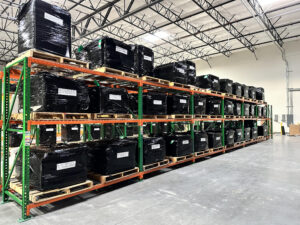
Evidence preservation, such as Component Testing Laboratories’ secure storage with 24/7 video surveillance, is a critical component of claims investigations and litigation.
Common Gaps in Expert Witness Engagement
Several recurring issues tend to undermine the strength and defensibility of claims. These include delays in engaging the appropriate experts, investigations that are not properly aligned with litigation requirements, and documentation that is either incomplete or inconsistent.
The absence of a standardized methodology can also be a significant problem. In auto claims, for example, crash reconstruction experts should apply physics-based analysis, scene documentation, and industry-standard methodologies to evaluate incident dynamics and support case strategy from the earliest stages.
When this level of rigor is lacking for methodology or other aspects of the investigation, gaps may go unnoticed in the claims process but often become highly visible during depositions, expert scrutiny, or trial preparation. This is also when they are most difficult to correct.
To help avoid these gaps, it’s important to engage expert support that is aligned with litigation requirements from the start. Alpine Intel provides integrated expert witness services, including forensic engineering, fire investigation, workers’ compensation investigation, vehicle forensics and crash reconstruction, and component testing—delivering litigation-ready insights from day one.
Submit an assignment for the professional support and expertise you need to navigate complex legal challenges with confidence.

Don’t miss insurance-focused resources and webinars about property, perils, and trends impacting claims nationwide by signing up for The Savvy Adjuster Newsletter.

Be sure to also tune in to The Savvy Adjuster Podcast to hear more from the experts themselves.
Alpine Intel’s content is meant to inform and educate readers using general terms and descriptions. They do not replace expert evaluations that determine facts and details related to each unique claim.
Related Resources
Subrogation Basics for Claims Adjusters Guide
The subrogation process can be challenging for adjusters due to legal complexities and the importance of preserving solid evidence. Gain insights into the fundamentals of subrogation with our guide.

Fire Claims: From Investigation to Litigation
Your fire claims may require onsite investigations, transporting evidence, product assessments, and litigation support. Consider this all-inclusive path.

Handling Video Evidence in Insurance Claims Guide
Learn how to properly collect, verify, and use video evidence to strengthen claim investigations, support negotiations, and ensure admissibility.