
A Look at 3 Components Prone to Freeze Damage

Key Takeaways
Use this article to find out:
- Which three common components are vulnerable to freeze damage and may wind up in claims
- What freeze failures look like in these items
- Why it’s important to verify cause of failure through expert testing in case the loss winds up in litigation or subrogation proceedings
When water freezes within a plumbing component, it expands, causing overpressurization that can compromise functionality and result in water damage. These losses can be costly. According to the latest available data from the Insurance Information Institute, water damage and freezing accounted for almost 23% of homeowners insurance claims in 2023, with an average claim severity of $15,400 from 2019 to 2023.
The Professional Engineers at Donan’s Component Testing Laboratories (CTL) have pinpointed three components particularly susceptible to freeze failures: water filters, plumbing pipes, and valves. Learn the causes and signs of freeze damage in these items, and how expert testing can help you evaluate subrogation potential in losses with unverified causes of failure.
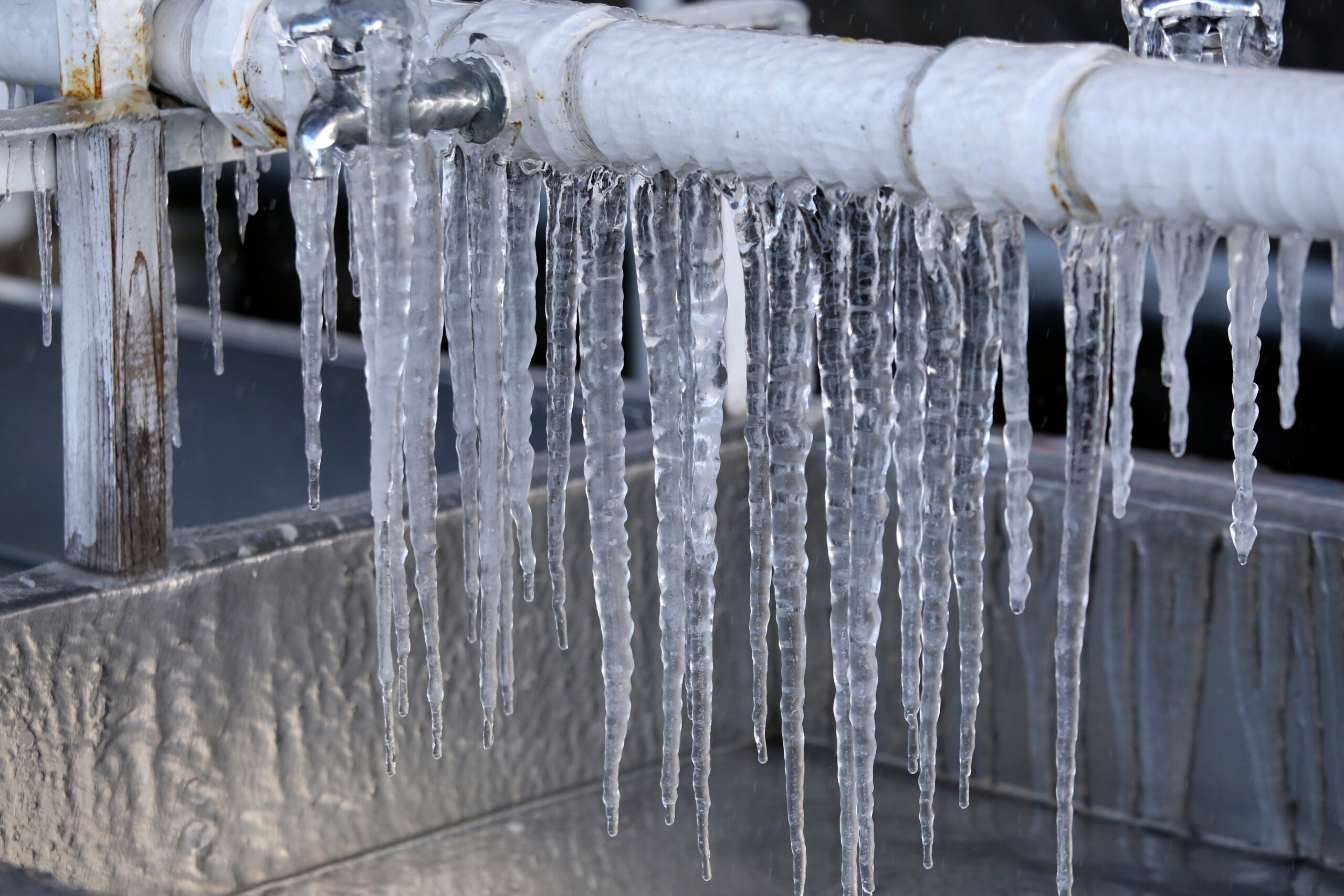
Product failure experts can verify whether freezing conditions led to a component failure, or if another issue was ultimately responsible for a water loss claim.
1. Water Filter Freeze Damage
Water filters used in whole-house systems, under-sink installations, and appliances such as refrigerators and icemakers can sustain damage when exposed to freezing temperatures.
Freezing water triggers a rapid increase in internal pressure due to volume expansion. Reverse osmosis (RO) water filters installed under sinks can experience this overpressurization if they are exposed to cold or are downstream of an ice blockage elsewhere within the water supply system. A blockage can subject the entire system to a uniform increase in pressure, potentially causing failures at any vulnerable point.
Water filters installed in refrigerators may also sometimes sustain freeze damage, but the root cause is often a refrigerator malfunction. When a refrigerator fails to regulate temperature effectively, the water filter inside may be impacted by freezing conditions. This can result in overpressurization and water damage. The refrigerator’s internal temperature can be tested to assess whether a refrigerator malfunction led to freezing temperatures and water filter failures.
Certain indicators can also point toward freeze failures in water filters, including branching or bifurcated fractures and cracked filter housings. But to confirm cause of failure, expert analysis is required.
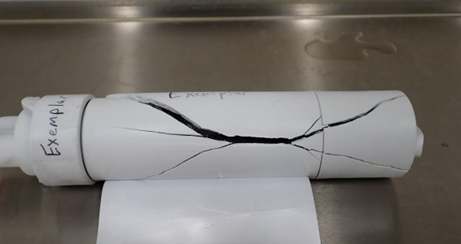
This exemplar water filter displays branching fractures typical of freeze failures.
2. Frozen Pipes Within Plumbing Systems
Frozen pipes are particularly common in plumbing systems with inadequate protection from outdoor temperatures. Pipes situated in unprotected areas or exposed directly to the elements can quickly freeze when temperatures drop. Open crawlspace vents are another risk factor, allowing freezing air to reach these components.
When hoses connected to plumbing systems are left outside in freezing weather, ice blockages can form and lead to increased internal pressure within connected pipes. As described with water filters, pipe sections downstream of a blockage also experience increased pressure. This can cause failures at any point within the system, including in heated areas of a building where ice is absent. Signs of such freeze damage may include burst pipes or cracks in PVC, metal, or other materials.
3. Freezing Conditions and Valves
Valves manage water flow and temperature in homes and businesses but can be susceptible to freeze damage, particularly when water flow is insufficient. Without continuous movement, stagnant water may freeze and expand, exerting excessive pressure on valve components and causing damage.
Frozen water in one component can also lead to a freeze-related failure in another. As water within pipes freezes, it expands, exerting pressure not only on the pipes but also on the valves connected to them. This expansion can cause the valves to crack or fail, disrupting the plumbing system’s functionality and potentially leading to water losses.
CTL’s Professional Engineers can conduct pressure tests and examine valve bodies for longitudinal fractures and stress-whitening, which may indicate a freeze-related failure.
For more on this, read about how the absence of stress-whitening, along with the presence of leaks in the armature guide tubes, helped a CTL engineer rule out freeze damage and discover a manufacturer’s defect in this Valve Failure Case Study.
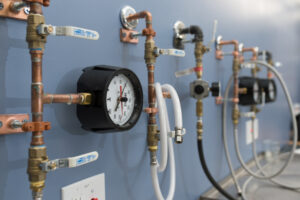
CTL’s Professional Engineers utilize extended pressure testing to form science-based, expert opinions about component failures in pipes, filters, and valves.
Why Test Components With Suspected or Reported Freeze Damage?
Despite their susceptibility to freeze damage, all these components can fail for reasons unrelated to freezing conditions, even in the coldest months. Verifying the cause of failure in water damage losses involving water filters, pipes, and valves may reveal an opportunity to pursue subrogation if a manufacturer’s defect or installation error is determined to be the cause.
That’s where product failure investigations come in. The Professional Engineers at CTL are experts in conducting these investigations, using techniques and tools such as extended pressure testing, microscope examination, metal composition analysis, and X-ray analysis to get to the root cause of a failure.
They compile their findings in reliable, top-of-class reports that deliver the insights you need to make informed subrogation decisions. For answers to your complex product failure questions, submit an assignment.
Engineering services are provided by or subcontracted to Donan Engineering, LLC, Donan Engineering NC, PLLC, or Donan Forensic, LP.

Don’t miss insurance-focused resources and webinars about property, perils, and trends impacting claims nationwide by signing up for The Savvy Adjuster Newsletter.

Be sure to also tune in to The Savvy Adjuster Podcast to hear more from the experts themselves.
Alpine Intel’s content is meant to inform and educate readers using general terms and descriptions. They do not replace expert evaluations that determine facts and details related to each unique claim.
Related Resources

Investigating Freeze Damage in Product Failures
Learn what the experts look for to confirm freeze failure in certain components and how lab assessments can ensure more accurate conclusions.
Freeze Damage to Pool Equipment
Adjusters should know how pool equipment is affected by freeze damage before settling this type of claim.

Damage to Electrical System Case Study
A homeowner claimed wind damage to electrical system components, but a StrikeCheck assessment determined a different cause of loss.