5 Ways Direct Lightning Can Impact HVAC Systems in Claims
Key Takeaways
Lightning strike damage tends to be overreported in HVAC claims. This adjuster resource explains:
- Which HVAC components direct lightning can affect and how
- Real-life examples of these impacts, and why full replacements typically aren’t necessary
- How expert assessments make a difference
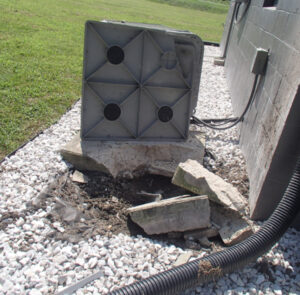
Lightning losses can look extreme, like this condensing unit taken off its pad. Even then, full HVAC system replacements are unlikely.
Only 2% of residential and 1% of commercial HVAC equipment that HVACi assessed last year had verified direct lightning damage as the cause of loss, according to the HVACi 2025 Annual Claims Report. While other perils are more likely to have damaged policyholders’ HVAC systems, adjusters still need to take lightning into consideration in claims.
Direct lightning can impact multiple HVAC system components. The scope of damage varies between specific incidents, but lightning damage doesn’t often require a full system replacement. Expert assessments are essential for more accurate claim resolutions if any of the following HVAC system components have reported lightning damage.
1. Failed Blower Motors
HVAC blower motors are fans with electric motors used to move air through the HVAC system. They are critical components because in cooling mode, blower motors move the air through the evaporator coil while refrigerant absorbs the heat from the air. In heating mode, blower motors create airflow so that heat is transferred to the air to warm a space.
It may be a surprise that direct lightning can affect this component because blower motors are attached to the furnace, which is part of the indoor equipment in a split system. These losses can occur when lightning strikes a chimney or roof and impacts the furnace cabinetry.
Don’t forget: Arc marks and other visible evidence are often present with direct lightning strikes, showing where the lightning traveled on a property.
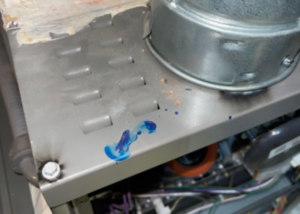
The arc mark shows where direct lightning affected HVAC equipment and resulted in damage to the blower motor.
2. Compromised Refrigerant
Refrigerant is essential to any split system. It evolves from gas and liquid states depending on its temperature and pressure and transfers heat to or away from a space. Lightning striking indoor or outdoor HVAC equipment can affect the refrigerant, which would cause the system to malfunction.
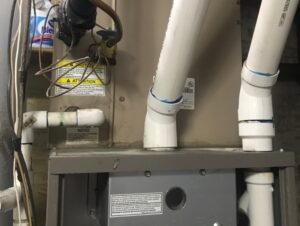
Lightning energized the refrigerant circuit and compromised the refrigerant, but the system could still be repaired.
Though rare, HVAC systems will sometimes be void of refrigerant after lightning damage. In one claim that reflected this uncommon scenario, the refrigerant circuit was energized with electricity as the result of a lightning strike. The electricity escaped and arced between the refrigerant piping and evaporator coil housing. In turn, the refrigerant circuit was compromised, though all other components measured within an optimal range.
It’s critical to note this type of damage may result in a major repair, but even then, a full replacement is unlikely to be necessary. In this claim, the adjuster was advised that the policyholder needed a new condensing unit, evaporator coil, and copper lineset. An HVAC system expert would recommend replacement equipment that is compatible with and meets the efficiency standards of the components already in place.
Refrigerant may also be affected by a failed lineset. HVAC evaluations have shown that lightning can blow a hole in the lineset, which connects indoor equipment to the outdoor condensing unit. This compromises the entire refrigerant circuit, requiring repairs.
Acidic refrigerant, however, is not a sign of direct lightning damage, though it may be misdiagnosed as such. Refrigerant can only become acidic over an extended period of time, and it is a sign of wear and tear.
Don’t forget: Though virgin R-22 was banned in 2020, reclaimed R-22 can still be purchased and used in existing equipment, which does not automatically need to be replaced. Existing R-410A equipment can also continue to be used and serviced despite its ongoing phasedown.
3. Malfunctioning Control Boards and Other Electric Components
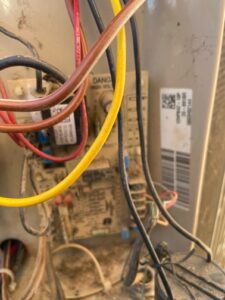
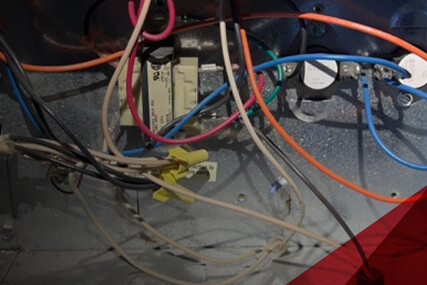
Lightning struck a property and caused a defrost control board, and other components, to malfunction.
Unlike high voltage surge that can only impact electric components, lightning can affect anything in its path. However, electric components are a probable target for lightning strike damage. Among the susceptible equipment is the defrost control board.
Though there may not be visual evidence, operational testing would prove whether the board has failed. This type of damage would likely result in a minor repair by replacing the defrost control board to return equipment to pre-loss condition.
Other common electronic components that are susceptible to lightning damage include the indoor control board, outdoor control board, and thermostat.
Don’t forget: Before settling for replacement equipment, whether an individual component or a full system, verify that the cost matches market values for the loss location and the equipment is Like Kind and Quality to the original.
4. Damaged Ductwork
As previously shown, lightning can travel through other non-electric items such as chimney flues and linesets. Ductwork is also susceptible to lightning damage and could be the only HVAC component affected.
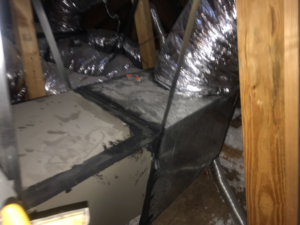
Ductwork can also sustain direct lightning impacts.
In one assessment, the unit was operational as were all the internal electrical components; however, there were two failed runs of flexible ductwork. The lightning struck the loss location’s roof, and two flexible ductwork runs in the attic were damaged. All other components measured within an optimal range, and the system could be repaired.
Don’t forget: Comprehensive assessments evaluate all HVAC system equipment so that nothing is overlooked.
5. Impacted Furnace and Condensing Unit
Though lightning can affect small, individual components, it can also impact enough equipment to require a replacement furnace or condensing unit. Even then, a full HVAC system replacement is rare unless there are efficiency or refrigerant incompatibilities. It’s important to have equipment evaluated to know the best course of action.
Don’t forget: Objective experts will ensure only the most appropriate repairs or replacements are recommended to return equipment to pre-loss condition.
HVACi, part of Alpine Intel’s suite of services, uses engineering best practices to evaluate and test HVAC and refrigeration equipment. Our nationwide team provides adjusters with accurate cause of loss and scope of damage determinations and objective repair and replacement recommendations. We also recommend settlement costs based on market value.
Did your policyholder report lightning as the cause of loss for an HVAC system? Submit an assignment to HVACi for accurate results.

Don’t miss insurance-focused resources and webinars about property, perils, and trends impacting claims nationwide by signing up for The Savvy Adjuster Newsletter.

Be sure to also tune in to The Savvy Adjuster Podcast to hear more from the experts themselves.
Alpine Intel’s content is meant to inform and educate readers using general terms and descriptions. They do not replace expert evaluations that determine facts and details related to each unique claim.
Related Resources
2023 Efficiency Changes for HVAC Systems
Several new U.S. Department of Energy (DOE) efficiency regulations related to HVAC systems took effect Jan. 1, 2023. Insurance professionals should know how these rules may impact their policyholders.
Complex Commercial HVAC Claims Case Study
Commercial HVAC claims may be more complex for adjusters to resolve than residential claims, since they often include multiple different types of systems with varied damages, or even multiple causes of loss.

HVAC Systems Quiz
Take this quiz to test your knowledge about the residential HVAC system equipment included in claims that adjusters ask HVACi experts to assess daily.