5 Fire Investigation Myths Debunked by NFPA 921

Key Takeaways
This is your chance to learn the truth behind common fire investigation myths. Read about:
- What fire patterns are, and what they can and can’t tell fire investigators
- Why the area of origin isn’t always the most damaged
- Why you need an expert investigation, even if the cause of the fire seems clear
Accurate fire investigations are guided by precise methodology, not assumptions. National Fire Protection Association (NFPA) 921 establishes standards for scientifically based fire and explosion investigations, requiring investigators to apply the scientific method, including data collection, hypothesis development, testing, and validation before determining origin and cause.
Despite this established framework, misconceptions about fire investigations persist. By examining these five common myths (and the realities behind them), insurance professionals can make more informed decisions about fire claims and involving certified fire investigators.
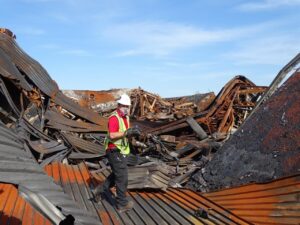
Understanding how fire investigations work can dispel misinformation and enable claims professionals to handle fire claims with more confidence.
Myth 1: Fire patterns alone can tell you exactly where the fire started.
Fire patterns are one of the most recognizable aspects of a fire investigation, but they don’t tell the whole story.
NFPA 921 defines a fire pattern as “the physical changes, or identifiable shapes, formed by a fire effect or group of fire effects.” While they can help certified fire investigators understand how a fire spread and developed, fire patterns don’t form in a vacuum. A variety of factors can influence how they appear, including:
- Ventilation
- Fuel load (the amount of combustible material available to burn)
- The size and layout of the room or compartment
- Flashover (the stage of fire growth at which most exposed combustible materials ignite almost simultaneously)
- Suppression activities
- Post-fire conditions
For example, after flashover occurs, fire patterns can develop or change throughout a compartment or room, potentially making it more difficult to distinguish patterns associated with the area of origin from those created during later stages of the fire. As a result, fire patterns cannot be evaluated in isolation during a fire investigation but should be assessed as part of hypothesis development and testing.
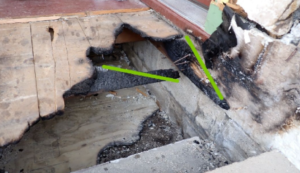
Fire patterns, such as those visible on these floor joists, are important data points in a fire investigation but must be analyzed alongside other evidence.
Myth 2: The most damaged area is always the area of origin.
Chapter 18 of NFPA 921 cautions investigators against assuming that the area of origin burned the longest or sustained the greatest damage.
As with fire patterns, a variety of factors can influence how intensely a fire burns and where damage occurs, including fuel availability, ventilation, fire growth, and suppression activities.
For instance, a fire may originate in a bedroom but spread into a living room that happens to contain a larger fuel load, such as additional furniture, and increased ventilation. As the fire develops, the living room may sustain more damage than the bedroom.
Rather than focusing solely on the most damaged area, certified fire investigators evaluate damage in the context of the entire scene. They consider fire dynamics, physical evidence, witness statements, and other data to develop and test hypotheses to determine the fire’s most plausible area of origin.
Myth 3: Burnt wiring means it had to have been an electrical fire.
Electrical wiring is often impacted during a fire, but that damage may result from fire exposure rather than indicate the source of ignition.
Consider a fire that begins when a candle ignites upholstered furniture. As it grows, nearby wiring, outlets, and cords may be exposed to intense heat and flames. By the time investigators arrive, those components may be severely damaged even though they played no role in ignition.
That said, NFPA 921 notes that it is important to document electrical items within the area of origin, including receptacles, switches, appliances, and other plugged-in devices. Fire investigators may also use arc mapping, a process that identifies and documents electrical arc sites within a fire scene, to help determine whether those components should be ruled out as potential ignition sources.
Some fire claims may also benefit from a joint inspection in which an electrical engineer can join fire investigators on-site to provide even more insight into potential electrical failures and their causes.
Myth 4: A code violation means the violation caused the fire.
The discovery of improper wiring, missing safety devices, or construction deficiencies does not necessarily mean these caused a fire. NFPA 921 explains that a condition that does not conform to applicable codes or standards may or may not be related to the fire’s cause. The presence of a violation alone does not establish causation.
Take a scene where fire investigators discover electrical wiring that does not conform to NFPA 70, National Electrical Code. Investigators must still use a systematic, scientific process to determine whether it played a role in ignition or was merely an unrelated deficiency that existed before the fire.
A code violation must be shown to have directly contributed to ignition under the conditions present at the time of the fire. If a violation is ultimately linked to the fire’s most plausible origin and cause, further investigation into potential subrogation opportunities may be warranted.
Myth 5: If the cause seems obvious, there’s no need for an expert fire investigation.
Some fires appear straightforward at first glance, but the most obvious explanation is not always the correct one. As the realities behind myths one through four demonstrate, certified fire investigators use NFPA 921’s scientific method to develop and test hypotheses rather than rely on assumptions.
A fire that starts on or near a range cooktop may appear to be a routine cooking fire, yet further investigation could reveal a product failure involving the appliance itself.
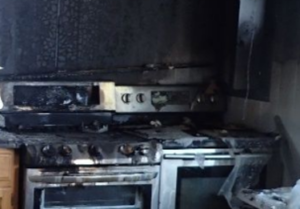
Cooking equipment fires may appear straightforward, but determining their origin and cause still requires a systematic, evidence-based investigation.
Even seemingly simple fires can involve product defects, installation issues, or other contributing factors that are not immediately apparent—factors that can significantly impact claim decisions and recovery potential. Premature conclusions can introduce confirmation bias, which occurs when investigators focus only on data that aligns with their hypothesis while neglecting or disregarding evidence that contradicts it. NFPA 921 specifically cautions investigators to avoid this.
Many insurance professionals, attorneys, and businesses partner with National Fire Experts (NFE) because our certified fire investigators not only adhere to NFPA 921 but also follow a detailed 11-step investigation process designed to align with the scientific method outlined in NFPA 921. They also have extensive experience performing joint investigations. We provide clients with the most plausible origin and cause of the fire, recommended next steps, and can partner with the Professional Engineers at Donan’s Component Testing Laboratories as part of Alpine Intel for further investigations into electrical, product, or component failures.
Rely on expertise and evidence rather than misconceptions when it comes to fire claims. Submit an assignment to NFE for an origin and cause investigation today.

Don’t miss insurance-focused resources and webinars about property, perils, and trends impacting claims nationwide by signing up for The Savvy Adjuster Newsletter.

Be sure to also tune in to The Savvy Adjuster Podcast to hear more from the experts themselves.
Alpine Intel’s content is meant to inform and educate readers using general terms and descriptions. They do not replace expert evaluations that determine facts and details related to each unique claim.
Related Resources
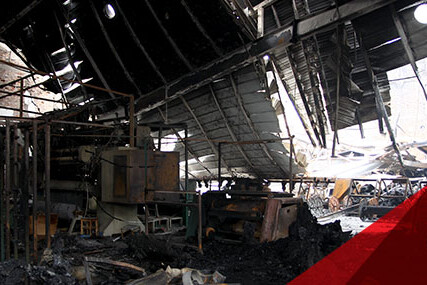
Case Study: Industrial Fire Investigation
A fire at a manufacturing facility led to a complex claim and left the carrier in need of details about the ignition sequence. That’s where National Fire Experts stepped in to help.
Your Questions About Fire Investigation Evidence Answered!
A crash course in how evidence is defined, collected, preserved by professional fire investigators, and how adhering to these guidelines ensures a conclusive investigation.

Fire Claims: From Investigation to Litigation
Your fire claims may require onsite investigations, transporting evidence, product assessments, and litigation support. Consider this all-inclusive path.