
3 Commonly Reported Summer HVAC Losses

Key Takeaways
This adjuster-focused article covers:
- Summer storm damage claims involving HVAC equipment
- The impacts of lightning, hail, and wind on these systems
- Why verifying the cause of loss and getting expert recommendations is crucial
Summer months see an uptick in HVAC claims as many policyholders turn on their air conditioning for the first time all year, and severe weather intensifies. For adjusters, resolving storm damage claims without an expert assessment any time of year may lead to inaccurate settlements based on wrong causes of loss; in 2025, 44% of residential claims involving HVAC and refrigeration systems were recategorized following an HVACi assessment.
Make sure you know the actual cause of loss and get repair vs. replacement recommendations before you close summer storm damage claims. Here’s some background on some of the most commonly reported causes of loss between June and September—lightning, hail, and wind—and what evaluations reveal.

Both you and your policyholders want quick resolutions to summer HVAC claims. An expert assessment could prevent an inaccurate settlement without prolonging the life of a claim.
Lightning
Lightning is a commonly cited cause of loss for reported storm damage claims throughout the year. In 2025, it was the stated cause of loss for at least 20% of equipment HVACi assessed during each spring and summer month. For the entire year, 17% of residential systems had reported lightning failures, but it was the actual cause of loss for only 2% of equipment.
According to the National Weather Service, lightning strikes about 25 million times each year in the United States. Though direct strikes to property are rare, equipment can sustain collateral damage from nearby strikes. Evidence of a lightning-caused fire in the attic introduces the possibility of smoke and soot damage throughout the system.
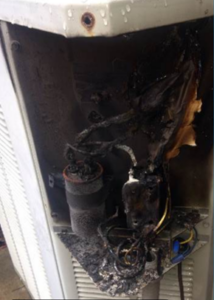
Direct and collateral damage from a lightning strike may include soot and charring to condensing units and other system components.
If lightning strikes a house, control board failures or malfunctioning thermostats are also potential indicators of collateral damage. Other visible lightning evidence includes arcing, ghosting, damage to structural components like the chimney or siding, evidence of direct strikes to nearby trees, and wiring insulation that has melted from the inside out.
For each storm damage claim, an expert assessment is necessary for more than just confirming the cause. Repair vs. replacement recommendations from a team familiar with the equipment support an accurate settlement decision. Coupled with verified market value pricing, these recommendations can also help adjusters avoid indemnity leakage for their carriers.
Reference this guide and Find the Cause of Loss in a Flash when you’re faced with a claim in which lightning is the reported cause of loss.
Hail
According to the HVACi 2025 Annual Claims Report, hail was reported most often in March, but hail-related claims were prevalent throughout the spring and summer before tapering off in October. HVACi residential equipment assessments confirmed hail was responsible for 6% of losses for the year. More importantly, almost 80% of hail-impacted equipment could be repaired.
Other causes of loss may be mistaken for hail impacts and included in storm damage claims, but experts familiar with the equipment in question can tell the difference. Many perils can dent or flatten the coil and/or aluminum fins within the condensing unit. However, if this damage is randomly spaced out and there are dents in the coils, fins, or casing, hail is a likely cause of loss. Sometimes the outline of the impacting hail is visible in the damage.
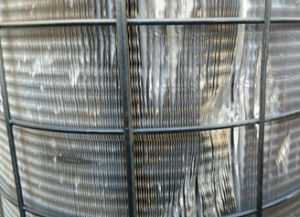
Dents in the fins that are random rather than linear could be evidence of hail damage.
Summer isn’t the only season for hail-related HVAC claims. To get the facts of how hail and wind affect equipment in the spring, head over to Impacts to HVAC Systems Frequently Appearing in Wind and Hail Claims.
Wind
You’re most likely to see summer wind claims later in the season. Last year, wind was the reported cause of loss for 16% of equipment HVACi assessed in September.
Wind can cause direct damage to condensing units by shifting them out of position or blowing them over. However, high winds may also lead the environment around the equipment to cause damage, such as blowing airborne particles, light debris, and even branches and uprooted trees into the HVAC equipment. Wind-damaged fins may be able to be combed out and condenser coils cleaned, but any damage should be assessed by an expert familiar with the equipment to ensure an objective, accurate claim resolution.
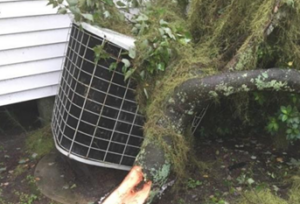
While some damage may be as small as particles clogging the fins, HVAC equipment can sustain impact damages as the result of high winds.
See how widely wind impacts to HVAC systems can vary, even after weather as severe as a tornado. Check out our Residential HVAC System Wind Claim Case Study.
Verify the Cause of Loss in Summer Storm Damage Claims
Don’t forgo an expert assessment of HVAC and refrigeration equipment because the cause of loss seems obvious. The HVACi team, part of Alpine Intel’s suite of services, confirms the actual cause quickly and accurately, with an average cycle time of 5 business days for residential assignments and 7 business days for commercial. We also provide repair vs. replacement recommendations supported by evidence and verified market value pricing. Submit an assignment today.

Don’t miss insurance-focused resources and webinars about property, perils, and trends impacting claims nationwide by signing up for The Savvy Adjuster Newsletter.

Be sure to also tune in to The Savvy Adjuster Podcast to hear more from the experts themselves.
Alpine Intel’s content is meant to inform and educate readers using general terms and descriptions. They do not replace expert evaluations that determine facts and details related to each unique claim.
Related Resources

HVAC Hail Claim Basics Guide
Though the outdoor equipment on commercial and residential HVAC systems is susceptible to being hit with hail and often claimed, there isn’t a guarantee the results will warrant a full replacement.
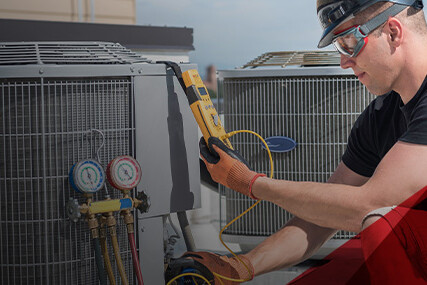
Decoding HVAC Claims – Actual vs. Reported Cause of Loss Webinar Recording
The policyholder may confuse damage resulting from typically non-covered perils like wear and tear for something else, like smoke and fire or wind damage.
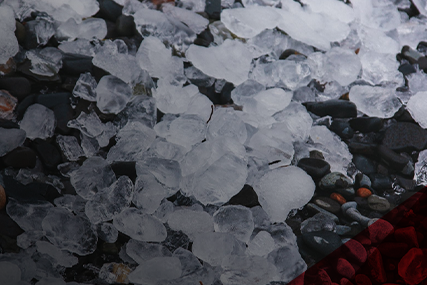
The Ins and Outs of Hail-Related HVAC System Claims eBook
Hail-related claims can come in at any time of the year, and your insureds’ HVAC systems may be at risk. Keep this resource on hand to refer to for your next claim.