
Solving the Puzzle: Collecting & Using Vehicle Data in Litigation

Key Takeaways
This litigation-focused article covers:
- Key admissibility considerations for vehicle incident data
- Different types of data and why analyzing them together provides critical context
- The qualities attorneys should expect in expert witnesses
After a vehicle crash or incident, every data point is like a puzzle piece. Some come from witness and driver accounts, while others are drawn from the vehicle itself and the environmental conditions surrounding the event.
When properly collected, preserved, authenticated, analyzed, and presented, these pieces can fit together to form a far more complete picture of the incident. That clarity is valuable not only for investigators and stakeholders, but also in the courtroom, where technical evidence often plays a central role in litigation.

Data collected by experienced professionals after a vehicle incident often becomes central to litigation and can significantly shape a jury’s understanding of the case.
Bringing Data Into the Courtroom
For data of any kind to influence post-crash litigation, it must first be admissible per rules of procedure, statute, and legal precedent. When a party asserts that evidence is inadmissible, the judge will ultimately decide if the evidence can be admitted. That process depends, in part, on how the data was obtained. Improper collection methods or failure to comply with accepted industry practices and privacy laws can result in key puzzle pieces being tossed out before a jury ever sees them.
One significant legal consideration is the Driver Privacy Act of 2015, the federal law governing the retrieval of Event Data Recorder (EDR) information. An EDR is a function within a vehicle that records operational data immediately before, during, and sometimes after a crash. Under federal law, retrieval of this data often requires the consent of the vehicle owner or lessee. State privacy laws may impose additional requirements, adding further complexity to the evidentiary process.
These privacy protections also extend to other vehicle data sources, including Heavy Vehicle Event Data Recorders (HVEDRs), Advanced Driver Assistance Systems (ADAS) data loggers, Video Data Recorders (VDRs or dashcams), and GPS telematics data.
For these reasons, attorneys should work with experienced, qualified forensic professionals who understand not only the technical aspects of vehicle data collection, but also the legal framework for admissibility in the relevant jurisdiction.
These same professionals—who can include crash reconstructionists, certified EDR technicians, and other specialists—are frequently called upon to testify as expert witnesses in vehicle cases. In this capacity, they must be able to explain complex vehicle systems, interpret technical findings, and communicate limitations in a manner jurors will understand.
They must also be prepared to face objections. It may be argued that vehicle incident data, such as EDR data, should not be accepted by the court or be considered by the trier of fact (the jury) because the data is alleged not to be:
- From the vehicle involved in the crash event
- From the specific crash event at issue in the case
- Reliable
All vehicle data collection and validation practices must be sound to successfully address these challenges.
Gathering Onboard Vehicle Data
Before it ever gets to a courtroom, it’s important to know what data is available. Beyond witness and driver statements, two categories of evidence help expert witnesses assemble the puzzle presented in litigation: vehicle data and environmental data. Vehicle data may come from multiple sources.
Event Data Recorders and Heavy Vehicle Event Data Recorders
Almost all modern passenger vehicles on the road today are equipped with EDRs, which store information that may include, but is not limited to:
- Steering, accelerator, and brake information
- Recorded speed prior to impact
- Delta-V of the crash
- The vehicle’s gear selection (Park, Reverse, Neutral, Drive, Low)
- Airbag deployment
- Whether passengers were present
- Seat belt status
- Cruise control status
- Vehicle odometer reading at the time of the crash
HVEDRs are the commercial and heavy-duty vehicle equivalents. They are typically stored within the engine control module, versus the airbag control module in passenger vehicles, and their data can be accessed through HVEDR downloads. They may also have sensors, radars, and other telematics platforms that can provide data as well.
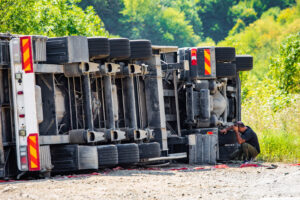
Like passenger vehicles, heavy-duty commercial vehicles record operational data that should be retrieved by experts following an incident.
Infotainment Systems
Some passenger vehicles have infotainment systems that may store data such as vehicle gear selector changes, odometer readings, ignition cycles, speed readings, saved locations, active routes, previous destinations, and connected device data. When available, this information can help establish timelines and routes, and corroborate or refute driver accounts.
Advanced Driver Assist Systems (ADAS)
Modern vehicles and their features are evolving every day. Recent additions to some passenger and heavy-duty vehicles include Automatic Emergency Braking (AEB), Lane Keeping Assist (LKA), and Blind Spot Monitoring (BSM). ADAS data is not currently available on all vehicles; therefore, a thorough inspection by the investigator must be completed to acquire this data.
Vehicle Inspections
Electronic vehicle data is generated based on the vehicle’s current mechanical condition. If a mechanical system has been compromised due to poor maintenance or other factors, the reported data may be inaccurate.
A full inspection can provide valuable insight into the state of the vehicle’s mechanical systems—including the tires, brakes, steering, suspension, engine, drivetrain, seatbelts, and airbags. By examining these components, a crash reconstructionist can perform an independent analysis to verify and validate the accuracy of the vehicle’s speed as recorded by the EDR, laying the foundation as to why a judge should allow the jury to consider and trust the vehicle data.
Collecting and Considering Environmental Data
Even the most sophisticated onboard data may only represent part of the puzzle. Vehicle data should be analyzed within the context of the surrounding environment to more accurately reconstruct an incident.
For example, EDR data may show a vehicle traveling at 40 mph, but that might not reflect its actual movement. On wet or icy roads, the vehicle could have been sliding or spinning its wheels with little traction. If the system only records wheel speed, the reported speed may be incorrect.
That’s why crash reconstructionists also consider factors such as road surface conditions and materials (wet asphalt or gravel), grade (uphill or downhill), lighting, and weather (rain or snow).
Other forms of evidence can also play a role in accident reconstruction. Certain newer vehicles are now capable of capturing and storing images or video related to driving events and collisions. These images may provide valuable insight into roadway conditions, traffic signals, vehicle positioning, weather, or driver maneuvers immediately before impact. In effect, the vehicle itself may preserve environmental data that investigators otherwise would not have access to.
Footage from CCTV, security cameras, and home surveillance systems may also capture the collision itself or vehicle movements leading up to it, while toll booth records can help verify vehicle locations and routes. When available, this evidence can enhance the completeness, accuracy, and defensibility of a reconstruction analysis.
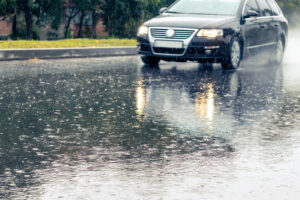
Rain, ice, and snow can all affect tire movement and speed readings, making weather conditions at the time of the crash an important factor in analysis.
Completing as Much of the Puzzle as Possible
The more reliable data points collected after a vehicle incident, the more complete the puzzle becomes. Gaps create uncertainty and leave more room for conflicting interpretations. But when vehicle data, environmental data, and witness testimony are properly collected, preserved, authenticated, analyzed, and presented, attorneys can offer judges and juries a far clearer understanding of what occurred.
Mecanica Scientific Services, part of Alpine Intel’s suite of services, assists attorneys and investigators by obtaining proper consent for event data retrieval and HVEDR downloads, validating vehicle data, and continuing to be one of the few authorized HVEDR providers for Volvo Trucks North America, Daimler Truck North America, and Mack Trucks. Our experts also stay at the forefront of emerging technologies, monitoring advancements in vehicle data and validated methods for accessing it.
Legal professionals, along with transportation experts and safety analysts, trust Mecanica for thoroughly documented inspections, peer-reviewed reports, nationwide coverage, quick cycle times, and expert witness testimony. To work with us on a vehicle claim or case, submit an assignment.

Don’t miss insurance-focused resources and webinars about property, perils, and trends impacting claims nationwide by signing up for The Savvy Adjuster Newsletter.

Be sure to also tune in to The Savvy Adjuster Podcast to hear more from the experts themselves.
Alpine Intel’s content is meant to inform and educate readers using general terms and descriptions. They do not replace expert evaluations that determine facts and details related to each unique claim.
Related Resources
Event Data Retrieval and Litigation Guide
Learn how event data retrieval services can help strengthen your litigation efforts for vehicle claims by clarifying the details of a collision, providing expert testimony, and more.
Your Guide to Vehicle Forensics Terminology
This glossary demystifies technical language related to vehicle forensics. Save a copy for easy reference during auto claim investigations or litigation.
Case Study: Retrieving Crash Data
Learn how CTL’s Crash Data Retrieval services delivered answers about the events leading up a crash for an adjuster looking to make an accurate settlement decision.