
Inland Flooding and Water Damage Claims: Why Engineering Assessments Are Vital

Key takeaways:
In this article, you’ll learn:
- Why adjusters should be aware of inland flooding throughout the United States
- What indicators licensed engineers use to determine if flood-related damage occurred
- How engineering assessments help adjusters make accurate claim resolutions
Flooding isn’t just an issue for adjusters who handle claims from coastal regions or high-risk areas. Nearly every county in the United States has experienced flooding in the past two decades, according to the National Flood Insurance Program (NFIP).
Insurance professionals nationwide need to know how inland flooding can lead to property claims, the types of damage it can cause, and how engineering assessments help ensure fair claim resolutions.
What Leads to Inland Flooding Events?
Man-made failures, weather events such as heavy rain, back-to-back storms, flash flooding, and snowmelt, or a combination can be the kindling that ignites an inland flooding event. Drainage systems that can’t adequately disperse the water can compound the issues.
The National Oceanic and Atmospheric Administration (NOAA) has laid out three scenarios in which inland flooding could occur:
- Moderate precipitation accumulates over several days
- Intense precipitation falls over a short period
- River overflows due to ice or debris jams or levee failures
Coastal storms that move inward also have contributed to this type of flooding.
NFIP-designated flood zones detail general flood risk based on proximity to water sources and whether protective barriers are in place or being constructed. High-risk zones are closer to ponds, streams, rivers, or coastal areas, while moderate zones have a reduced risk due to mitigation efforts.
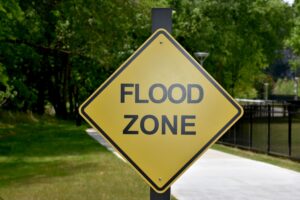 The National Flood Insurance Program has established flood zones that can tell policyholders, carriers, and adjusters how much of a risk there is for flooding at a specific location.
The southeastern United States is more vulnerable to inland flooding, partially due to its geographical elevation and deteriorating infrastructure.
But the NFIP found that nearly one-third of flood claims originated outside of high-risk flood areas over a 10-year period. This means that regardless of loss location, adjusters should be aware of inland flood-related damage indicators and then seek confirmation from a licensed engineer to ensure an accurate cause of loss and scope of damage determination.
How Inland Flooding Can Damage Property
From collateral damage to more severe structural issues, inland flooding can cause extensive losses to homes, businesses, and other property types that appear in claims.
When it comes to the structure itself, foundation damage and localized erosion are key threats.
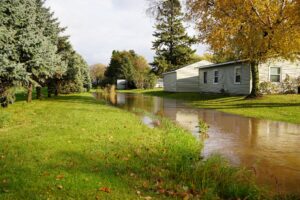
Inland flooding like that shown here can occur when drainage systems aren’t able to efficiently disperse water that has accumulated on land.
Rising and moving floodwater can both exert pressure and destabilize soil, impacting the structural integrity of a home. Rising floodwater wets the building and surrounding soil, causing differential settlement, the extent of which is based on the grade of land, soil type, water volume, and other conditions. Moving floodwaters apply both lateral and vertical pressure to structures, but damage varies based on the amount of exposed surface area, its shape, and how it’s founded.
Various building materials also react differently to water, which affects the severity of damage from inland flooding. Swelling, delamination, and warping can occur in plywood and oriented strand board with long-term water exposure. Deterioration and loss of strength are typically seen with fiberboard and gypsum board.
Stains, cracks, and mold growth on drywall may also occur when it’s exposed to excessive amounts of moisture. The location, cleanliness of cracks, and erosion are three elements an engineer considers during an assessment.
Because flood damage can be complex and challenging to assess, adjusters would benefit from partnering with a licensed forensic engineer who can ensure that all damage is properly accounted for and provide definitive insights into underlying causes of loss.
Benefits of an Engineering Assessment Following Flood Events
Whole-structure assessments from a licensed engineer will determine where water damage originated and the extent of it—or if something else led to the loss.
Engineers are trained to differentiate indicators of flood-related damage from other causes of loss, conducting their assessments from the bottom up and outside in to match how flood waters typically affect structures.
Among the characteristics they might consider are whether:
- The observed damage is below the high-water mark
- Cracks are recent, have a clean interior, and have brightly colored and/or sharply defined edges
- Erosion is localized around an obstruction to the water’s flow or coincides with the direction of the water’s flow
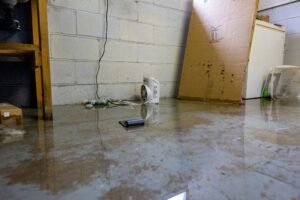
Licensed engineers can assess property damage to provide accurate causes of loss to adjusters who want to ensure they resolve claims quickly and confidently.
On-site assessments combined with weather data research provide a well-rounded look at the property. They take water source, flood water depth, repairs made since the event (if any), direction of water movement, and pre-existing damage into consideration.
Engineering evaluations also determine how or if building material affected the scope of loss. Engineers offer recommendations for repair recommendations for any flood-damaged material as required by NFIP, giving adjusters the information required to make more accurate claim resolutions.
The licensed forensic engineers at Donan, a part of Alpine Intel’s suite of services, are equipped to tackle complex inquiries regarding property damage and flood-related losses. Our nationwide team is prepared to objectively investigate residential and commercial properties to deliver actionable intelligence and conclusive insights that detail the cause of loss for any property concern or scope of damage.
To partner with Donan’s experts, submit an assignment today.

Don’t miss insurance-focused resources and webinars about property, perils, and trends impacting claims nationwide by signing up for The Savvy Adjuster Newsletter.

Be sure to also tune in to The Savvy Adjuster Podcast to hear more from the experts themselves.
Alpine Intel’s content is meant to inform and educate readers using general terms and descriptions. They do not replace expert evaluations that determine facts and details related to each unique claim.
Related Resources

Water Damage in Property Loss Claims Guide
Water damage is a frequently claimed peril. Download this guide to learn more about water losses to HVAC systems and electronics, including critical data, causes, and affected items.

Hurricane-Related Flooding Structural Claim Case Study
Donan determined the scope of flood and wind damage to a beachfront property so the adjuster could make an accurate settlement decision about this hurricane claim.

Inland Flooding Case Study
Find out how Donan’s engineer determined a house was damaged by river waters rising – and which damages were unrelated to the flood – in this case study.