
Weighing the Effects of Ice and Snow on Tree Branches

Snow glistening on a hillside or in your backyard can be a beautiful sight on a cozy winter day. But what does not land on the ground can accumulate on trees, weighing down the branches and putting nearby homes and other structures in a potentially perilous position.
Learn how and why snow and ice collect on tree limbs and branches, as well as what makes a tree more susceptible to failure from winter-weather damage.
Accumulation of Ice and Snow on Tree Branches
Too much ice or snow on tree branches, also known as load pressure, forces the limbs closer to the ground and increases the possibility of snapping—and, depending on their location, damaging a home, commercial structure, or vehicle.
Dry snow (the lighter, fluffier flakes) tends not to adhere to surfaces because it develops when the air temperature is below freezing, there is a lack of moisture that would otherwise cause it to stick.
However, wet snow accumulates on outdoor surfaces when air temperatures are above freezing. Because it is moist and dense, wet snow is ideal for snowball fights or building snowmen but can become dangerous if too much builds up on tree branches. If temperatures plunge below freezing after a wet snow or if freezing rain occurs, ice can build up on trees and thus increase the weight applied to them.
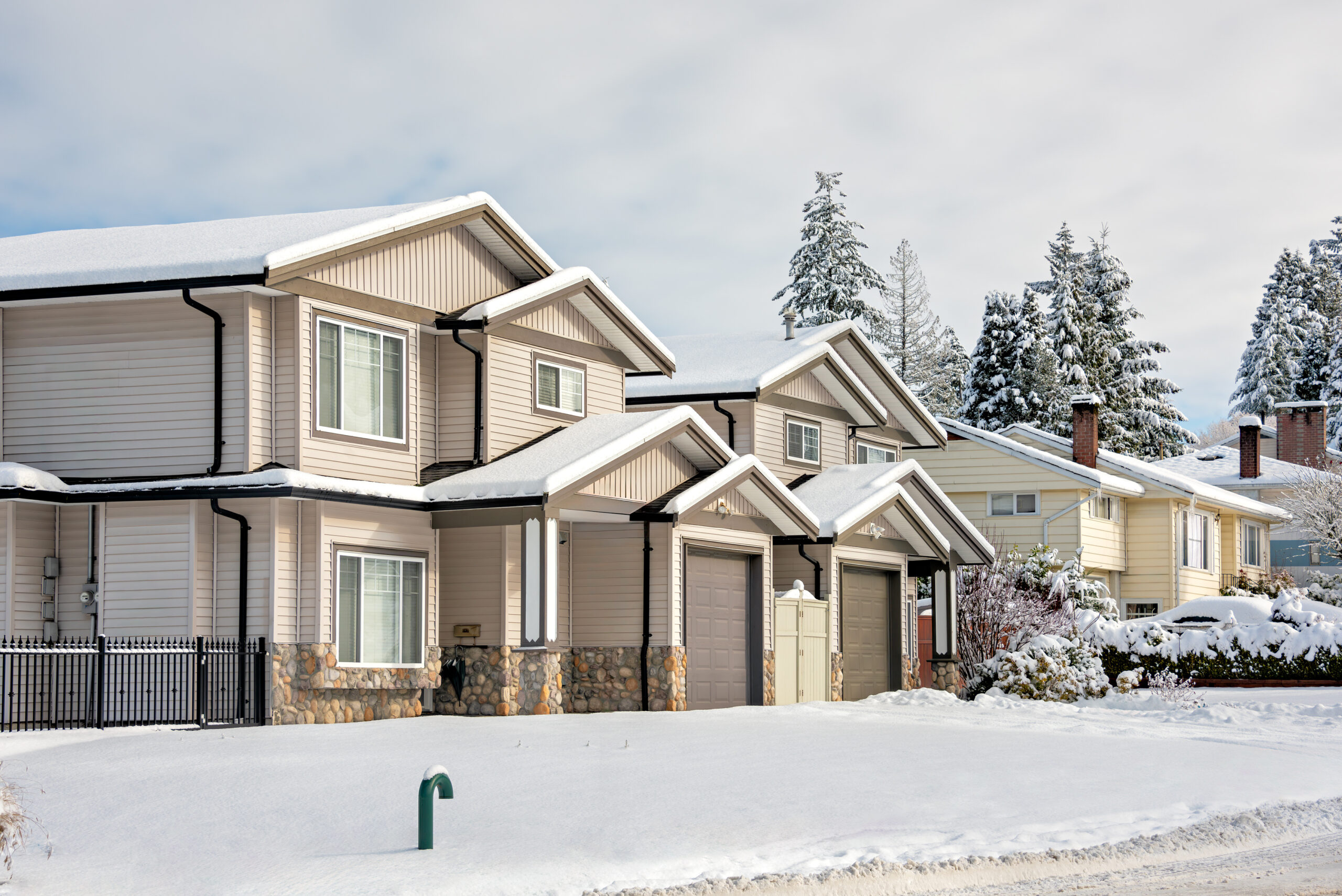
Wet snow is more likely to stick to, and accumulate on, tree branches during winter weather events.
Ice formations can increase a branch’s weight by up to 30 times, according to the National Weather Service (NWS). Small branches or those already showing signs of weakened structural integrity can be downed with just one-fourth an inch or half an inch of snow or ice accumulation.
But it is not only the weight of the ice or snow that can determine if a branch will break.
How Tree Species Respond to Ice and Snow on Tree Branches
A tree’s species, health, and age also influence resistance to external pressures of ice and snow on tree branches.
Young or newly planted trees do not fare well in harsh weather. Smaller trees are more susceptible to heavy snow and ice and have the potential to “bend so far over from the weight that their tops are near or even touching the ground,” according to the Wisconsin Department of Natural Resources.
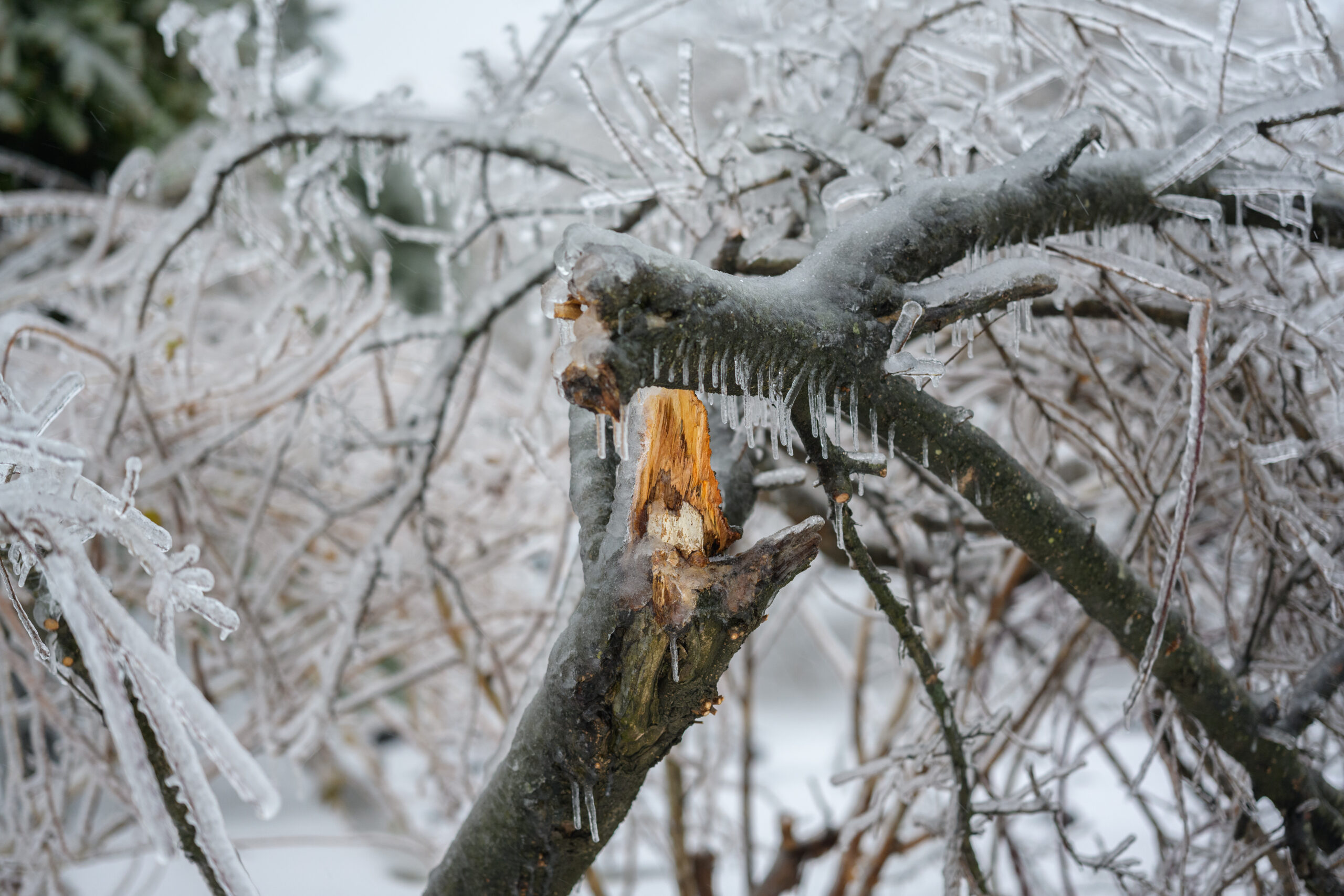
The age of a tree and the strength of its branch attachments influence how much weight it can hold before breaking, falling, or uprooting.
Wood strength and how well the individual branches are attached must also be considered. Well-maintained trees with sturdy branch structure tend to fare better, according to the North Carolina Urban Forest Council (NCUFC), while those with an unbalanced crown or weak branches are more susceptible to damage.
The species also influences resistance to effects of ice and snow on tree branches, though is only one part of the equation:
| Ice and Snow Resistance By Tree Species* | ||
| Resistant | Moderate | Susceptible |
| Norway maple | Red maple | Silver maple |
| Musclewood | Sugar maple | Common hackberry |
| Northern catalpa | White ash | Green ash |
| Redbud | Tuliptree | Thornless honey locust |
| Kentucky coffeetree | Ironwood | Black cherry |
| Black walnut | Eastern white pine | Bradford callery pear |
| Sweetgum | Sycamore | Pin oak |
| White oak | Bur oak |
Black locust |
| Swamp white oak | Northern red oak | American linden |
| Arborvitae | American elm | |
| Littleleaf linden | Siberian elm | |
| Silver linden | ||
| Eastern hemlock | ||
| *Source: NCUFC | ||
A Tree Fell—Now What?
If the weight of ice and snow on tree branches becomes too much and a limb breaks or an entire tree topples over, an emergency tree removal service like HMI can remove it.
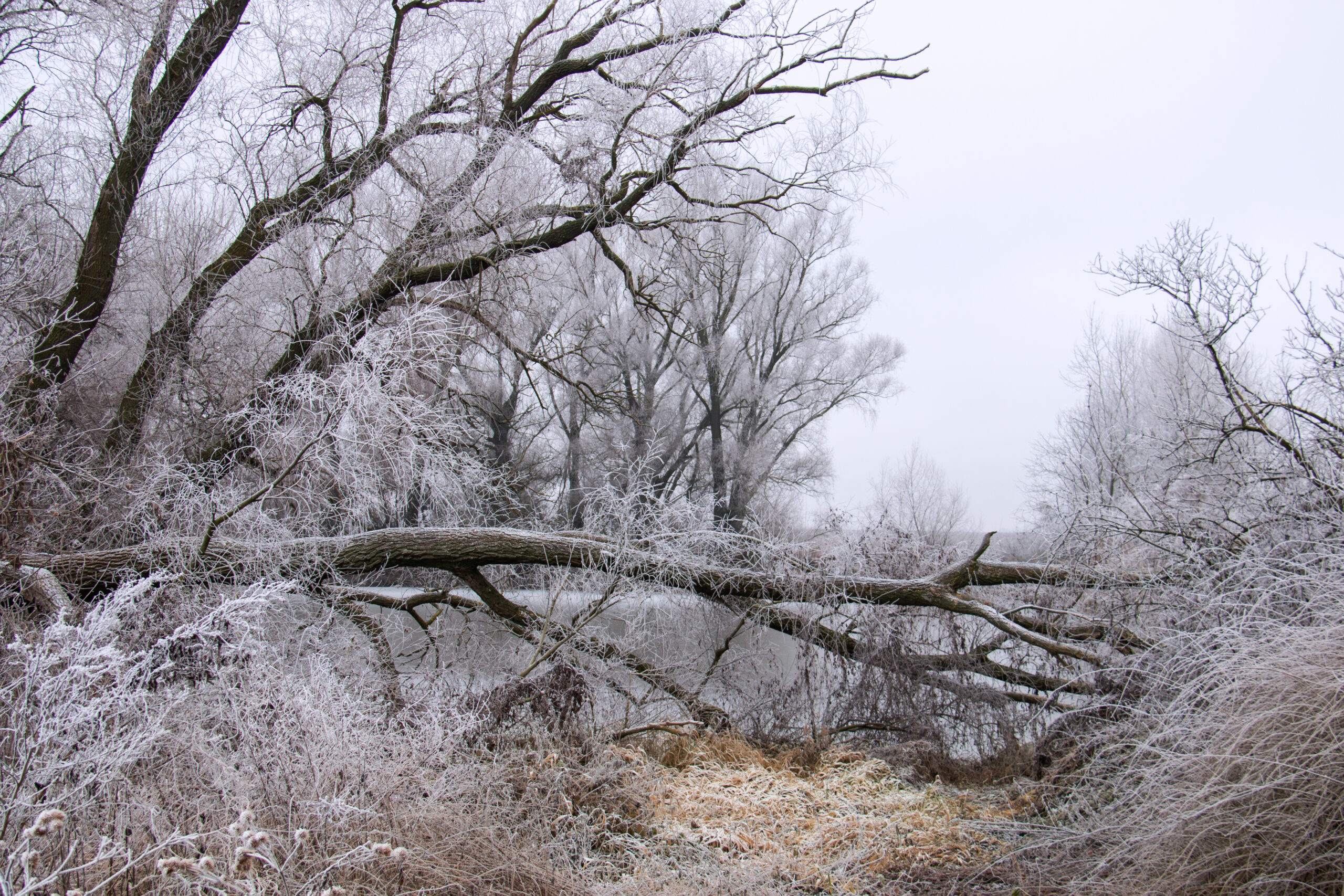
If a downed tree falls on someone’s property or blocks a roadway, emergency tree removal services like HMI can dispatch experts within hours to remove the debris within hours.
With nationwide access to qualified tree removal crews, HMI services residential, commercial and agricultural properties, outdoor sports facilities, retail locations, and myriad other property types. Tree care is estimated to be one of the top five most dangerous professions in the United States, and it is critical to use licensed, insured, and qualified tree care professionals to dismantle and remove fallen trees safely and quickly.
HMI’s team of credentialed experts maintains high standards and fair pricing by following strict agreements, auditing every project for quality and accuracy, and conducting tree removal invoice reviews.
For more information, or to work with HMI for tree removal services, submit an assignment today.

Don’t miss insurance-focused resources and webinars about property, perils, and trends impacting claims nationwide by signing up for The Savvy Adjuster Newsletter.

Be sure to also tune in to The Savvy Adjuster Podcast to hear more from the experts themselves.
Alpine Intel’s content is meant to inform and educate readers using general terms and descriptions. They do not replace expert evaluations that determine facts and details related to each unique claim.
Related Resources

Up on the Housetop: Ice Dams and Snow Load Guide
Severe winters in some parts of the country lead to ice and snow accumulating on rooftops. Excessive or unevenly distributed weight from these loads can cause roofs to sag, leak, or even collapse.

Winter Threats of Ice Dams and Snow Loads on Roofs
Learn the causes, consequences, and early signs of ice dams and snow loads to help you handle your claims.

Tree Impact Case Study
A tree fell through the roof and wall of a policyholder’s bedroom during a storm. The carrier reached out to Donan for a scope of damage and to get repair recommendations.