Confidentiality vs. Privacy in Claims Investigations

Privacy and confidentiality are core tenants of any claim investigation. However, their subtle differences affect not only how an investigation is conducted but what information an investigator or insurance professional can obtain—and how.
Confidentiality refers to protecting information that has been shared with you and leaves little room for interpretation.
Privacy, however, is more subjective and focuses on a person’s right to control what information is collected about them. Levels of privacy change based on the situation and evolve with social norms and technology.
Validating the details of a claim with honesty and integrity requires the ability to navigate the nuances of confidentiality vs. privacy with certainty.
Confidentiality in Claim Investigations
Confidentiality comes with legal, moral, ethical, and professional obligations. Claim professionals are trusted to protect information provided or discovered during the claims process. This responsibility comes in many forms:
Not sharing claim details with unauthorized parties: Evidence obtained during an investigation is procured with the sole purpose of validating a claim. It is not meant to be shared with anyone outside of the investigation.
Securing physical and digital files appropriately: In addition to recording the evidentiary chain of custody, protocols and proper safeguards—like encrypted files on a digital server or locked file cabinets in an office—need to be established to protect documentation related to the claim.
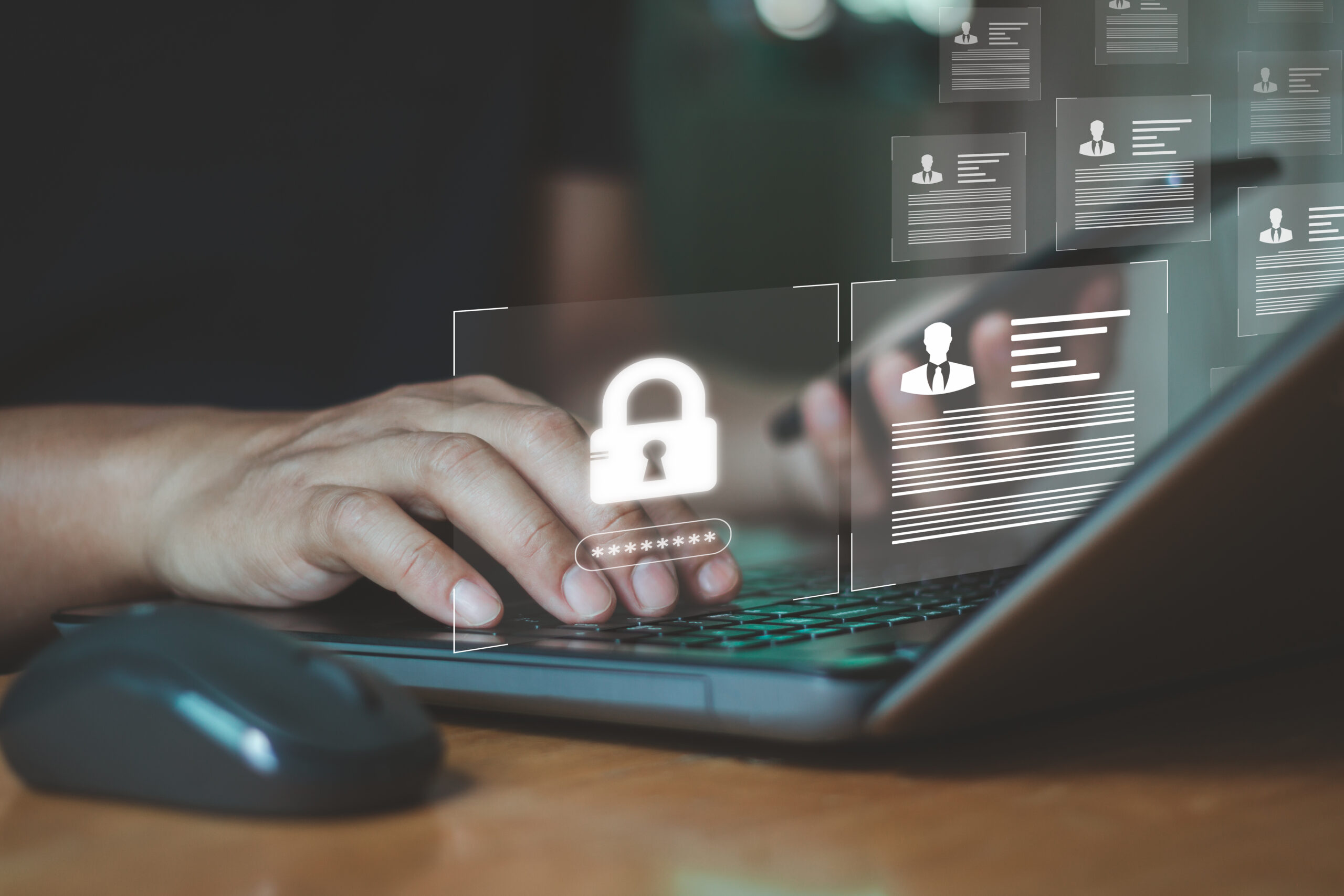
Storing digital records using password protection or encrypting the files helps maintain confidentiality during the claims process.
Being mindful of conversations in public spaces: Witness or policyholder interviews, and even claim-related conversations with coworkers, should be avoided in public. The sensitive and identifiable information discussed requires the utmost discretion. A better alternative is to conduct interviews in a private office in person, through a secure video recording service, or on a secure phone line.
Following all regulatory requirements for information protection: In addition to company protocols, claim professionals need to adhere to industry standards related to confidentiality. This could range from redacting personally identifiable information like a Social Security Number to denying an external request to review a claim report. However, if information is shared with a third-party SIU company that doesn’t have access to the claim file, the company will need personally identifiable information (PII) like a Social Security Number. In that case, insurance professionals should ensure the third party has a secure email system in place to protect PII.
Confidentiality focuses more on handling information that has been obtained and who it can be shared with, while privacy is more about the process of obtaining it.
Privacy in Claim Investigations
Privacy is the ability to be secluded, or free from, unauthorized intrusion. Because of its subjectivity, claim professionals should keep in mind what personal information can be collected, how it can be used, how the information is gathered, and what surveillance or investigation methods are appropriate. It’s as much an ethical quandary as it is a legal one.
Balancing Invasion of Privacy Concerns While Conducting an Investigation
Following local laws regarding privacy, surveillance, and recording helps ensure that claims professionals are maintaining a reasonable expectation of privacy for the policyholder or claimant.
Every investigation needs supporting documentation or evidence that explains the legitimacy of the probe. For example, with a social media investigation, insurance professionals should keep clear records that cite the specific red flags that prompted them to refer a claim to a skilled investigator.
Even with social media investigations, there are privacy protocols to follow. Neither the third party nor the claims professional should add, follow, or send a friend request to claimants on social media platforms, including private profiles. While there’s inherently no expectation of privacy on social media, doing so may cause moral issues in possible litigation. Evidence preservation is also critical. Keep copies of any content useful for the claim. Maintaining PDFs with date and time stamps are beneficial, especially if a claimant deletes information or changes privacy settings on their profile.
Investigators must then use methods proportionate to the situation. For example, surveillance may not be warranted for a claim in which a doctor is suspected of medical billing misrepresentation. In that scenario, a medical canvass could be sufficient. Or if red flags emerge while reviewing a workers’ compensation claim, a more in-depth approach that includes surveillance, a social media investigation, and a background check might be appropriate.

Trained investigators navigating the possibility of invading someone’s privacy should weigh the evidence-gathering technique against the situation under scrutiny.
Once the investigation technique is determined, the claim professional must also adhere to industry, company, and legal requirements. Any information obtained through a medical canvass, for instance, must be Health Insurance Portability and Accountability Act (HIPAA) compliant. Procuring medical records without patient consent would violate HIPAA and put the investigator, their employer, and others in legal jeopardy. Using deceptive tactics to access private social media accounts is also considered an invasion of privacy.
Trained investigators understand these nuances and know how to balance the goals of their investigation with privacy and confidentiality protocols.
How Investigative Partners Navigate Confidentiality vs. Privacy
When indicators of possible misrepresentation appear in a claim, adjusters can turn to an investigative partner who’s better equipped to manage confidential information and adheres to privacy laws because of their specialized training.
Professional licensed investigators know how to:
- Keep information confidential
- Follow all applicable privacy laws
- Use proper training and expertise
- Conduct investigations within the confines of the law
- Document their activities appropriately
- Maintain proper licensing and insurance

Highly trained investigators decide how to address potential misrepresentation through unbiased evidence–gathering techniques and in accordance with industry protocols and local legislation.
Some claim validation approaches, such as surveillance and social media investigations, are inherently intrusive. But investigators have the contextual knowledge to gauge whether or not a technique is violating local legislation or someone’s privacy.
As a leading insurance defense investigation firm, VRC Investigations’ licensed investigators leverage a fact-driven approach to deliver thorough and timely reports that allow adjusters to address insurance claim misrepresentation with clarity and confidence. If you’re ready to take advantage of VRC’s comprehensive services, submit an assignment today.

Don’t miss insurance-focused resources and webinars about property, perils, and trends impacting claims nationwide by signing up for The Savvy Adjuster Newsletter.

Be sure to also tune in to The Savvy Adjuster Podcast to hear more from the experts themselves.
Alpine Intel’s content is meant to inform and educate readers using general terms and descriptions. They do not replace expert evaluations that determine facts and details related to each unique claim.
Related Resources

Types of Canvassing To Bolster Claim Investigations
Canvassing can help insurance professionals verify facts of a claim without sacrificing objectivity, accuracy, or fairness.

Commercial Claim Guide: Chiller Basics
Claims involving commercial HVAC equipment can be complex, particularly when it comes to chillers. Determining the cause of loss, scope of repairs, and an accurate settlement amount can be daunting for even the most experienced adjuster.

How To Corroborate the Facts of an Auto Claim Guide
Learn how to validate auto claim details by asking the right questions, reviewing critical documents, using vehicle forensics, and preserving 3D evidence.