Chimney Fires: Understanding Creosote and Handling Claims

The warm crackle of a wood fireplace may bring your policyholders comfort, but it also introduces risk. According to the National Fire Protection Association (NFPA), while chimneys and fireplaces were involved in just 8% of heating equipment fires from 2019 to 2023, they accounted for 27% of direct property damage.
Chimney fires occur when flames start or spread outside of the firebox to the chimney’s venting system. Creosote, a dark, tar-like substance that accumulates without proper maintenance, is a major contributor to these incidents. Learn more about this substance, how and why it builds up, and what you can do to accurately resolve chimney fire claims.
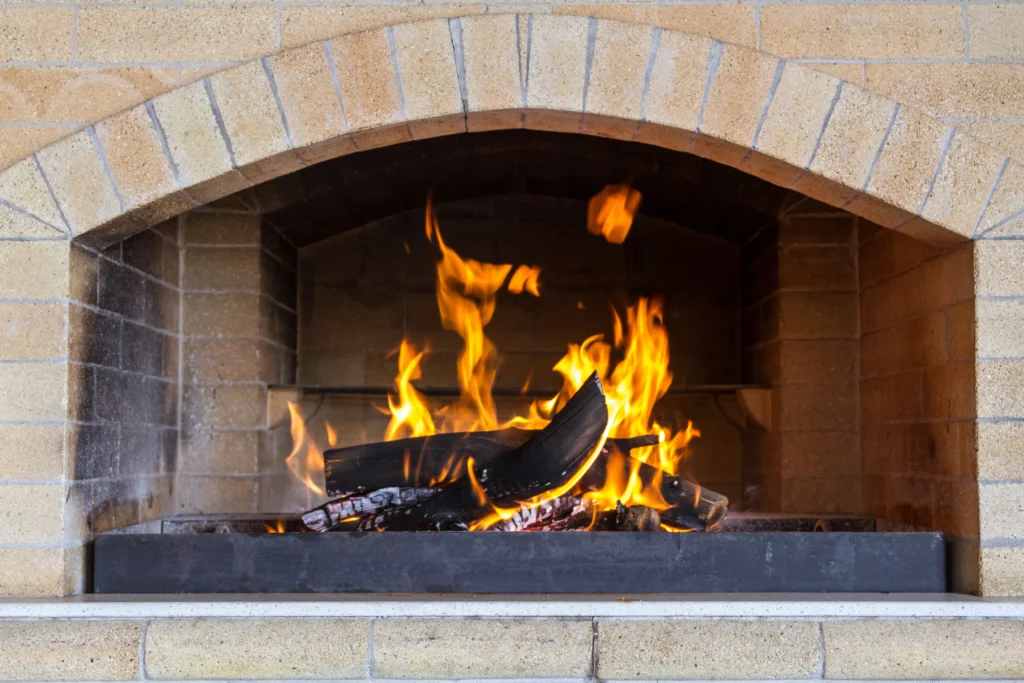
This fire is confined to the firebox, but if it spreads to the chimney venting system, it could become a chimney fire, potentially causing structural damage.
How Does Creosote Cause Chimney Fires?
Creosote forms as a flammable byproduct of incomplete wood combustion in a fireplace. When wood burns, the smoke produced carries a mixture of wood particles, gases, and other chemical compounds. Particles that don’t fully burn travel up a chimney’s flue as smoke. As these byproducts cool, they condense along the flue walls, forming creosote. With each fire, creosote thickens if not properly cleaned, making creosote buildup a common sign of neglected chimney maintenance.
Left unaddressed, creosote buildup can ignite. This is a problem because only a chimney’s firebox is designed to safely withstand the heat of direct flames. Chimney flue liners, typically constructed from clay or metal, aren’t. Clay flue liners, in particular, are prone to cracking under the extreme heat of burning creosote. Once compromised, clay flue liners may allow hot gases to escape, potentially igniting nearby combustible materials or structural components and causing minor to major property damage.
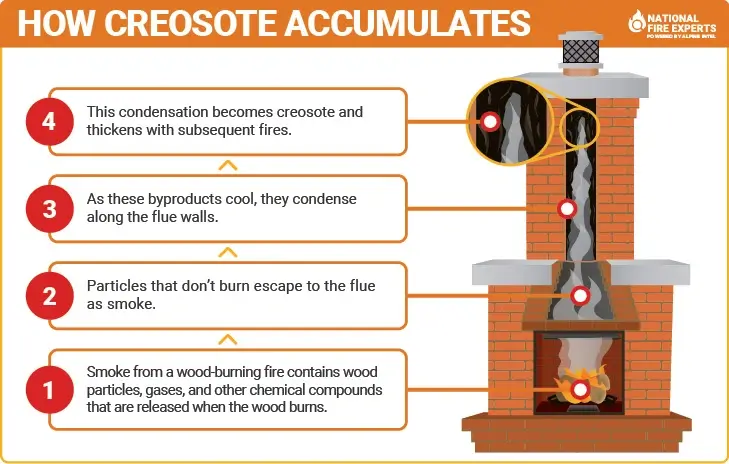
This diagram depicts the process by which creosote forms and accumulates within the chimney flue of a wood-burning fireplace.
Just like with any other fire claim, a certified fire investigator should perform a systematic investigation to identify a reported chimney fire’s most plausible origin and cause. These professionals should have an in-depth understanding of NFPA 211, the national standard for the safe design, installation, inspection, and maintenance of chimneys, fireplaces, and venting systems. The standard calls for annual inspections and necessary repairs to mitigate fire risks, particularly from creosote buildup, and requires the repair or replacement of any damaged or deteriorated flue liners.
After reaching their conclusions, a fire investigator should provide recommendations for next best steps. Based on the fire investigator’s findings after some investigations, they may advise bringing in an engineer. Together, the fire investigator and engineer may work to determine the mechanism of failure—pinpointing what went wrong with the chimney and why. This analysis can provide additional knowledge to determine whether the issue resulted from an installation error or a manufacturing defect, helping to inform subrogation decisions. An engineer can also offer critical insights into the scope of any structural damage caused by the chimney fire.
What Impacts Creosote Buildup and Chimney Fire Risks?
Several factors contribute to creosote buildup and increase the risk of chimney fires.
Low flue temperature, lack of cleaning, and burning multiple fires over time all increase risk. Cooler flue temperatures encourage condensation, which promotes creosote accumulation.
Similarly, burning green, unseasoned wood accelerates creosote production because the fire’s energy evaporates moisture while decreasing combustion efficiency and flue temperature.
Using well-seasoned, dry, split wood is ideal to avoid or reduce the risk of buildup. However, it’s important not to use more fuel than the firebox is designed for.
Restricting airflow can also accelerate creosote accumulation. Closed glass doors or partially opened dampers slow smoke movement through the flue, giving creosote more time to form. Creosote buildup itself can also reduce airflow even more, compounding the problem.
The NFPA provides recommendations for mitigating chimney and fireplace fire risks that you can pass on to your policyholders, such as:
- Scheduling annual chimney cleaning and inspections with a qualified professional
- Using a sturdy fireplace screen to prevent sparks from escaping into the room
- Allowing ashes to cool completely before placing them in a metal container at least 10 feet away from their home
- Always following the manufacturer’s guidelines
The Three Levels of Creosote Buildup
Creosote buildup may not cause as big of a fire risk right away. It can be categorized into three levels that are based on severity. Level one creosote consists of a high percentage of soot and is relatively easy to remove. Level two creosote appears as shiny black flakes that are more stubborn and harder to brush away, though still removable. The third and most dangerous level of creosote forms a tar-like coating on the inside of the flue. Level three creosote is highly flammable and requires professional intervention to address.
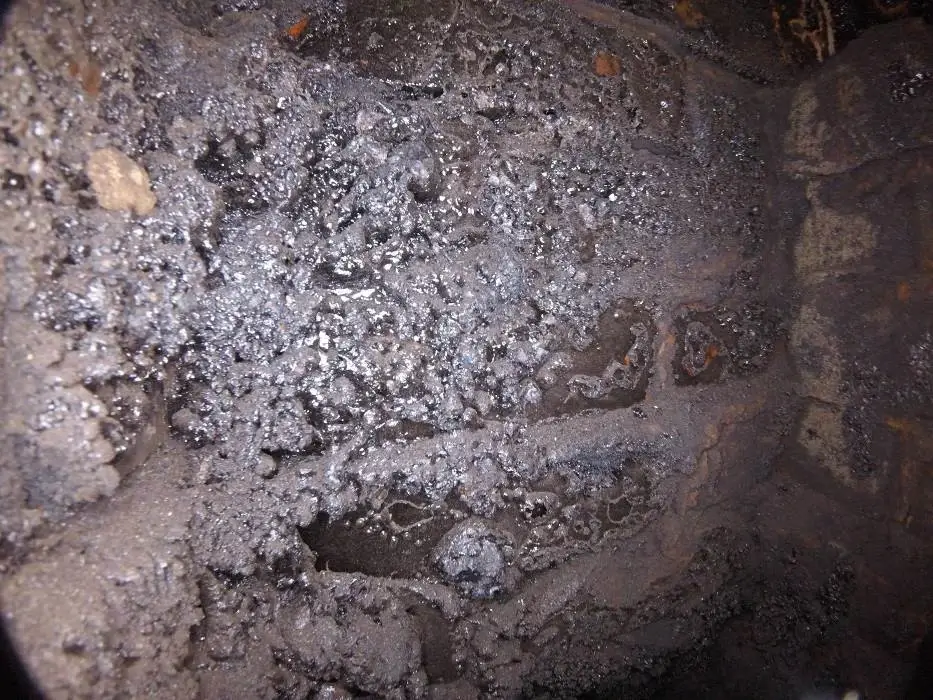
Creosote has built up inside this smoke chamber over time.
Potential Indicators a Chimney Fire Occurred
Certified fire investigators may inspect the flue liner for specific chimney fire evidence. Longitudinal cracks will typically extend in a lengthwise direction through one or more sections of the flue liner, potentially indicating strong signs of fire damage.
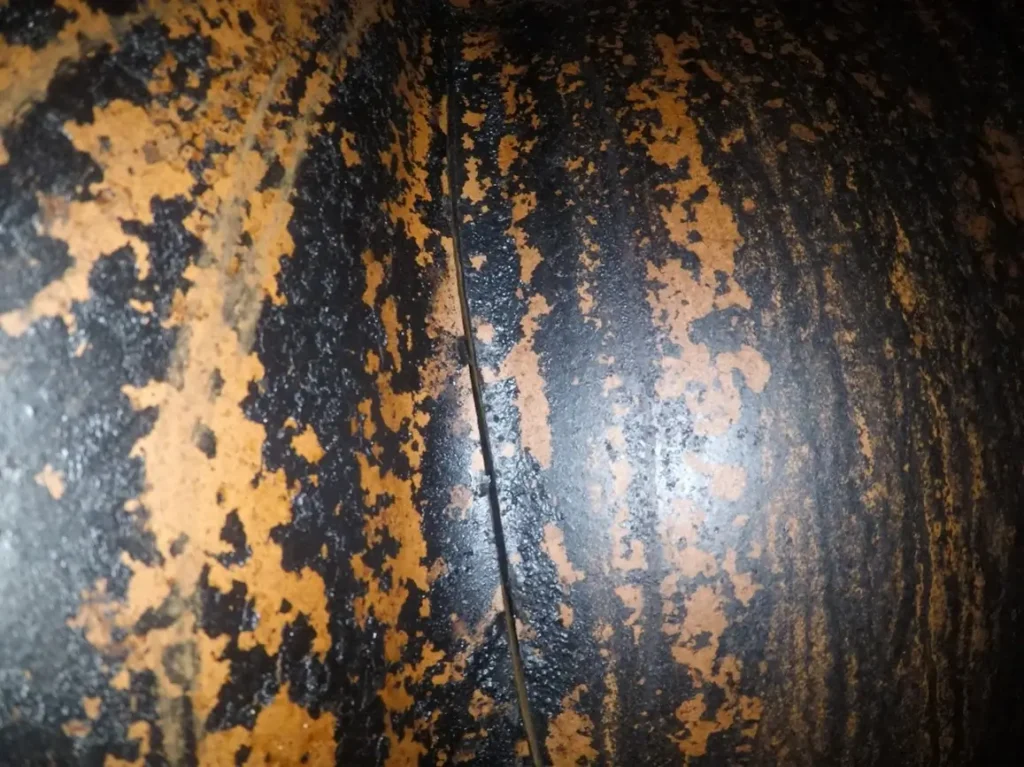
The vertical crack in this tile flue and the presence of burnt creosote indicate a chimney fire may have occurred.
Metal flue pipes can also show visible signs of a chimney fire, such as changes in shape or color. High heat may warp the metal or cause discoloration, often referred to as “bluing” or a rainbow-like effect. This discoloration can appear internally or at joints where heat tries to escape. Similar effects can be seen on metal chimney caps and spark arrestors, which may distort or discolor when exposed to heat levels beyond their design limits.
Tackling Chimney Fire Claims
Reaching an accurate resolution for a chimney fire claim starts with a comprehensive fire investigation. Certified fire investigators can identify the most plausible origin and cause, whether it stems from creosote buildup or other factors. Their expertise ensures that every piece of evidence is carefully analyzed to build a clear and credible picture of what occurred.
After receiving a fire investigator’s report, you may need an objective forensic engineer to determine if there is structural damage and if it could have been caused by something other than the fire. It’s important to partner with these unbiased assessment experts rather than relying on contractors who may have a vested interest in the outcome.
You can find both kinds of experts through Alpine Intel. Our suite of services includes detailed, 11-step fire investigations from National Fire Experts and forensic engineering assessments from Donan Engineering. For comprehensive fire claim support this winter and beyond, submit an assignment.

Don’t miss insurance-focused resources and webinars about property, perils, and trends impacting claims nationwide by signing up for The Savvy Adjuster Newsletter.

Be sure to also tune in to The Savvy Adjuster Podcast to hear more from the experts themselves.
Alpine Intel’s content is meant to inform and educate readers using general terms and descriptions. They do not replace expert evaluations that determine facts and details related to each unique claim.
Related Resources

Your Guide to Creosote and Chimney Fire Claims
Creosote buildup can ignite and damage chimney flues and other materials. Here’s what you should know about it when handling chimney fire claims.

Handling Video Evidence in Insurance Claims Guide
Learn how to properly collect, verify, and use video evidence to strengthen claim investigations, support negotiations, and ensure admissibility.
Understanding Space Heater Fires and Resulting Claims
Find out about how space heater fires ignite, factors that make space heaters fire hazards, and how experts investigate these incidents.