Understanding Types of Commercial Roof Damage

From asphalt deterioration to foot traffic impact, there are myriad causes of commercial roof damage. In 2024 alone, roof repair and replacement cost value (both residential and commercial) exceeded $30 billion, according to the Verisk U.S. Roofing Realities Trend Report. That makes understanding how various perils impact types of commonly used commercial roofing materials even more pressing.
Wind, hail, and other perils can cause severe damage to these low-slope roofs, despite their fire resistance, durability, and longevity.
Learn about four types of commercial roofing materials—used on buildings ranging from historical sites and multi-use structures to educational and health care facilities—and the damage they can sustain.
Four Types of Commercial Roofing Materials
Thermoplastic Membranes
Thermoplastic polyolefin (TPO) and polyvinyl chloride (PVC) are two types of thermoplastic membrane materials. The National Roofing Contractors Association states that because they’re created with a synthetic substance, they soften when heated and “reharden” when cooled.
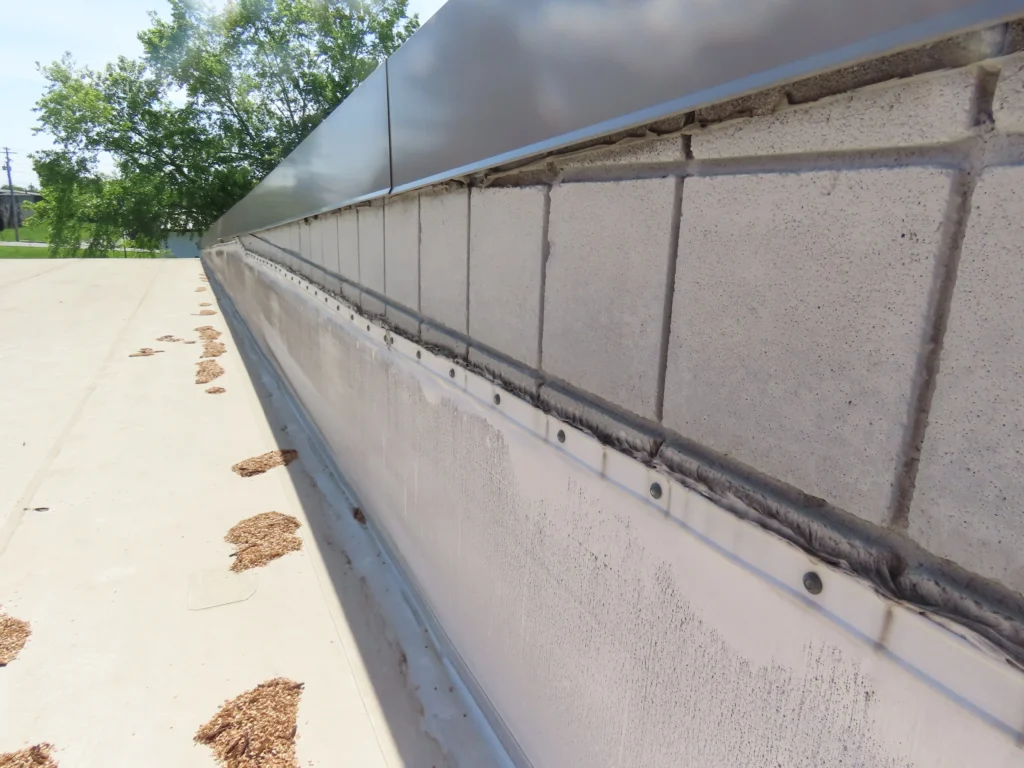
A thermoplastic membrane along a parapet wall.
PVC use, according to NRCA, began in the early 1960s in Germany but didn’t become popular in the United States or Canada until the following decade. TPO, on the other hand, has only been used for the last quarter century.
As a single-ply membrane, it’s less resistant to impact damage or foot traffic compared to other commercial roofing materials. Damage can present as surface cracks from age-related deterioration or holes and leaks due to impacts, implements, or foot traffic.
BUR Materials
Built-up roof systems have existed in some form since the early 1800s.
Today’s version largely uses asphalt. They generally feature several alternating layers of asphalt and ply sheets over the roof deck and “most often over insulation that is attached to the roof decking,” according to the Asphalt Roofing Manufacturers Association (ARMA). Among these layers are roof sheathing, a base sheet, hot asphalt, roofing felt, and gravel.
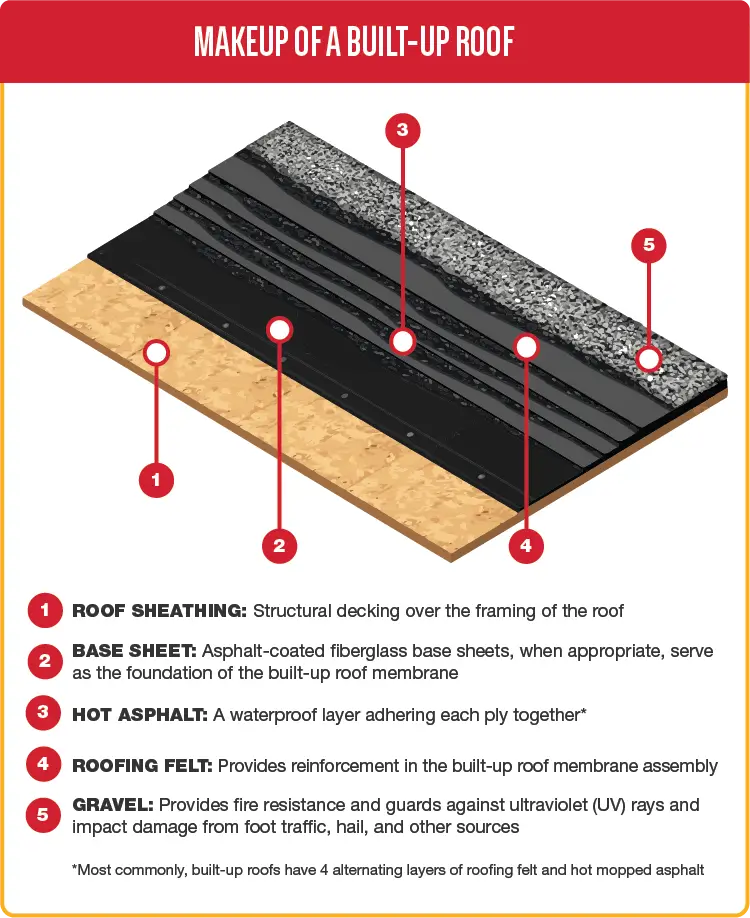
Built-Up Roof systems have five layers of material and are commonly found on educational buildings and other low-slope commercial roofs.
This roofing system is susceptible to weather and UV exposure, impact damage, and added roof loads. BUR material failures can also look like:
- Cracking, which allows water to enter
- Blisters, which can indicate the presence of moisture during installation
- Undulations that are vulnerable to cracks and tears
- Splits in joints, which can allow water intrusion
Modified Bitumen
Modified bitumen roofing was popularized in the 1970s and is made from a plastic material known as atactic polypropylene (APP) or the elastomeric/rubber material known as styrene butadiene styrene (SBS). It’s then reinforced with “one or more plies of fabric such as polyester, glass fiber, or a combination of both,” according to the ARMA.
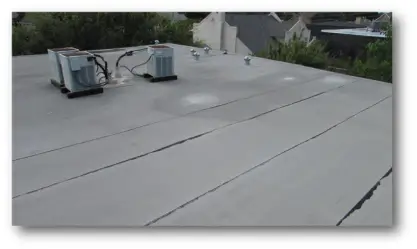
An example of a modified bitumen roof on a commercial building.
The material has a uniform thickness and “consistent physical properties” throughout, ARMA states. It’s also affordable and needs only moderate installation and maintenance.
However, modified bitumen is prone to splits, blisters, and surface crazing.
EPDM Membrane
EPDM is “an extremely durable synthetic rubber roofing membrane,” according to the EPDM Roofing Association (ERA), that comes in various lengths and thicknesses. It can be installed “either fully adhered, mechanically attached or ballasted, with the seams of the roofing system sealed with liquid adhesives or specially formulated tape,” according to the ERA.
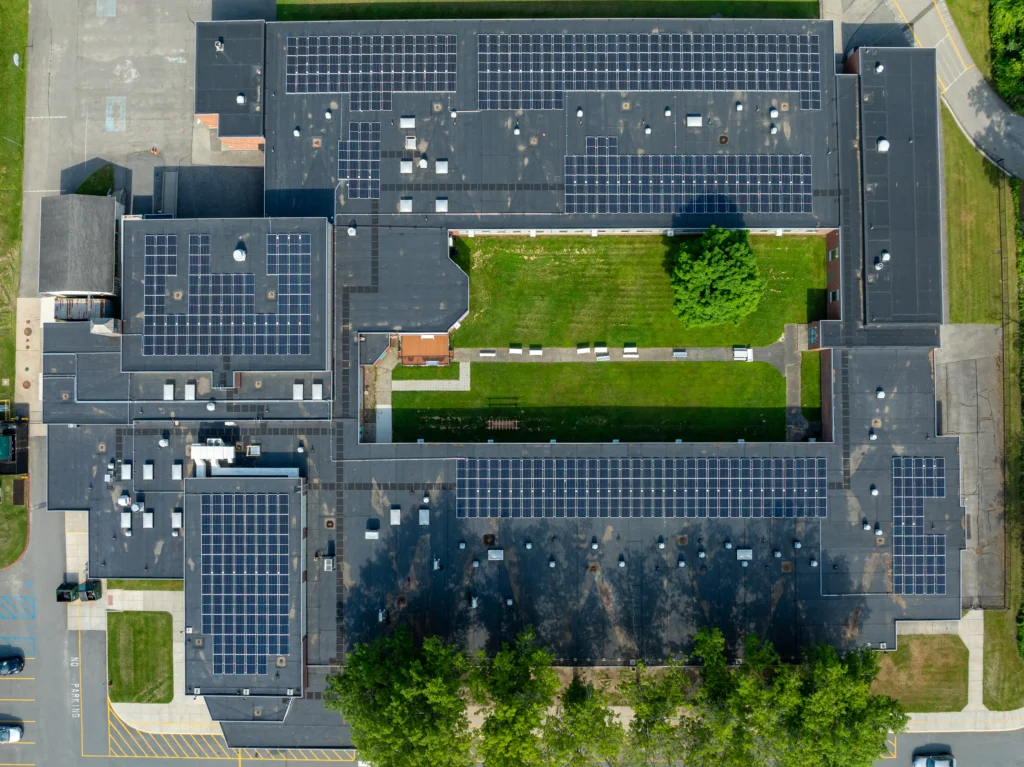
EPDM roofing material is commonly used on commercial industrial buildings that have low-slope roofs.
EPDM’s resiliency is derived from its rubberized material, which allows it to flex and bend when impacted. However, it does require regular maintenance along membrane laps.
Damage to this roofing material includes openings due to shrinkage and holes or leaks resulting from impacts, implements, or foot traffic.
Understanding Types of Commercial Roof Damage
In addition to human-caused damage and age-related deterioration, natural disasters and weather events also affect the functionality and integrity of commercial roofing materials.
Hail Damage
Expert evaluations can identify hail damage that severely reduces the integrity or functionality of a roof’s membrane. With BUR systems, for example, it sometimes presents as bruises or fractures in the asphalt flood coat. Depending on the size of the hail stones, the membrane ply underneath the flood coat also can sustain damage. Single-ply membranes like EPDM, PVC, and TPO can form circular or radial cracks at the point of impact. Damage from hail on modified bitumen membranes is similar to asphalt shingles, appearing as bruises and fractures.
Severe Wind
There are two main scenarios in which wind can damage a low-slope roof. It must blow over parapet walls and other obstructions, creating negative uplift pressures, or penetrate a building’s interior, creating positive pressure from below the roof.
Downed trees, damaged commercial signs, and weakened or broken building items like satellite dishes or gutters can suggest severe winds affected the property. However, those indicators don’t necessarily confirm the peril caused the claimed damage. Roofs with improperly anchored components are more susceptible to wind damage, which typically begins at the roof’s perimeter.
Wind-blown or poorly secured objects can also impact a roof.
When To Bring in Engineering Expertise for Commercial Roof Damage Claims
Commercial roof damage claims require expert analysis that incorporates not only onsite assessments to determine cause and scope of loss, but also research into reputable weather data (when applicable).

Donan’s licensed engineers use the scientific method and leverage the latest technology when investigating property claims.
When there are multiple indicators of damage or complex and challenging questions associated with a claim, Donan’s licensed forensic engineers provide adjusters with timely, comprehensive reports that deliver an objective cause of loss and recommend the most appropriate repairs and replacements.
To call on their decades of experience, submit an assignment today.

Don’t miss insurance-focused resources and webinars about property, perils, and trends impacting claims nationwide by signing up for The Savvy Adjuster Newsletter.

Be sure to also tune in to The Savvy Adjuster Podcast to hear more from the experts themselves.
Alpine Intel’s content is meant to inform and educate readers using general terms and descriptions. They do not replace expert evaluations that determine facts and details related to each unique claim.
Related Resources
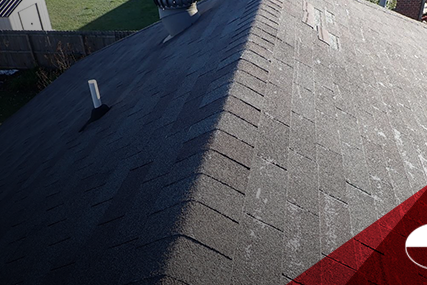
Roof Damage Claim Case Study
Using a real-life hail-related roof claim, you’ll find out how our licensed engineers determine an accurate conclusion through interviews, property inspections, research, and testing.
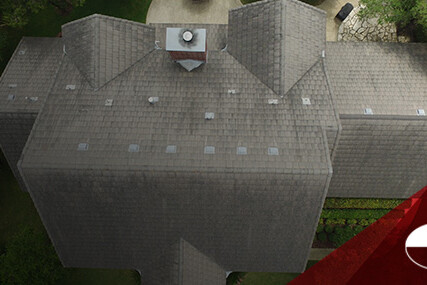
Adjuster’s Guide to Residential Roof Types
This guide gives you a rundown to the pros and cons of various popular roof types you can expect to see in claims.