Assessing Wildfire Property Damage: Key Structural Concerns

According to the U.S. Department of Agriculture, 46 million homes are at risk from wildfire in areas where human communities meet vegetative fuels. In 2025, the threat posed by wildfires became very clear as flames in the Los Angeles area destroyed thousands of buildings across more than 60 square miles. Claims following wildfires may not require an origin and cause investigation, but this doesn’t mean adjusters should settle without an objective assessment of the property.
Many homes involved in wildfire property damage claims will not be total losses. While some fire damage may be obvious, it’s important to note that some may be unrelated to the fire. Read on to learn about the various ways in which wildfires damage property and how licensed forensic engineers determine an accurate cause and scope of loss to facilitate a fair settlement decision.

Wildfires are undeniably destructive, but the range of damage they produce is broad and should be fully assessed by a licensed engineer before resolving the claim.
Heat Damage and Wildfire Characteristics
Wildfires can exceed 2,000 degrees Fahrenheit, and that heat can radiate, even if the flames aren’t close enough to touch the structure. Embers may also travel from the flames and contribute to heat damage on roofs and siding. Buildings with poor ventilation or particularly flammable materials are susceptible to heat damage, the severity of which depends largely on the type of material and the intensity and duration of the exposure.
Evidence of heat damage includes:
- Cracked, warped, or broken glass
- Charred and blistered wood
- Warped and melted vinyl siding or other plastic elements
- Melted and warped asphalt shingles
- Cracked and discolored concrete and masonry
- Melted exterior piping, which may lead to water leaks and damage
Because many variables can change the direction and intensity of wildfires in different locations, damage may be uneven. An on-site inspection of the property can determine what elements were damaged by heat from wildfire, as well as identify any other fire-related damages.
Damage Is Caused by More Than Just Flames
Because wildfires generally burn longer than typical structural fires and consume more vegetation, they produce more smoke. In addition to the health and environmental impact of large quantities of smoke, this also means the effects of the wildfire can occur far from the flames. Byproducts of combustion can be destructive to buildings up to hundreds or even thousands of miles from the fire, according to the U.S. Environmental Protection Agency.
Char
Char is a solid, black residue produced when organic matter partially burns. It may appear on building materials on the property or be carried there by wind, having originated elsewhere. Even if they have not damaged the structure, pieces of charred material can indicate the wildfire’s proximity to the property, which can help confirm or exclude fire damage from the incident.
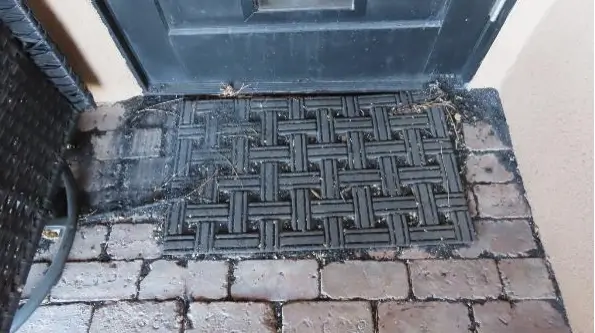
Small particles of charred material, like this one in this outdoor entryway, may originate on the property or be borne there by the wind, which can still indicate how the fire impacted the house.
Soot
Soot is the fine, powdery substance created when materials are not fully consumed in the fire. It is combustible, and under the right circumstances, such as exposure to smoldering debris or high heat, can contribute to reignition.
Ash
Ash is inorganic residue and the product of complete combustion. Because it is fully burned, it is not combustible. Ash can clog gutters and drainpipes, which may lead to flooding, roof damage, and other issues if not addressed. The particles can also settle unnoticed in ductwork or insulation.
However, some deposits are cosmetic only. Engineers know how to determine if smoke byproducts have caused damage and if they can be cleaned to prevent ongoing problems. They can also identify whether all claimed damages are direct results of the wildfire.
Wildfire Property Damage vs. Other Causes of Loss
A homeowner scrutinizing their house after a wildfire may notice pre-existing conditions for the first time and mistakenly attribute them to the fire. Some damages caused by other perils, like age-related deterioration and impact damage, can bear similarities to those caused by wildfire, but a skilled professional engineer can distinguish between them.
Irregularities in roof shingles may be due to extreme heat, or they may be the result of sun exposure, moisture, and manufacturing defects. Char or soot stains on walls could have pre-dated the fire, deposited by fireplace smoke or even candles.
Impact damage, too, can be mistaken for fire damages. The patterns in which glass and concrete crack vary depending on the cause, which is something an engineer can differentiate during their comprehensive investigation.
How Engineers Can Help Assess Wildfire Property Damage
Forensic engineers assess fire damage using on-site evidence and a variety of other resources, which may include witness statements; photographs; and data about the event from reliable state, local, and federal agencies.
Aging the damage is crucial. The expert may seek out images online or ask the homeowner for photographs that show the property before the wildfire. Certain damages, like cracks, can be identified as new or pre-existing based on physical evidence, such as paint covering reportedly new cracks or grass growing within concrete included in a fire damage claim.
Engineers also look at collateral indicators surrounding the house, like landscaping and nearby structures. Though the heat distribution of wildfires may be uneven, the conditions around the house can help develop a picture of the fire’s location and heat.
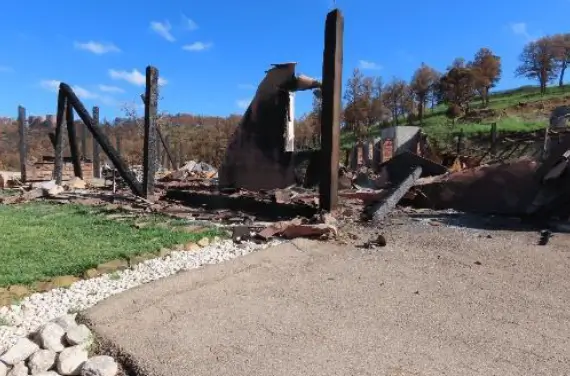
The surrounding area, like these charred trees and burnt house near a subject property, can help to confirm or exclude wildfire as a potential cause of loss.
Engineers can also make suggestions about how to return the property to pre-loss condition, which gives the adjuster and policyholder an objective recommendation to compare with contractors’ assessments. This may include repairs and replacements, and they might recommend experts who have experience with other areas, such as fire damage to HVAC or electrical equipment.
This is not a full description of structural wildfire assessments by Donan Engineering, part of Alpine Intel’s suite of services, which can provide answers about heat, soot, and ash damage to help adjusters reach fair and accurate settlements surrounding these claims. For the full scope of Donan’s capabilities with wildfires and other perils, submit an assignment.

Don’t miss insurance-focused resources and webinars about property, perils, and trends impacting claims nationwide by signing up for The Savvy Adjuster Newsletter.

Be sure to also tune in to The Savvy Adjuster Podcast to hear more from the experts themselves.
Alpine Intel’s content is meant to inform and educate readers using general terms and descriptions. They do not replace expert evaluations that determine facts and details related to each unique claim.
Related Resources
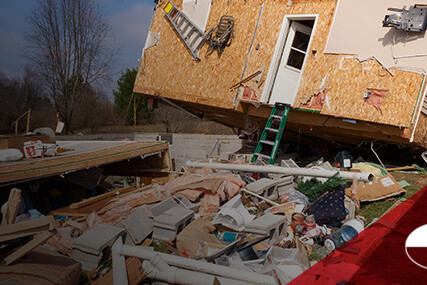
Your Guide to Structural Tornado Damage
Tornadoes can cause an array of structural damages. Get familiar with these losses and learn which indicators may point toward another cause of loss.

Church Structural Damage Claim Case Study
An adjuster turned to Donan’s experts after a church’s ceiling fractured and fell in. Our engineer verified the cause of loss and identified the safety risks.
Assessing Roof Damage After a Contractor’s Estimate
Learn how a roof damage assessment can help adjusters make fair settlements, identify reliable contractors, and spot signs of severe roof damage.