
StrikeCheck Electrical System Assessment Tools of the Trade

StrikeCheck, an Alpine Intel brand, assesses claims involving electronics and electrically powered specialty items to deliver actionable reports for fair and accurate settlement decisions. While the overall process is similar for all assessments, some require different tools and expertise to help the StrikeCheck team reach an accurate cause and scope of loss. Take a look at how these inspections play out, from getting the right technician onsite to the tools our experts use to help deliver the answers you need to resolve the claim.
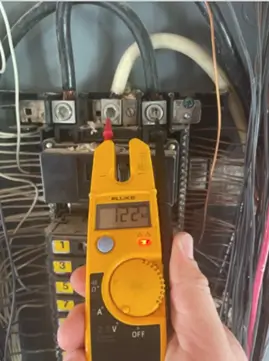
Assessing electronics to obtain an accurate cause of loss requires the right tools for the job – and the right expert to interpret the readings.
The Onsite Electronics Inspection Process
When a client submits an assignment for onsite assessment, the StrikeCheck team reaches out to the policyholder to confirm what equipment needs evaluation and to obtain their availability. Using this information, they identify the first available technician who is both near the loss location and has the expertise needed to inspect the claimed equipment, which may range from consumer electronics and appliances to solar equipment and well pumps.
Once onsite, the technician completes diagnostic testing as needed, using appropriate tools and functional testing, and takes pictures to capture the equipment and pertinent readings. Which tools are used will depend on the claimed equipment and damages being assessed.
Tools of the Trade
Here are a few of the tools the StrikeCheck team may use to draw their conclusions about a property.
- Amp Clamp Meter: Amp clamp meters, or ammeters, measure electrical current, which is the speed of charged particles passing through a circuit. These can help identify overloaded or shorted circuits, if a specific item is drawing less current than expected from a malfunctioning circuit, and more.
- Multimeter: Multimeters measure the voltage at different points along a circuit and can be useful in detecting voltage drops due to undersized wiring or overloaded circuits and confirming that outlets and batteries are receiving the correct voltage. They also measure electrical resistance to verify continuity within a circuit to identify broken wires, loose connections, and other interruptions within the circuit.
- Infrared Thermometer: Infrared thermometers allow the technician to take temperatures of electrical components, water lines, and conditioned spaces without making contact. Many infrared thermometers allow technician to take temperatures of areas that are out of physical reach.
- Thermal Camera: Thermal cameras read temperature differences in a photographic format, showing hot, cold, and temperature gradients. Extreme temperatures can indicate malfunctioning or overloaded components in electrical equipment. For appliances such as refrigerators and freezers, the thermal camera can show leaks around door seals and drawers. When used by a trained StrikeCheck technician, the thermal camera is a valuable tool in solar panel inspections, as it will show damaged cells and wiring.
- Outlet Tester: Outlet testers allow the technician to verify the proper wiring connected to an electrical outlet. Many of the outlet testers in use also allow the technician to test the operation of GFCI outlets and breakers and to identify and document missing wires, dropped neutrals, and other damages. In many cases this can distinguish wear and tear or improper installation from other causes or loss.
- Network Tester: Network testers help the technician verify all components of the wired and/or wireless network. These testers test the wiring, Power over Ethernet ports, and internet connectivity. With the network tester, our trained StrikeCheck technicians can narrow down the failed component and limit the repair/replacement scope.
- Lightning Verification Report: Lightning verification reports confirm or exclude cloud-to-ground lightning flashes and strokes for a 7-day search period and a 5-mile search radius. These interactive reports are often indispensable for claims where lightning or surge is the reported cause of loss.
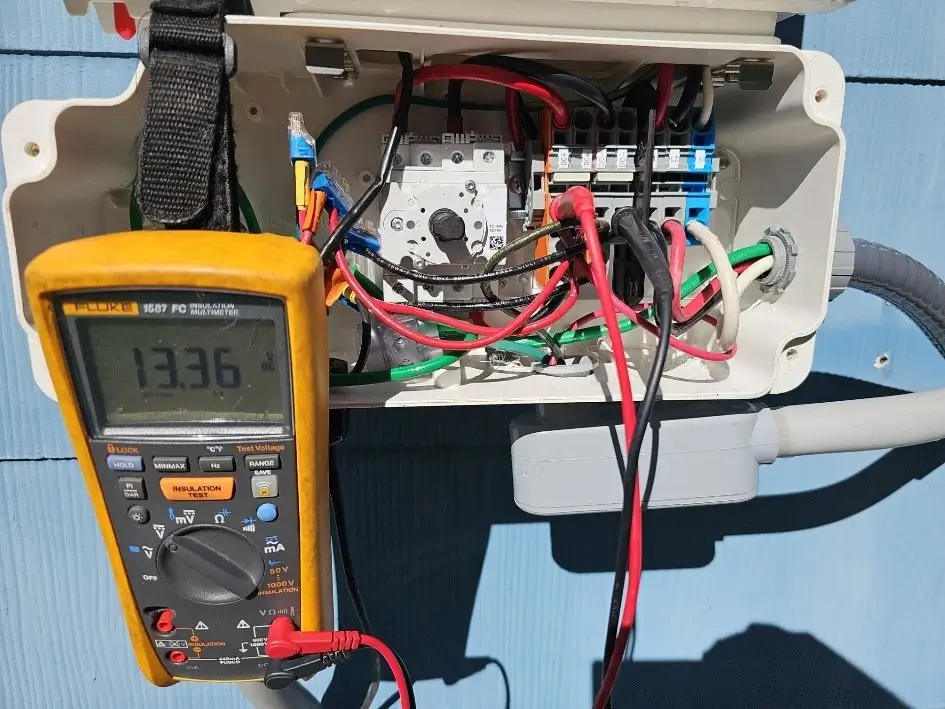
A multimeter can provide accurate and easy–to–interpret voltage and ohm readings on a variety of electrical items.
Because of the complexities of electronics and specialty equipment, some assessments may require testing that needs focused expertise. The StrikeCheck team’s experience and knowledge of equipment, codes and regulations that apply to various items, and insurance industry trends are another valuable tool at clients’ disposal.
The Report
After the onsite assessment, the StrikeCheck team analyzes the technician’s observations, testing, and any necessary weather data and delivers a report to the client that includes:
- Cause of Loss: The cause of loss determined by the testing may be different from what was reported by the policyholder or contractor, which is why StrikeCheck backs it up with images and readings.
- Repair/Replacement Recommendations: These recommendations are based on StrikeCheck’s findings and outline what is necessary to return the equipment to its pre-loss condition, including settlement recommendations based on market value pricing for labor and Like Kind and Quality materials. These costs are included in the report even in cases where a repair is recommended, in case the adjuster needs them.
- Equipment Summary: This comprises a list of all claimed items and a summary of findings and recommendations for each, followed by images of each item and the readings, if any, that pertain to them.
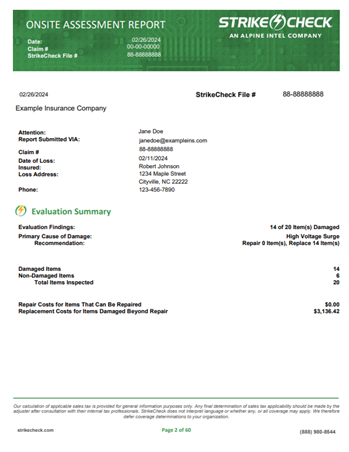
StrikeCheck’s onsite assessment reports provide a comprehensive summary of testing, findings, and recommendations.
Do I Need an Onsite Electrical Assessment?
For many electronics claims, an onsite review complete with testing, photographic documentation, and expert observations of the claimed equipment can help adjusters reach quick and accurate settlement decisions. However, some claims require only an objective review of a contractor’s invoice or estimate, without measurements and readings. With a desktop claim review, StrikeCheck’s expertise remains a useful tool, still providing verification of market value pricing to facilitate a fair resolution.
Whether you need the onsite readings and observation or an unbiased eye on an invoice, submit an assignment to take advantage of the StrikeCheck team’s experience and knowledge surrounding electronics and electrically powered specialty items that show up in your claims.

Don’t miss insurance-focused resources and webinars about property, perils, and trends impacting claims nationwide by signing up for The Savvy Adjuster Newsletter.

Be sure to also tune in to The Savvy Adjuster Podcast to hear more from the experts themselves.
Alpine Intel’s content is meant to inform and educate readers using general terms and descriptions. They do not replace expert evaluations that determine facts and details related to each unique claim.
Related Resources

What Residential Electrical Equipment Can StrikeCheck Assess?
Use this interactive guide to learn more about some of the more than 250 types of electrically powered items StrikeCheck evaluates in homes.

Electrical Systems Case Study
We helped resolve an unnecessarily costly claim in which a contractor stated that the electrical pedestal and subpanel would need to be replaced for over $10,000.

StrikeCheck Client Case Study
A Top 5 P&C carrier entrusted StrikeCheck to determine the cause of loss and scope of damage for more than 300 types of electrically powered items.