
Winter Property Insurance Losses: An FAQ For Policyholders

Key Takeaways:
In this article on winter property insurance losses, you’ll learn:
- How to help prevent ice and snow damage from impacting roofs or gutters
- What signs to look for if snow- or ice-related damage is suspected
- Which pipe materials are more susceptible to freezing and how to help mitigate frozen pipes
- Whether flooding can cause structural damage in winter insurance claims
Severe winter weather has routinely caused more than $1 billion in damage per event over the past 25 years, according to the National Centers for Environmental Information.
But with the right preparation, policyholders and homeowners can do their best to fortify their property for a safe season. Donan Engineering’s licensed forensic engineers and technical educators regularly discuss how snow accumulation could be the beginning of roof damage, water intrusion, or other structural damage to the home.
Learn answers to some common questions surrounding losses reported in winter insurance claims and discover prevention and mitigation tips for ice and snow damage.
How Can I Prevent Snow and Ice From Damaging the Roof or Gutters of My Home?
Maintenance is key to prevent your home’s roof or gutters from sustaining ice and snow damage.
The National Weather Service suggests removing leaves, sticks, and debris from gutters and downspouts to ensure melting snow and ice have a direct path to drain. When a heavy snowfall does hit your area, also consider using a roof rake to remove as much snow as possible. This tool allows you to remove snow while standing on the ground.

Snow and ice accumulation on a roof can cause damage to the interior and exterior of a home because of its weight or resulting water intrusion, possibly leading to losses that may appear in winter insurance claims.
But gutters and roofs aren’t the only places to consider. A properly insulated and ventilated attic helps mitigate effects of snow and ice as well.
If preventive measures aren’t taken, the likelihood of ice dams or heavy snow loads developing and causing property damage increases.
Ice dams—in some cases a result of poor insulation, poor air sealing, and poor attic ventilation—develop when heat that escapes a home warms snow on the roof, causing it to melt. Once that melted snow reaches the colder edges of the roof or gutters, it re-freezes.
If left unaddressed, anything that melts behind the ice dam becomes trapped and could make its way into the home itself.
Rapid snow accumulation, rainfall after a snow event, and certain roof designs also could lead to snow load threats. A snow load is the downward force that accumulated snow and ice exert on a roof. In a worst-case scenario, the accumulated weight could cause a roof collapse.
If the snow (and sometimes rain) isn’t able to properly drain, it might result in water seepage and leaks in the home, possibly leading to severe or long-term losses.
What Signs Should I Look for if I Suspect Snow or Ice Is Causing Damage to My Home?
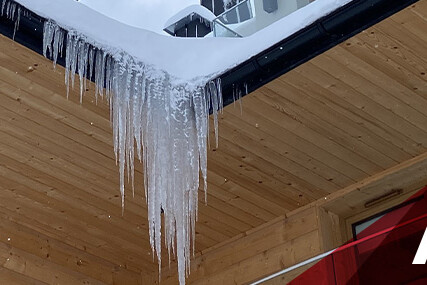
There are several signs that your home could potentially have snow- or ice-related damage that could lead to an insurance claim. If icicles begin to form on the roof edge or there’s visible ice buildup behind the gutters, these could indicate ice damming. Inside the home, water stains on walls or ceilings (especially near walls) can also suggest ice damming or some other form of water intrusion.
Snow load indicators include a visibly sagging roof, paint that appears cracked, and sudden difficulty opening or closing windows and doors. 
Ice melt and snow loads are common causes of loss for roof damage in winter months.
How Does the Type of Piping in My Home Affect Its Likelihood To Freeze?
Different piping materials react differently to frigid temperatures. Two types are more susceptible to ice blockages—copper and PEX water supply pipes.
Copper water supply pipes and PEX water supply pipes are both used in residential properties. Both can burst due to an ice blockage, but PEX water supply pipes might “mushroom” out before bursting.
Polyvinyl chloride (PVC), typically used for cold water supply lines or wastewater, is less likely than metal pipes to freeze, though failures can still occur.
Cast-iron and galvanized steel pipes, which aren’t as prevalent in newer homes, are prone to rust, corrosion, cracks, or splitting.

An ice blockage could cause bathroom pipes, which are typically PEX water supply pipes, to burst.
Regardless of the material, pipes used in residential properties can freeze within six to eight hours under the right conditions. Pipes are among the most vulnerable components of a home when it comes to freezing (and the trickle-down effects freezing causes).
Depending on where the freeze originated and where on the line the pipe actually burst, frozen pipes can be the impetus for other damage throughout the home. If the water doesn’t remain localized to the area in which it burst, you could have multiple intrusion points in the form of water stains on the ceiling or on the walls, among other indicators.
However, there are ways to mitigate the possibility of frozen pipes.
How Can I Keep My Pipes From Freezing To Help Avoid Winter Property Claims?
Prevention tactics include opening kitchen or bathroom cabinets to allow warmer air to reach the plumbing and keeping garage doors closed, according to Consumer Reports. Or allowing cold water to drip from faucets that are “served by exposed pipes.”
Proper insulation is key to helping mitigate temperatures that can lead to freezing pipes. A few options exist to protect your pipes: Cellulose, foam, and fiberglass.
Cellulose insulation can be used throughout your home and typically is installed in horizontal spaces like the ceiling between the attic and the living spaces. Several variations and uses exist for foam insulation. Injection foam is best used in an existing home to address an exposure in the insulation. Spray foam is more commonly seen in new construction.
You’ll commonly see fiberglass insulation in irregularly shaped spaces, like staircases.
Insulation sleeves, also known as pipe jackets, and heat tap offer additional protection for residential pipes.
Can Flooding Events Damage My Home in the Winter Months?
Yes. Snowmelt, ice jams, and heavy rainfall can all lead to flooding.
Snowmelt flooding can occur when heavy snow cover remains on the ground for an extended period of time, followed by quickly rising temperatures, heavy rainfall, or high humidity.
Floating ice that accumulates near river bends, river mouths, or manmade structures, may prevent the flow of water, leading to ice jam flooding. Flash flooding could also occur due to a rapid thaw or breaking up of the floating ice.
Rainfall can present as regular downpours or flash floods during a warmer winter. Mountainous areas with open hills may be more vulnerable to debris flow and landslides that accompany flooding.
Insurance carriers and policyholders alike can work with companies like Donan Engineering, part of the Alpine Intel suite of services, to ensure a potential loss is properly categorized and addressed.
Engineering services are provided by or subcontracted to Donan Engineering, LLC, Donan Engineering NC, PLLC, or Donan Forensic, LP

Don’t miss insurance-focused resources and webinars about property, perils, and trends impacting claims nationwide by signing up for The Savvy Adjuster Newsletter.

Be sure to also tune in to The Savvy Adjuster Podcast to hear more from the experts themselves.
Alpine Intel’s content is meant to inform and educate readers using general terms and descriptions. They do not replace expert evaluations that determine facts and details related to each unique claim.
Related Resources

Common Winter Heating Losses
However, the additional stress on HVAC equipment in the winter can lead to serious losses. Learn more about four of the most common winter heating losses.
Winter Property Damage eBook for Adjusters
Download the eBook to learn about losses linked to cold weather and prepare for winter claims involving HVAC equipment, structures, and fires.

Test Your Winter CAT Claims Knowledge
Winter CAT claims preparation can start at any time of year. Take our quiz to see if you’re ready.