Why Data Center Equipment Contamination May Not Be Obvious After a Loss

Key Takeaways
Contamination can be an overlooked factor in data center equipment losses. Learn more about:
- How construction dust, water, and smoke can affect data center equipment
- Key factors insurance professionals should consider when evaluating contamination-related losses
- How experts assess the scope of contamination
- Why contaminated equipment does not always require replacement
According to IBM, a typical data center housed at an organization’s own facility contains between 2,000 and 5,000 servers, while hyperscale data centers have at least 5,000 servers and potentially miles of connection equipment. Regardless of size, keeping this equipment operational requires built-in redundancy and continuous cooling. But even these systems can’t protect against every risk.
Contamination, for example, can be particularly difficult to detect and diagnose. Equipment may show no obvious signs of damage and continue operating normally, even when sensitive internal components have been exposed to contaminants that could cause premature failure months or even years earlier than uncontaminated equipment.
Learn how different types of contamination can affect data center equipment by causing damage or contributing to future failures and what insurance professionals should consider when handling these losses.
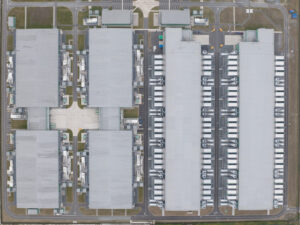
The sheer size of data centers and the volume of equipment within them can make losses particularly costly and complex.
3 Types of Contamination That Can Impact Data Center Equipment
Dust, water, and smoke can all contaminate data center equipment, but each presents different considerations for evaluating the scope of damage.
1. Construction Dust Contamination
Dust exposure can begin before data center construction is complete. Equipment may be installed while construction is still underway, and later expansions, renovations, and equipment installations can introduce additional particulates from drywall, concrete, metal, and other materials.
Unlike a fire or major water event, construction-related contamination may occur without a noticeable incident or obvious visible signs of damage. While equipment is operating, cooling fans can draw airborne particles into sensitive internal components.
Accumulated dust can affect cooling and mechanical components, potentially causing equipment to overheat or malfunction. For example, dust buildup can restrict airflow or cause bearings in cooling fans to bind, preventing them from rotating freely. These issues can reduce cooling efficiency and increase the risk of premature equipment failure.
When insurance professionals receive a claim for the affected equipment, the connection to construction activity may not be apparent. An objective, on-site expert assessment can help determine the extent of the damage and whether it resulted from construction-related contamination or another cause of loss.
Loss Consideration: Was the data center equipment operating while dust was airborne?
2. Water Contamination
Water damage is the most frequent cause of data center claims, according to an Allianz Commercial analysis of international data center losses. Exposure can result from roof or plumbing leaks, cooling system failures, sprinkler discharge, or firefighting efforts.
The potential impact depends on factors such as the type of water, duration of exposure, and whether equipment was energized. Gray or black water may introduce contaminants, while exposure to energized equipment can cause short circuits, arcing, and other electrical damage. Even after the water is removed, moisture, minerals, and other residues may remain on internal components, potentially contributing to corrosion.
Loss Consideration: What type of water was involved, and was the equipment energized?

Cooling system failures can expose data center equipment to water, potentially resulting in damage to electrical components.
3. Smoke and Soot Contamination
Smoke and soot can migrate well beyond the immediate area of a fire, potentially exposing equipment that shows no obvious signs of fire damage. Acidic gases produced during a fire can react with moisture to form corrosive compounds that may cause electronic components and metallic surfaces to corrode.
However, smoke circulating within a data center does not necessarily mean every piece of equipment has been contaminated or will corrode. Proximity to the fire can influence the extent of exposure. Quantifying contamination can help establish the scope of damage and inform appropriate next steps.
Loss Consideration: How widespread is the exposure, and which equipment was affected?
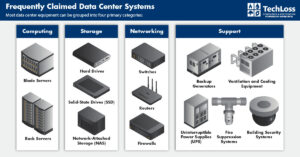
Data center computing, storage, networking, and support systems can all be impacted by contamination. Download the full Data Center Equipment Claims Guide for Adjusters to learn what other causes of loss commonly impact data center equipment.
How Is Data Center Equipment Contamination Assessed?
Independent experts evaluate the extent of data center equipment contamination through detailed, objective on-site inspections. Carefully disassembling equipment allows experts to examine sensitive internal components for evidence of exposure and assess whether contamination has caused damage or could contribute to future issues if left unaddressed.
For equipment exposed to smoke or dust, scientific wipe sampling can provide additional insight. Samples collected from internal and external surfaces are sent to a laboratory for analysis, where results can be compared with applicable U.S. Department of Energy standards to evaluate the potential impact on electronic equipment.
When policyholders and insurers are unsure whether damage is related to construction activity, wipe sampling can also detect common components of construction dust, such as quartz, calcium, magnesium, and iron. Combined with equipment inspections, these findings can help insurers better understand the scope of contamination and determine appropriate next steps.
Contamination Does Not Automatically Mean Data Center Equipment Must Be Replaced
There are different methods for returning contaminated data center equipment to pre-loss condition, depending on the findings of an assessment. Some equipment may require cleaning or repair, while other items may warrant replacement.
Making that distinction can be especially important in a data center, where hundreds or thousands of individual pieces of equipment may be involved. Replacing equipment unnecessarily can significantly increase claim costs, prolong data center downtime, and expand the scale of business interruption.
TechLoss Consulting & Restoration, part of Alpine Intel, provides straightforward solutions for complex losses involving business-critical commercial equipment, including data center systems. Our team helps insurance professionals identify fair, cost-effective paths toward restoring equipment quickly and efficiently and can work as an extension of your team. Submit an assignment to work with our experts.

Don’t miss insurance-focused resources and webinars about property, perils, and trends impacting claims nationwide by signing up for The Savvy Adjuster Newsletter.

Be sure to also tune in to The Savvy Adjuster Podcast to hear more from the experts themselves.
Alpine Intel’s content is meant to inform and educate readers using general terms and descriptions. They do not replace expert evaluations that determine facts and details related to each unique claim.
Related Resources
Data Center Equipment Claims: A Guide for Adjusters
This one-page guide is designed to help you understand what equipment may be included in data center claims, the perils that can affect it, and more. Request it now.
How Extreme Heat May Affect HVAC Equipment Guide
Learn why HVAC claims may increase in summer, how heat can exacerbate equipment damage, and facts that might help you settle based on an accurate cause of loss.
Fix It or Forget It: Navigating Equipment Loss
Don’t wait and see when it comes to potentially damaged equipment. Learn warning signs, risks, and how expert assessments reduce downtime and more in complex technical claims.