What Adjusters Should Expect To See From Storm-Impacted Solar Power Systems

Key Takeaways
This resource answers important adjuster questions, such as:
- What does solar panel wind damage look like?
- Can hail damage solar panels?
- How can you verify the cause and scope of loss in storm-related solar power system claims?
Policyholders often report wind, lightning, or hail as the cause of loss for solar panels included in claims. While expert assessments frequently identify a different cause of loss affecting a solar power system, it’s still important to understand how solar panels and wind, as well as these other perils, interact during severe storms, what storm-related panel damage looks like, and why these weather-related perils don’t always affect system functionality.
Solar Panels Are Built To Withstand Many Hurricane Winds
The components used to convert light into usable electricity may look fairly delicate. Solar panels have photovoltaic (PV) semiconductors usually made from types of silicon, including polycrystalline and monocrystalline, that absorb photons from sunlight and cause electrons to move between the PV layers to form an electric field. Glass, plastic, or metal supports the thin PV semiconductors, which are mounted on racking systems either on the ground or on a roof. As solar power gains popularity, manufacturers have continued to improve the equipment’s strength, knowing it must endure elements like wind.
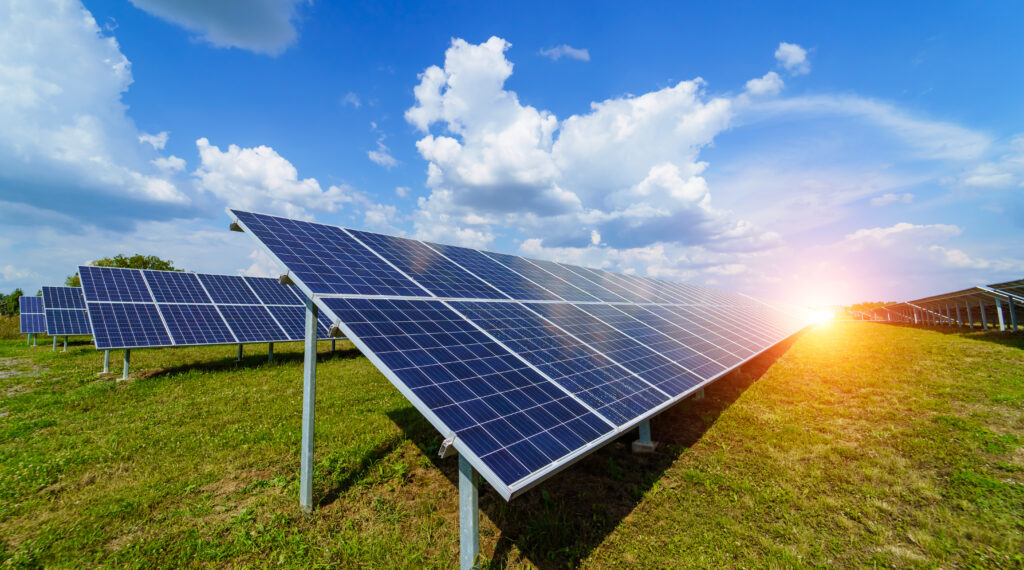
Individual solar cells are connected in panels, which are joined together into arrays placed on racking systems.
Most solar panels are designed to withstand winds of up to 140 miles per hour, which is faster than a Category 3 hurricane. In particularly wind-prone areas, such as some cities in Florida, officials expect even stricter measures, requiring that solar power systems be able to withstand winds of at least 160 miles per hour.
Even so, wind can still impact solar panels in several ways.
Wind and Solar Panel Movement
When solar panels and wind interact, the result can be uplift, particularly on roof-mounted systems. Equipment may be lifted, or in rare circumstances, ripped off the roof. Visible evidence of wind damage may include cracked glass from straight–line winds, missing panels, or failed installation brackets. Solar panels can also disconnect from their mounting, overturn, or obstruct other panels. While handling these claims, adjusters should have an objective expert determine if the impacts decrease equipment functionality and verify that the installation meets standards.
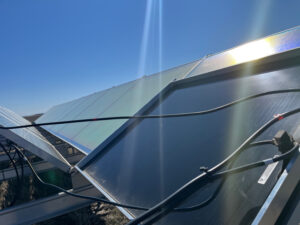
Installation brackets failed to work as designed, resulting in wind pushing this solar panel onto another one.
Wind-Blown Dust and Debris on Solar Panels
Another way wind can impact solar panels is through wind-blown debris, though this is more likely for equipment that is placed closer to the ground. Dust, dirt, or leaves carried onto panels may be carefully cleaned off without needing additional repairs, though policyholders must make sure this maintenance is completed safely.
Heavier items blown onto panels may cause minimal to more catastrophic effects. For example, shingles can scratch panels, resulting in cosmetic impacts that don’t affect the system’s operation. Fallen limbs or trees could result in irreparable damage.
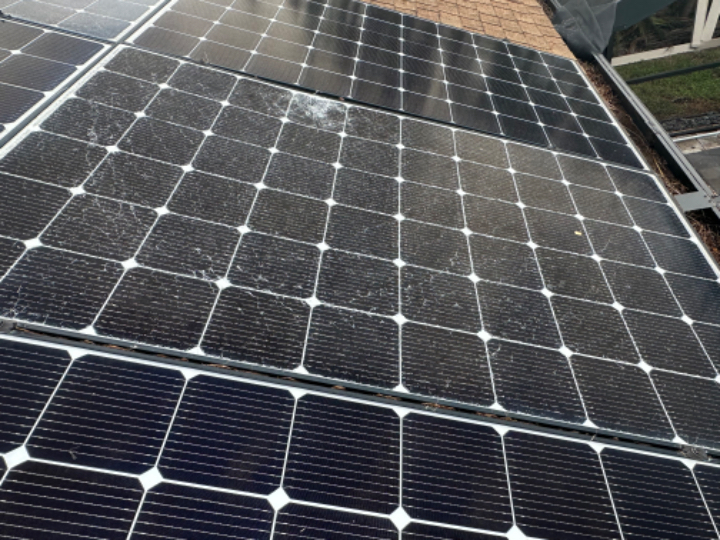
This solar panel shattered because of a wind-blown impact during hurricane conditions.
Wind can impact other solar power components besides the panels. These include the inverters that convert the direct current (DC) to alternating current (AC) used in homes and businesses. Inverters may be attached to individual or multiple panels and could be wind damaged.
Other storm-related perils have been linked to solar equipment losses, but they aren’t typically as prevalent as many policyholders may think.
Can Hail Damage Solar Panels?
While hail can damage solar panels and other components in a solar power system, it occurs less often than is reported. According to the StrikeCheck 2025 Annual Claims Report, hail was the stated cause of loss for 10% of the solar power equipment inspected by StrikeCheck in 2025. However, hail was determined to be the actual cause of loss in only 5% of systems.
Why Hail Doesn’t Always Impact Solar Panel Functionality
Solar panels and hail don’t necessarily spell total loss. Panels may continue to function as designed following hail impact. According to Consumer Affairs, the majority of solar panels can hold up against hail as big as golf balls, or approximately 1 3/4 inches in diameter. When hail gets much larger, say the size of a tennis ball, panels may be more likely to sustain damage.
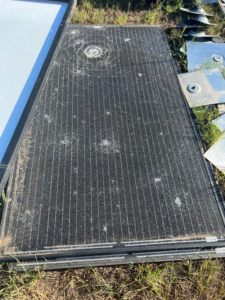
Hail impacts are random and may not affect all the panels in an array.
Policyholders who have more than one panel will notice that hail rarely affects all the solar panels the same way. Some may have no evidence of hail; others may have an aesthetic impact that doesn’t affect functionality; and, in severe cases, some may be cracked. When that happens, a solar power expert will need to determine the scope of damage and what it means for the entire system.
Other Storm-Related Losses Can Occur
Other perils that may impact solar panels include water and lightning, but resulting damage isn’t common. Unlike other electronics, solar panels are waterproof, having been made for the outdoors. Water damage may occur if the panels are cracked, or it may affect electrical components.
Policyholders often report lightning as the cause of loss after a storm. Damage from direct lightning is very rare. It’s more likely that the panels will sustain damage from high voltage surge from a nearby strike or a change in the amount of electricity on the grid, regardless of the weather.
Solar panels are built and tested to be able to withstand inclement weather, including wind, hail, and rain. But losses do still occur and should be evaluated for scope of damage before a settlement decision is made. The experts at StrikeCheck can help.
As part of the Alpine Intel suite of services, StrikeCheck offers fast cycle times and comprehensive claim solutions through fact-driven on-site assessments, desktop pricing reviews, and lightning verification reports.
Eliminate the guesswork for residential solar power system claims and other reported electrically powered equipment losses. Submit an assignment.

Don’t miss insurance-focused resources and webinars about property, perils, and trends impacting claims nationwide by signing up for The Savvy Adjuster Newsletter.

Be sure to also tune in to The Savvy Adjuster Podcast to hear more from the experts themselves.
Alpine Intel’s content is meant to inform and educate readers using general terms and descriptions. They do not replace expert evaluations that determine facts and details related to each unique claim.
Related Resources
Solar Power System Components Guide
Solar power systems are becoming more and more popular as their cost becomes more competitive with conventional energy production systems.
Exploring Solar Power System Claims Webinar Recording
Understand how solar power systems work and be more prepared to settle these claims through the webinar recording.
Solar Panel Overview Guide
Solar systems are incredibly complex, and if you’re processing a solar power system or panel repair claim, you want to be sure that you’re handling it appropriately.