The Impact of HVAC Theft on Property Claims
Your policyholders’ HVAC systems, built with valuable materials, can become targets for thieves. Learn why this problem persists, the challenges HVAC theft claims create, and the steps your policyholders can take to reduce their risk.
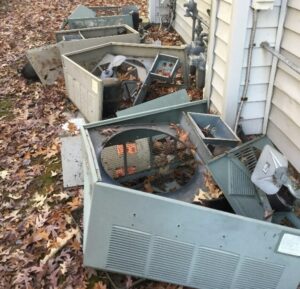
Thieves took coils from these HVAC units.
Why Is HVAC Theft Such a Common Occurrence?
HVAC systems contain high-value metals, such as copper, that criminals can easily sell. The risks are compounded by the typical placement of equipment. Condensing units are usually installed outdoors, often out of plain sight on commercial properties, making them accessible to thieves without attracting attention. The desired components can be stolen quickly and easily, if the property owner has not taken preventative steps.
Though prices have fluctuated over time, 2025 saw a 30% increase in U.S. copper prices, according to CNN. U.S. tariffs and growing demand for renewable energy and AI infrastructure likely contributed to this spike. As a result, copper-related HVAC thefts could continue to pose a risk for carriers.
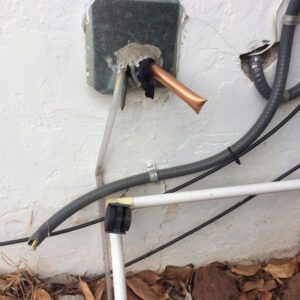
This condensing unit’s copper lineset was cut and removed.
The rising number of copper thefts have led many states to enact stricter regulations on scrap yards, requiring locations to enforce more stringent requirements when accepting salvaged copper. For example, sellers must show a valid ID and, in some states, recyclers may require fingerprinting or take photos of sellers to keep on file that could be subsequently requested by law enforcement.
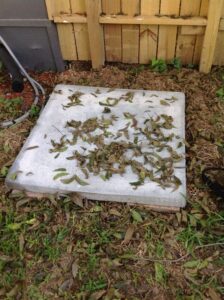
Sometimes entire condensing units are stolen from their pads.
What Considerations Are Required For a Repair or Replacement Option Following an HVAC Theft Claim?
The main consideration following theft of HVAC components for determining scope of repairs is what components were stolen. When a thief is stealing copper or the outdoor condensing unit, they will have to cut the lineset that connects the outdoor compressor to the indoor evaporator coil. If the lineset is left open, moisture can enter the refrigerant loop and cause contamination (regardless of the refrigerant type used in the system) and lead to a major repair or replacement requirement.
However, a couple additional factors need to be taken into consideration before determining the scope of repairs required to return the insured to pre-loss condition.
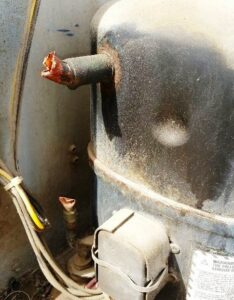
The copper lineset was cut from this condensing unit’s compressor.
Equipment Availability
Some theft damages may require a more extensive repair or even a full system replacement due to the availability of repair parts. This is especially prevalent in older systems. For example, if the coils are stolen and there are no longer compatible coils available from the manufacturer, the outdoor condensing unit may need to be replaced to return the insured to pre-loss condition. This could increase the recommended settlement amount by thousands of dollars.
Federal Regulations
Currently, there are federal regulations surrounding HVAC systems that are enforced by the U.S. Department of Energy (DOE) and the Environmental Protection Agency (EPA).
The DOE regulates the minimum efficiency standard for newly manufactured and installed equipment. An HVAC unit’s efficiency is rated by the Seasonal Efficiency Ratio (SEER), which is based on how much heat is removed and how much energy is consumed. The most recent DOE update, which took effect in January 2023, requires specific minimum SEER standards depending on location and system type. If the outdoor condensing unit needs to be replaced because of theft, the new equipment must meet the minimum efficiency requirements. The remaining indoor equipment must be compatible.
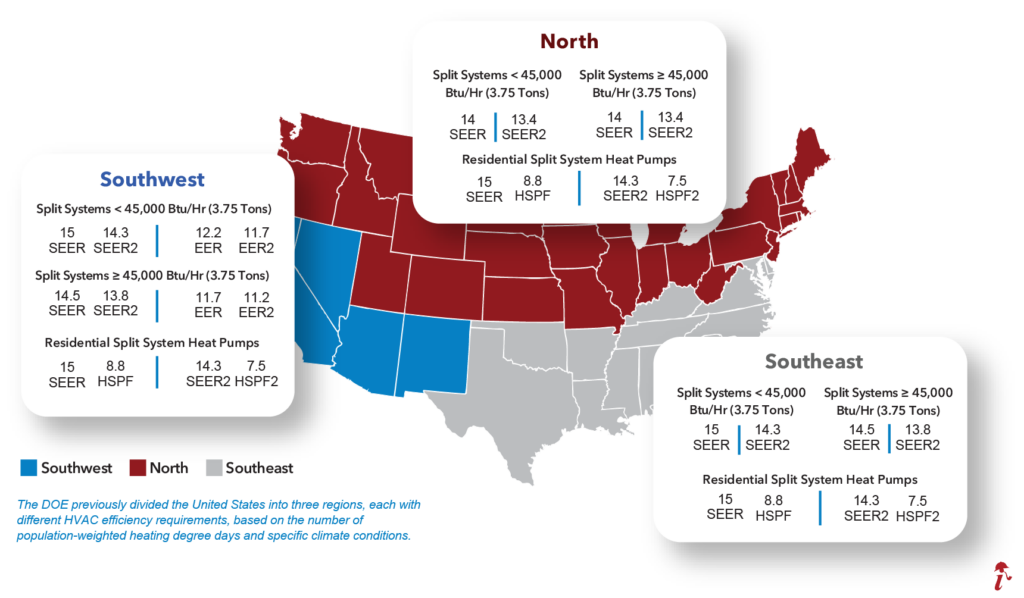
This map shows how HVAC regulations differ by location. The U.S is broken into three regions based on temperatures and humidity.
The EPA has also updated its regulations to match global initiatives to reduce the use of certain types of refrigerants. The production of net-new R-22 refrigerant was phased out completely in 2020. While R-410A initially served as a replacement for R-22, its high Global Warming Potential (GWP) has led to its phasedown as well. In its place, A2L refrigerants, such as R-454B and R-32, are now being used in new equipment.
Regardless of what refrigerant type is used, equipment made for a specific kind is typically not interchangeable. If the outdoor condensing unit is stolen and replaced with one that uses a different refrigerant, other repairs or replacements may be necessary.
How Can Policyholders Reduce the Risk of HVAC Theft?
There are many steps that property owners can take to reduce the risk of HVAC theft and, subsequently, thousands of dollars in insurance losses, including:
- Improve or add lighting surrounding the unit to increase visibility. Because the HVAC unit is often tucked away out of sight on the property, outdoor lighting may not illuminate it, making it easy for a potential thief to access. An even better option is to install motion-censored lights, which will activate when someone walks in the path of the motion detector.
- Install metal cages around the HVAC equipment. Manufacturers produce HVAC system specific security cages, which allow the unit to be locked away from theft, while maintaining the airflow required for the system to operate properly.
- Incorporate an HVAC alarm system. These alarm systems typically connect to a standard security system. If power is manually shut off to the HVAC system, or the refrigerant pressure levels suddenly drop, it triggers the security system.
- Add a video surveillance system and signs that notify potential culprits that the site is being recorded, which will deter many thieves. If a theft does occur, video footage of the crime can be accessed, which can potentially assist in finding the culprit.
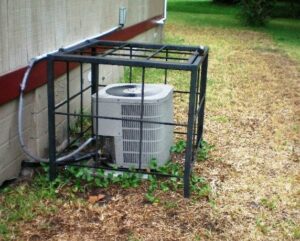
Condensing units can be enclosed in security cages to prevent theft.
What Does This Mean for Insurance Carriers?
As long as HVAC theft remains a prevalent concern, it is critical that insurance carriers take all steps necessary to reduce indemnity leakage. Risk managers can guide policyholders in implementing the preventative measures outlined above to safeguard their HVAC systems. And when HVAC theft claims arise, it’s essential for adjusters to work with objective HVAC experts who can accurately verify the cause of loss, assess repairability, and ensure that any necessary replacements match the original equipment in Like Kind and Quality.
As the nation’s leading provider of residential and commercial HVAC and refrigeration system assessments and desktop pricing reviews, HVACi, part of Alpine Intel, stands ready to help insurance professionals evaluate HVAC claims of all kinds. For expert support, submit an assignment today.

Don’t miss insurance-focused resources and webinars about property, perils, and trends impacting claims nationwide by signing up for The Savvy Adjuster Newsletter.

Be sure to also tune in to The Savvy Adjuster Podcast to hear more from the experts themselves.
Alpine Intel’s content is meant to inform and educate readers using general terms and descriptions. They do not replace expert evaluations that determine facts and details related to each unique claim.
Related Resources

Understanding Water Damage in HVAC System Claims Guide
Rains, flooding, and leaks can all cause water to get into places it shouldn’t be – including your policyholders’ HVAC systems.
Essentials of Settling Water-Related HVAC Claims Webinar Recording
By the end of the webinar, you’ll know about water’s impact to split systems, ductwork, and package units, among other components.
HVAC System Theft Losses in Residential Claims Guide
Learn more about why HVAC metal theft is common and what to consider when handling these claims.