
Structural Chimney Damage: Indicators and Possible Causes in Residential Properties

Key Takeaways
Throughout this article, you’ll learn about:
- Indicators of structural chimney damage on residential properties that may appear on masonry and brick chimneys
- Several types of chimney damage and how they can occur
- Benefits of a forensic engineering assessment when structural chimney damage is possible
When temperatures drop, fireplace usage tends to increase. That uptick in roaring fires can lead to homeowners noticing water intrusion or other possible signs of chimney-related structural damage.
Accurately identifying whether fire, weather-related perils, or other factors caused the damage can help inform next steps.
Common Indicators of Structural Chimney Damage
Brick spalling, masonry cracks, water intrusion, cracked flue liners, and foundation-related defects are common indicators of structural chimney damage. Signs of chimney problems can appear long before a fireplace’s functionality is affected and could suggest damage from multiple causes.
Spalling or chipping to brick veneer first appears on weak spots, such as delaminated areas, and may cause further structural issues if not addressed.
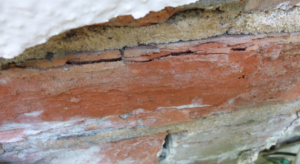
Spalling on concrete or masonry manifests as seemingly minor aesthetic damage but could lead to structural damage.
Clay tiles—the most common type of flue liner in residential wood-burning fireplaces with brick chimneys—are susceptible to cracks and mortar-joint deficiencies, whether from installation errors, structural movement, water intrusion, or chimney flue fires.
Foundational indicators also cannot be overlooked. Leaning or tilting, insufficient or missing lateral support, chimney footing defects, and eroded soil all can point to weakened structural integrity.
Possible Causes of Chimney Damage
Various weather events, non-weather-related perils, or lack of maintenance could cause chimney losses ranging from freeze damage to chimney flue fires.
Cold Weather Losses
Cold weather damage can result from freeze-thaw cycles, ice dams, or snow buildup. Cracks near the top of the chimney, where tiles are exposed to moisture and colder temperatures, could indicate freeze-related losses.
Precipitation can be absorbed unless the chimney masonry has a glazed surface. When the water freezes, it expands and creates an opening that allows more precipitation to enter, ultimately leading to spalling.
Trapped moisture can also cause pieces of chimney masonry to fall off the surface. Sometimes, water leaves behind salt that could crystallize below the masonry’s outer surface. If untreated, it may contribute to exfoliation, spalling, or cascading deterioration.
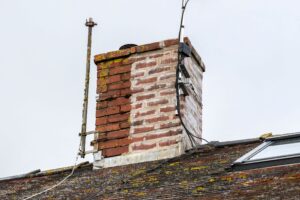
Chimney masonry and brick veneer can both sustain structural damage.
If precipitation enters uncapped flues, it can cause deterioration of the liner and mortar joints due to freeze thaw and surface spalling. Hot flue gases can condense moisture on cooler flue liner walls at the chimney’s top and lead to mortar-joint deterioration or surface spalling, even when the flue is covered.
Other Weather-Related Losses
Weather-related events that can occur any time of year, such as storms, high winds, and lightning strikes, could also cause chimney damage.
Strong wind can displace chimney flue caps and, when severe enough, they can even cause structural damage. This often occurs at the intersection of the chimney and roof, where the chimney is supported below and freestanding above.
Though rare, lightning damage to chimney masonry is also possible. It presents as cone-shaped spalling or fracturing due to high temperatures in lightning passing instantaneously through the concrete or masonry. Visible effects tend to be localized, according to the American Concrete Institute. But if a gap exists at concrete joints or where masonry is reinforced, electrical currents can arc and leave black spots on spalled concrete.
Non-Weather-Related Damage
Some signs of chimney damage could be mistakenly attributed to a recent weather event. However, the indicators may actually result from normal aging, manufacturing or installation errors, or chimney fires and soot buildup.
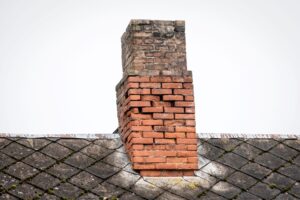
Brick chimneys can exhibit spalling and deterioration, among other indicators of structural damage from weather-related and non-weather-related perils.
Chimney displacement may occur when soil settles beneath the foundation, causing the chimney to rotate away from the structure. Even a small rotation of the relatively small supporting foundation can translate to significant separation at the top of a chimney.
Creosote accumulates in chimney flues without regular chimney cleaning and maintenance, potentially leading to chimney fires. Chimney flue fires can cause liner cracks and damage to the mortar joints between tiles. Such a fire is typically evidenced by puffy or glazed creosote in the flue, smoke chamber, damper, or firebox outside of the flue liner. Burn marks on adjacent shingles, often from flying embers, smoke discoloration, or fire damage to the flue cap, may be identified. Flue tile damage could be indicated by cracks, spalling, and cracked or missing mortar. Any opening in the flue liner can allow combustion gases to enter the living space, rendering a fireplace unsafe to use.
Engineering Assessments and Chimney Damage
Because some signs of chimney damage could stem from multiple causes of loss, seeking an objective forensic engineering assessment can help you better understand what actually happened and be able to move forward.
Professional Engineers, including those at Donan Engineering, have extensive knowledge of chimney materials and how they react to various perils. They understand the nuances of structural chimney damage and follow the scientific method to deliver expert findings that consider reputable weather data, satellite imagery, and other evidence-based resources.
Their reports not only bring clarity to homeowners and insurance professionals experiencing chimney-related losses but can be helpful should litigation occur or questions arise regarding how the cause of loss was determined.
Donan Engineering, part of the Alpine Intel suite of services, can also refer assignments to other offerings such as National Fire Experts for further analysis, if requested. Built on decades of experience, Donan’s licensed engineers deliver actionable intelligence through forensic engineering investigations with fast cycle times and exceptional reports that answer complex and challenging questions about property loss, including chimney damage. Submit an assignment today.
Engineering services are provided by or subcontracted to Donan Engineering, LLC, Donan Engineering NC, PLLC, or Donan Forensic, LP. National Fire Experts performs work in Indiana under Donan Engineering license PI20700047.

Don’t miss insurance-focused resources and webinars about property, perils, and trends impacting claims nationwide by signing up for The Savvy Adjuster Newsletter.

Be sure to also tune in to The Savvy Adjuster Podcast to hear more from the experts themselves.
Alpine Intel’s content is meant to inform and educate readers using general terms and descriptions. They do not replace expert evaluations that determine facts and details related to each unique claim.
Related Resources
Crawlspace Moisture: Indicators and Causes Guide
This guide shows possible indicators and causes of crawlspace damage, as well as repair or remediation recommendations a licensed forensic engineer may provide.

Key Indicators of Flood Damage
Dive into how different forces may impact properties during flood events, common damages, and how experts differentiate between flood damage and other causes of loss.
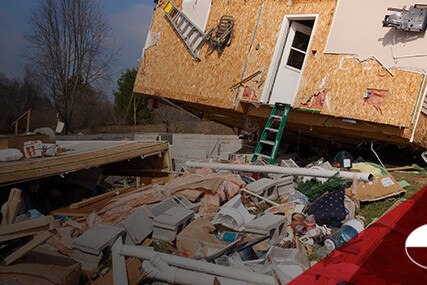
Your Guide to Structural Tornado Damage
Tornadoes can cause an array of structural damages. Get familiar with these losses and learn which indicators may point toward another cause of loss.