
Root of the Problem: What Causes Trees To Fall

Aside from who is at fault when a tree falls, or if insurance will cover any damage sustained, looms a larger question: What causes trees to fall in the first place?
The answer helps property owners and insurance professionals grasp the bigger picture, including how to prevent or mitigate a fallen tree in the future and the best way to respond if a tree does fall on or near a property.
What Causes Trees To Fall?
Several factors contribute to tree failure, which can potentially damage property or cause injury. Chief among those are weather events, environmental factors, and human intervention.
These external forces combined with the condition of a tree and where it is growing could determine not only a tree’s health but also its ability to remain standing.
Weather events
Wind, ice, lightning, flood, and various other weather events can weaken the structural integrity of trees in any environment or lay the groundwork for a future break (if a singular event doesn’t cause it to fall immediately).
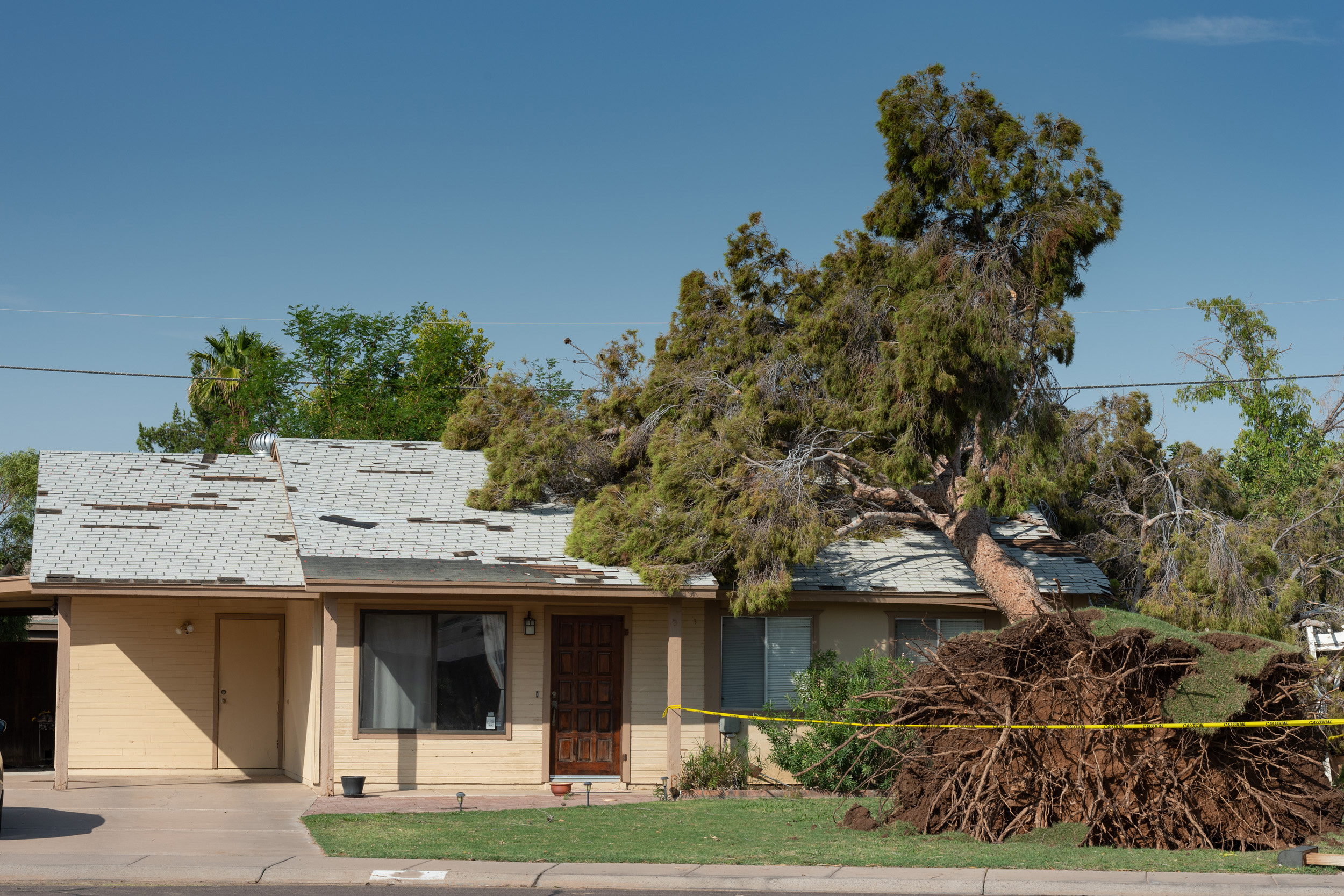
Weather events like heavy rain may cause a tree to fail and result in damage to nearby property.
Trees that grow near bodies of water have the added vulnerability of flooding, which may cause ground saturation and weaken root systems, according to the California Governor’s Office of Emergency Services. Ground saturation can destabilize the soil around a tree, and this occurs because the soil loses its ability to hold the tree firmly. Factors like shallow soil, root decay, and an unbalanced canopy can worsen this vulnerability.
Other external pressures, including the weight of snow and ice on trees, hamper a tree’s structural integrity and can lead to a break.
Environmental
Environmental factors such as exposure, location, topography, and soil content influence how trees grow and take shape, according to the Virginia Cooperative Extension’s Tree Steward Manual.
In some cases, the cause of a weak tree may be the roots themselves. Improper root development could occur when there’s damage, decay, or limited space. Meanwhile, anomalies in a tree’s shape, such as codominant joined trunks or cavities, factor into its ability to withstand wind and other natural forces.
Fungi might also infiltrate a tree and lower its resistance to environmental infections, possibly exacerbating decay as the tree ages.
Trees already in distress are more prone to insect infestation and disease, further weakening the tree and making it more likely to uproot.
Human Intervention
The human element also cannot be discounted. Where a tree was planted or grew naturally plays a role, as does the way that area has been modified.
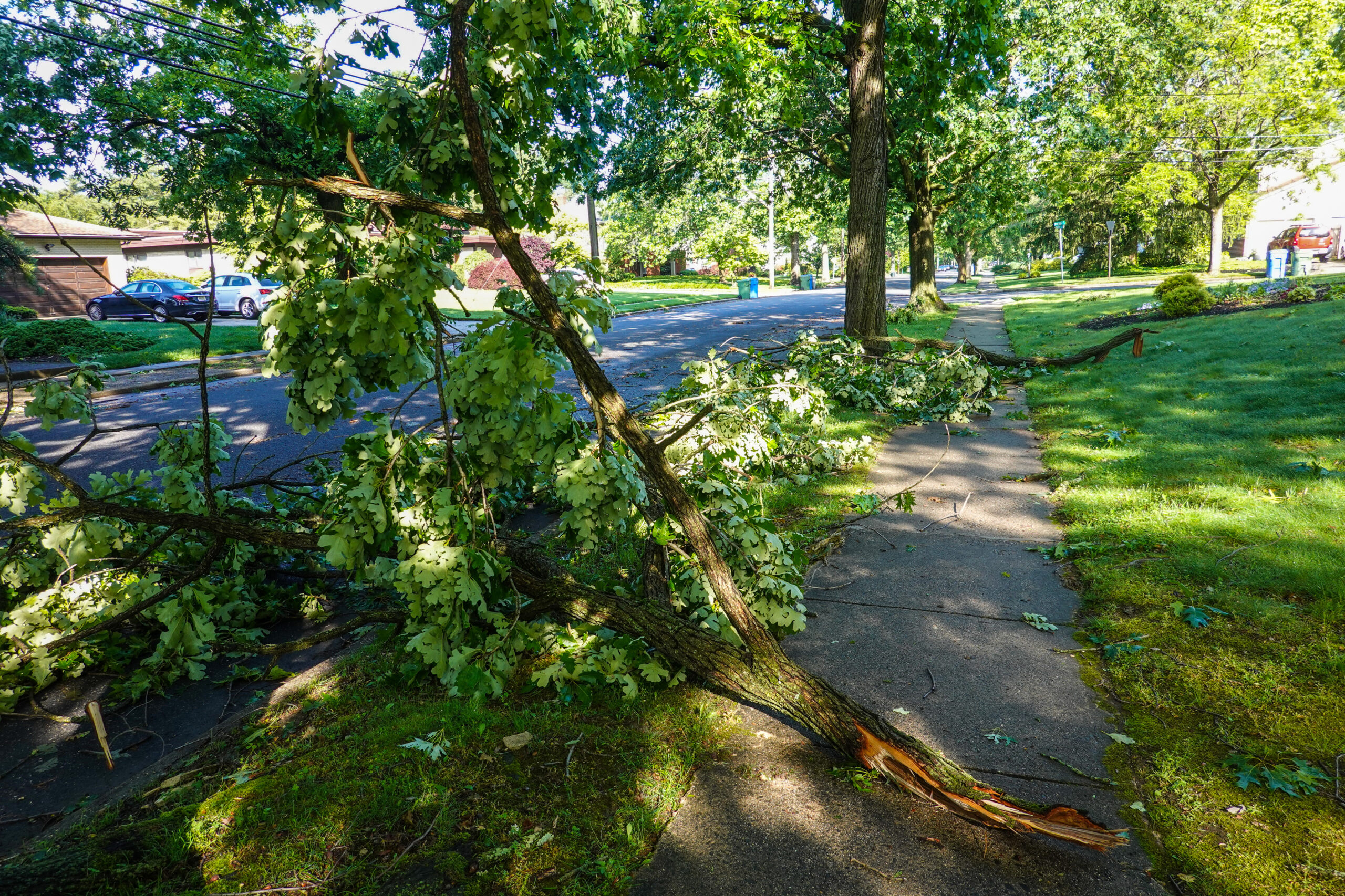
Human influence, such as a technician performing utility work, might lead to tree damage that could eventually cause it to fall.
Manmade actions ranging from landscaping and construction to utility work could inadvertently damage a tree or its environment. The potential disturbances to the soil, tree roots, or other elements may make it more prone to failure.
External forces such as mechanical damage, e.g., tree vs. car, can also cause significant damage and result in total tree failure.
While any combination of these factors could cause a tree to fall, there are opportunities to prevent or deter damage.
Signs a Tree Might Be at Risk of Falling & Prevention Tips
Knowing when a tree is about to fall can seem like a guessing game, but certified arborists, including those at HMI, are uniquely trained to spot the indicators.
They know some trees could have internal damage that makes them more susceptible to falling, while others that outwardly appear structurally weak might not be in as bad of shape as assumed.
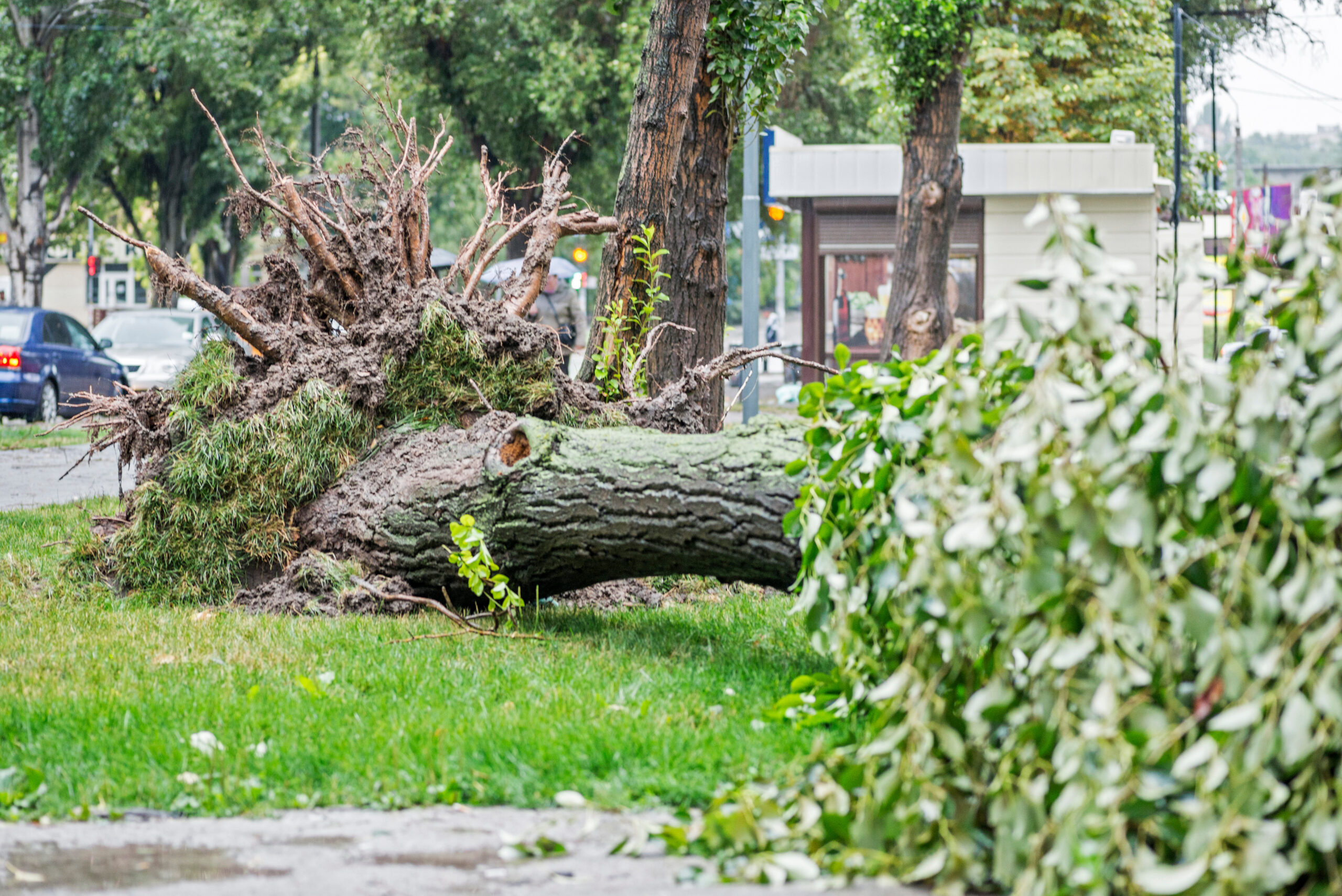
Ground saturation is one sign a tree might be prone to failure.
Some indicators that a tree might be at risk of toppling over include:
- Cracks in the trunk or branches
- Signs of decay
- Sunken soil around the base of the tree
- Bark loss
- Defects, wounds, and splits
- Evidence of root damage, including die back and a leaning trunk
- Co-dominant stem
- Unusual patterns, bulges, or deformations on the tree
- Heaving of the tree or soil around the base
- Existence of cankers on the side of the tree
The only surefire way to prevent tree damage to property is to not have them in the area at all, but deforestation of all urban forestry is not recommended and can have unintended consequences. The real solution is having a certified arborist inspect trees on a property periodically, and keep the trees as healthy as possible through treatments and good maintenance practices.
Maintenance can include pruning, cabling, or bracing trees. Furthermore, consulting an arborist when looking to plant a new sapling is critical, and arborists can help select and place the tree in the best location for it to thrive.
But even the best laid plans are no match for Mother Nature. If a tree does fall, there are certain steps that should be taken to safely remove a tree.
When To Call an Expert
Contacting tree removal experts as soon as possible after the initial impact is ideal to limit the extent of damage to property or roadways. It is critical to use licensed, insured and qualified tree care professionals to dismantle and remove fallen trees safely and quickly.
In addition to its certified arborists, HMI has qualified tree removal crews who are available within hours to eliminate trees and tree debris from various property types and blocked roadways.
HMI’s experts also can provide cause of loss analysis, an inventory of damaged plants, and replacement, repair, and removal cost estimates for damaged trees and landscaping.
With nationwide coverage, 24/7 emergency support, and consistent market pricing, HMI’s network of credentialed green industry experts is equipped to handle outdoor property claims of any kind.
If you’re ready to use their services, submit an assignment today

Don’t miss insurance-focused resources and webinars about property, perils, and trends impacting claims nationwide by signing up for The Savvy Adjuster Newsletter.

Be sure to also tune in to The Savvy Adjuster Podcast to hear more from the experts themselves.
Alpine Intel’s content is meant to inform and educate readers using general terms and descriptions. They do not replace expert evaluations that determine facts and details related to each unique claim.
Related Resources

Three Causes of Christmas Tree Fires
Christmas trees are a beloved holiday tradition, but even these brightly lit and colorful decorations have a dark side.

Apartment Fires: Causes and Investigations Guide
Learn common causes of apartment fires, how investigators approach assessments, and the characteristics that can introduce unique considerations to these claims.

Causes of Flooding During Winter Months Guide
Learn the leading causes of winter flooding and what evidence experts use to distinguish between flooding and other water damage.