
Manufactured Homes and Property Claims: What Adjusters Need To Know

Key Takeaways
In this article, you’ll learn:
- The differences between manufactured, mobile, and modular buildings
- Common damage concerns for mobile and manufactured homes
- Why adjusters should be aware of the manufactured home construction process
With nearly 8 million manufactured homes in the United States, adjusters need to know what makes these structures more susceptible to certain weather-related perils, particularly those associated with severe storms.
It’s important to first understand the differences between manufactured, mobile, and modular buildings, and then explore the nuances that persist related to mobile and manufactured housing.
This puts insurance professionals in a better position to determine when an expert, scientific-method-backed engineering assessment may be needed to analyze reported damage and determine its cause.
Manufactured, Mobile, or Modular: What’s the Difference?
Manufactured and modular homes are both created off-site in a factory. The individual pieces are then shipped to the property location and assembled.
Modular homes typically adhere to the codes and standards for conventional housing, including the International Building Code (IBC), and use the same materials (wood, concrete, and steel). Meanwhile, manufactured homes fall under the purview of the U.S. Department of Housing and Urban Development (HUD), which established building and safety standards in the 1970s and enforces them through its Office of Manufactured Housing Programs.
The implementation of standards also created a distinction between mobile and manufactured homes that could affect the severity of reported damage and how claims are resolved, though the terms have been used interchangeably among the general public.
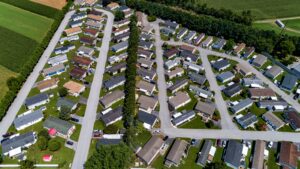
The term ‘manufactured home’ took effect in the 1970s after the U.S. Department of Housing and Urban Development created federal safety and construction standards for what had been called mobile homes.
By HUD’s definition, mobile homes were built prior to the implementation of its standards. Buildings created after 1976 are considered manufactured homes and are required to have a certification label. This difference is important for adjusters because prior to 1976, building materials varied by manufacturer, and standards for wind resistance, fire safety, and structural integrity were nonexistent. At least 1 million mobile homes are still in use, according to the Urban Institute’s estimate, and both types can appear in claims today.
Common Damage Concerns for Mobile and Manufactured Homes
Mobile and manufactured homes are more prone to damage from weather-related perils, fire, and wear and tear than conventional housing, but the pre- and post-1976 construction approach influences how susceptible they are.
The mobile homes built before 1976, according to the MPH Exchange, have more vulnerabilities related to weather, while the anchoring systems and overall structure of newer manufactured buildings lend themselves to increased stability.
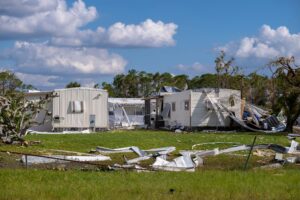
Mobile homes are historically more susceptible to weather-related perils because, prior to 1976, federal standards did not exist for the creation of these properties.
Even still, manufactured homes are considered among the most vulnerable structures where severe weather perils are concerned. The Journal of Performance of Constructed Facilities published a research study in 2020 on the effects hurricanes Irma and Michael had on manufactured housing communities. Researchers found that 20% of surveyed homes were classified as completely destroyed.
A University of Kansas civil engineering professor told Nebraska Public Media that regardless of how modern a manufactured home is, high winds are still a risk.
Because manufactured homes are built off-site and fastened to their foundation through piers or anchors, they could be more susceptible to leveling, cracks, leaning, or buckling.
Manufactured homes are also more apt to develop moisture or condensation issues, in part, due to the prevalence of crawlspaces. If not properly ventilated, homes could experience elevated moisture levels that lead to fungal growth, wood decay, soft and distorted framing, and hanging or displaced insulation, among other losses.
Newer manufactured homes are constructed with a conventional, asphalt shingle roof, but mobile homes might have flatter roofs that are more vulnerable to water-related damage from snow loads or ice dams.
An in-depth engineering assessment can help adjusters know whether they’re reviewing a claim for a mobile home or manufactured home based on materials used and the quality of those materials.
Construction Process and Engineering Assessments
The manufactured home construction process is a key component adjusters should be aware of when reviewing property claims. Construction deficiencies tend to occur more often with manufactured homes. For instance, Donan’s engineers have found deficiencies related to ceilings, inadequate draining conditions, and roof framing systems in manufactured homes included in claims.
The manufacturers themselves provide installation requirements, such as how to properly align the foundation to maintain structural stability, which are then regulated through HUD.
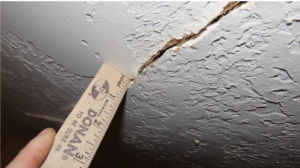 A Donan engineer determined that forces from historical and ongoing differential settlement resulted in the cracked ceiling of this manufactured home. Inadequate drainage conditions contributed to the differential settlement.
HUD dictates the design load criteria, which vary based on which of three HUD-designated zones the home will be installed. Each has its own thresholds for wind loads, wind speeds, and other related criteria. To know which zone a home was built for, check the structure’s individual data plate zone map. If moved to a location outside of their original zone, these homes may not have the same resistance to external forces.
HUD’s Model Manufactured Home Installation Standards also have guidance related to grading and drainage, intended to prevent or mitigate water-related issues.
Licensed engineers have the depth of knowledge and resources to determine if:
- A manufactured home was relocated from a different zone prior to sustaining damage
- Grading and draining standards were met
- What may have contributed to or caused claimed damage if they have ruled out construction deficiencies
They are also in a better position to evaluate what building requirements, if any, were in effect at the time of construction (to determine if the claim is for a mobile or manufactured home) and if the home meets current standards.
Donan’s engineering team is well equipped to tackle these types of complex inquiries related to property damage for manufactured or mobile homes, or other types of structures. Our licensed engineers investigate a wide array of property losses with perils including wind, lightning, hail, fire, flood, water, and more. Following a property loss, knowing what happened and how is crucial to making accurate claim decisions.
To partner with a licensed Donan engineer, submit an assignment today.

Don’t miss insurance-focused resources and webinars about property, perils, and trends impacting claims nationwide by signing up for The Savvy Adjuster Newsletter.

Be sure to also tune in to The Savvy Adjuster Podcast to hear more from the experts themselves.
Alpine Intel’s content is meant to inform and educate readers using general terms and descriptions. They do not replace expert evaluations that determine facts and details related to each unique claim.
Related Resources
Water Damage in Property Loss Claims Guide
Water damage is a frequently claimed peril. Download this guide to learn more about water losses to HVAC systems and electronics, including critical data, causes, and affected items.
Hail-Related Property Damage Claims eBook
Learn tips about hail damage, or what might look like it, when policyholders report hail impacts to roofs, structures, HVAC systems, outdoor equipment, and more.
Lightning and Surge Impacts in Property Claims Guide
Lightning and surge are the most frequently reported or determined cause of loss for commercial and residential policyholders.