How High Voltage Surges Impact Commercial Equipment Claims

Key Takeaways
Through this article, adjusters can find out:
- What causes high voltage surges
- How these events can damage the electrical equipment critical to your commercial policyholders
- The process experts use to identify surge as the cause of loss and determine repairability
High voltage surges pose a threat to commercial operations because they can damage electrical equipment and bring business activity to a standstill. These sudden voltage spikes, also known as transient power surges, can affect critical systems such as point-of-sale equipment, security networks, data center equipment, manufacturing machinery, and computer servers. For health care and telecommunications industries, the consequences can be particularly severe, with equipment failures potentially compromising patient care or leading to data loss.
While many businesses install surge protection devices, these safeguards are not foolproof. That’s why insurance professionals should understand what causes high voltage surges, how they affect commercial electrical equipment, and how experts can identify their sources.
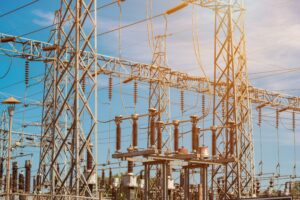
Surges may only last for a few milliseconds to several minutes, but they have significant ramifications for your commercial policyholders and their electrical equipment.
What Causes High Voltage Surges?
High voltage surges can stem from a variety of sources. Three common causes include:
- Weather-related events: Lightning strikes, as well as high winds and other severe weather conditions, can disrupt power lines and cause sudden voltage spikes.
- Utility-related issues: Vehicle collisions or other impacts can damage utility equipment. This damage, or other malfunctions within the electrical grid, can lead to unpredictable power surges that affect connected commercial properties.
- Equipment-driven surges: High-energy devices, particularly those with mechanical or operational issues, can generate surges when they power on or off, affecting other connected systems.
Regardless of its cause, high voltage surge can have major, and sometimes costly, impacts to electrical equipment.
How Do High Voltage Surges Damage Business-Critical Electrical Equipment?
According to the National Electrical Manufacturers Association (NEMA), the effects of surges on electrical equipment can be divided into three categories: disruptive, dissipative, and destructive.
Disruptive: NEMA notes that disruptive effects occur when surges enter equipment through inductive coupling, or nearby electromagnetic interference. This can disrupt data output lines, causing components to misinterpret the surge as legitimate commands, which may lead to system lock-ups, operational errors, malfunctions, or even corrupted or lost files.
Dissipative: Integrated circuit components have a finite tolerance for electrical stress. Over time, repeated surge exposure may contribute to cumulative stress that, in some circumstances, can increase the potential for arc-overs, short circuits, open circuits, or junction failures, which may affect the reliability of essential equipment.
Destructive: Finally, NEMA describes destructive effects as causing the most immediate and visible damage. High-energy surges that exceed the voltage tolerance of components or overwhelm power supply regulators can cause failures, such as burnt circuit boards or melted components.
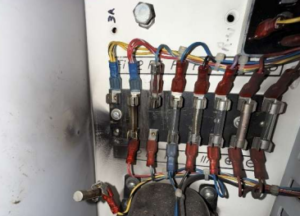
Burn marks inside the control system for an elevator indicate that a high voltage surge may have occurred.
In a business context, the consequences of such damage can extend beyond the equipment itself. Companies may face downtime, production delays, and financial losses.
How Is High Voltage Surge Damage (and Its Source) Identified?
The cause and scope of any commercial electrical equipment damage should be confirmed by an objective expert who can carefully assess the claimed items.
In some cases, visible external signs—such as evidence of arc events or minor electrical fires—may indicate a high voltage surge. However, a deeper inspection of the internal components might be necessary. Experienced consultants can examine these complex systems and perform detailed testing to rule out alternative causes of equipment failure, such as loose or disconnected cables, which may indicate wear and tear.
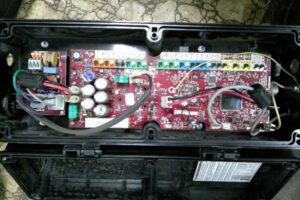
Confirming the cause of loss in commercial electrical equipment claims often necessitates inspecting internal components, such as the circuit board.
If high voltage surge is confirmed, experts may also be able to go a step further and trace its most likely origin. They will ask the question: Did this stem from weather-related events, such as lightning, or utility service disruptions?
To obtain these answers after verifying the cause of loss, TechLoss Consulting & Restoration, part of the Alpine Intel suite of services, performs both utility and weather research. The team identifies the commercial facility’s electric service provider and contacts them to investigate whether there were any known surges or irregularities on the reported loss date. Weather research for this same timeframe can shed light on atmospheric conditions, including those conducive to electrical events such as lightning strikes.
For added precision, on-site assessments by TechLoss can be paired with lightning verification reports from StrikeCheck, another Alpine Intel offering. These reports confirm or exclude lightning’s presence. The reports feature a standard 7-day search period and 5-mile search radius to denote cloud-to-ground lightning flashes and strokes near properties across the United States.
Using our expertise and research, TechLoss can confirm the cause and circumstances surrounding reported instances of high voltage surge, helping carriers return affected business-critical or high net-worth residential electrical equipment to pre-loss condition through the most appropriate solution.
Because electrical equipment claims can be so multifaceted, insurance professionals can also rely on TechLoss to source loaner equipment, reinstate maintenance contracts, and generally act as an extension of the carrier’s team. Experience this partnership and get what you need to settle complex claims accurately. Submit an assignment.

Don’t miss insurance-focused resources and webinars about property, perils, and trends impacting claims nationwide by signing up for The Savvy Adjuster Newsletter.

Be sure to also tune in to The Savvy Adjuster Podcast to hear more from the experts themselves.
Alpine Intel’s content is meant to inform and educate readers using general terms and descriptions. They do not replace expert evaluations that determine facts and details related to each unique claim.
Related Resources
Guide to High Voltage Surge Claims with Electronics
Adjusters should understand why high voltage surge losses are so prevalent and what all could be impacted.
Commercial HVAC Equipment for Adjusters eBook
Commercial HVAC equipment contain complicated components that are susceptible to several perils. This eBook will help you settle commercial claims accurately.
A Guide to High Voltage Surge Losses in Commercial Equipment
Learn how experts identify the source of high voltage surge and evaluate damage to commercial equipment with this claims guide.