
Handling Tree Claims: What Adjusters Can Expect

The severity of tree-related damage can differ from one claim to the next, but the companies insurance professionals partner with for tree or tree debris removal should provide the same technical expertise and fair market pricing for every assignment.
Adjusters must understand how tree size, scope of damage, restricted access and the need for multiple services can impact cost estimates and the removal process itself. Armed with this knowledge, they are better equipped to ensure the extraction process doesn’t delay or complicate the claim.
Varying Scopes of Damage and Levels of Service Provider Coordination
Reputable tree care companies will typically perform pre-work assessments and partner with local entities, as necessary, to protect themselves, preserve the integrity of the property, and lessen the likelihood of additional claims due to unprofessional or haphazard removal work.
Upon assignment receipt, a quality tree services vendor will typically conduct an on-site assessment to determine what equipment and how many labor hours are needed to safely remove an entire tree, limbs, or tree debris from the property. This information is compiled into a cost estimate and provided to the homeowner before work begins.
When the tree can be easily and safely accessed, standard equipment such as bucket trucks, aerial lifts, or skid steers may be used.
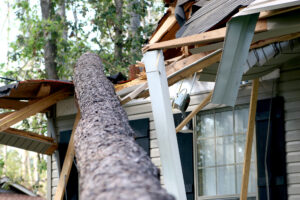
A reputable tree care company will assess the severity of tree-related damage to a structure before beginning the removal process. This ensures they have the proper equipment and enough workers to handle the scope of damage.
However, if the certified tree care specialists determine there are safety concerns—such as obstructions to access to the downed tree or if the tree has broken through the roof and into the home—more specialized equipment and/or additional labor hours could be warranted. Cranes may be required to reach over the home or lift sections of the tree out of the home. In some cases, trees may need to be lowered by hand using rigging systems if there is no access for equipment. These situations can increase labor hours significantly.
A professional tree care specialist will coordinate with one or more external parties if removing the tree requires services they can’t provide. Certified tree care professionals will work with local utility companies, transportation officials, or others so tree crews can work safely around utility lines and ensure permits and traffic control requirements are met.
It’s critical that companies can scale their resources to offer the same level of professionalism after a catastrophe (CAT) event as they do for daily storm events, both of which could result in property damage in claims.
Weather Will Likely Have Influenced the Tree Failure
There’s not a “single season” that is necessarily more prone to causing tree-related property damage, but adjusters should remember that the ways in which a tree can impact a property do ebb and flow with weather conditions.
Wind, for instance, has consistently been a leading cause of downed trees. The 2025 LexisNexis home trends report found that wind severity increased nearly 24% year-over-year, and wind-related losses increased in frequency nearly 6% year-over-year from 2023 to 2024. Wind from hurricanes and tornadoes, as well as other associated perils, also cause property impacts from fallen or flying trees and tree debris.
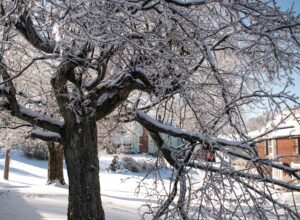
The weight of ice and snow on tree branches can lead to limb failures that may damage a structure or block access to a property.
When colder weather and freezing conditions take hold, heavy snow can create significant damage. Ice storms may also add significant weight to trees, which can cause extensive damage to limbs. In extreme cases (1/2” or more), full tree failures are common. Both weather-related perils still have the potential to impact property and lead to a claim.
Regardless of what causes tree-related damage claims, adjusters and vendor managers who anticipate a claim surge should have a reputable and qualified company on deck that’s transparent about pricing, follows overarching claim goals, and treats every assignment with the same high level of detail and care.
As a leading provider of outdoor property claim support for insurance professionals nationwide, HMI leverages its network of certified tree care professionals to perform tree and tree debris removal following CAT events and typical storm damage.
With its transparent pricing and specialist certifications, HMI delivers accurate results and fair, market-based pricing on every project. Submit an assignment today.

Don’t miss insurance-focused resources and webinars about property, perils, and trends impacting claims nationwide by signing up for The Savvy Adjuster Newsletter.

Be sure to also tune in to The Savvy Adjuster Podcast to hear more from the experts themselves.
Alpine Intel’s content is meant to inform and educate readers using general terms and descriptions. They do not replace expert evaluations that determine facts and details related to each unique claim.
Related Resources
HMI’s Tree Removal Cost Guide
This Tree Removal Cost Guide for 2026 explains the estimated cost of tree removal services for companies in the HMI network.
Subrogation Basics for Claims Adjusters Guide
The subrogation process can be challenging for adjusters due to legal complexities and the importance of preserving solid evidence. Gain insights into the fundamentals of subrogation with our guide.

Refrigerator Claims Guide
Factors like the broad range of market prices and the complexity of refrigerator components can make it difficult to determine the best next steps when settling claims.