Hail and Commercial HVAC Systems Don’t Mix
Key Takeaways
Policyholders frequently report hail damage to commercial HVAC equipment. Prepare for claims by learning:
- Which systems and components are most often impacted
- What repair options should be considered before a replacement
- How objective assessments can help determine the best course to restore equipment to pre-loss condition
In 2025 alone, the National Oceanic and Atmospheric Administration (NOAA) recorded 5,430 severe hail events with hail an inch or larger. These storms can cause widespread damage and are costly. According to the Insurance Information Institute, severe convective storms, including hailstorms, were the costliest natural catastrophes that year, resulting in approximately $52 billion in insured losses.
Commercial properties frequently sustain hail damage, and HVAC systems are among the equipment that’s often impacted. We analyzed our commercial HVAC claims data in the 2025 HVACi Annual Claims Report, and 39% of the systems HVACi assessed were determined to have hail as the cause of loss. Because these claims are so common, it’s important to know how hail affects commercial HVAC systems, and what options should be considered before a full replacement.
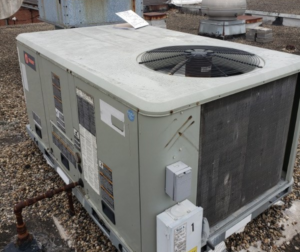
Package units and vent caps are frequently listed in commercial HVAC claims for hail damage.
Commercial HVAC Equipment Prone to Hail Damage
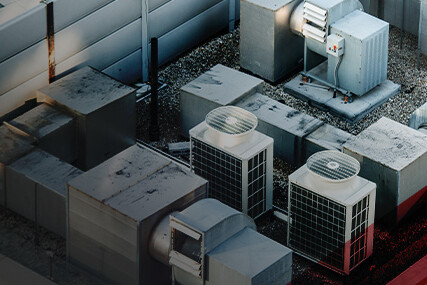
Commercial HVAC systems, including ground and rooftop units, are susceptible to hail damage.
Package units, all-in-one heating and cooling systems that can vary in size, are the most common commercial HVAC system affected by hail because they have several more vulnerable components. Refrigeration units, including walk-in coolers, ice machines, and refrigerated preparation tables, are used at many commercial properties, including grocery stores and restaurants. Because their condensing units are often outside, they are also liable to have hail damage. Exhaust systems, which remove unwanted heat and combustible gas from businesses using fans and vents, have external vent caps that are also frequently impacted by hailstones.
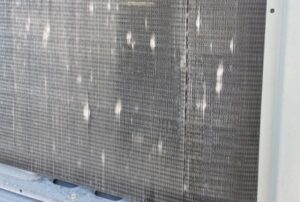
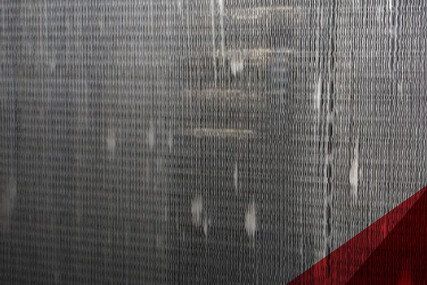
Condenser coils, shown here up close, are among the HVAC system components prone to hail damage.
Commonly Damaged Commercial HVAC Components
Some commercial HVAC components are more susceptible to hail impacts. These include:
- Condenser coils: The most prominent HVAC component to sustain hail damage is the aluminum fin-covered condenser coils. Hail can easily bend or dent them. Dents in HVAC condenser fins can range up to twice the size of hailstones. When the fins are damaged, they are more at risk of pressing against each other or against the copper coil and blocking the system’s air flow. If it gets bad enough, this type of hail damage could make the HVAC system work harder, increase its running time, produce inadequate cooling, and shorten the equipment’s lifespan.
- Fans blades: The fan assemblies in condensing and package units and the blades can also be dented or damaged by hail. Fan blades that are dented or broken in half could cause an imbalance that may damage the system over time because it can wear out bearings or destroy a motor by overworking it.
- Vent caps: Vent caps keep moisture, debris, and other items from getting into the system where air is being pushed out. Hail can harm these components made of softer metals. Dents are the most common damage, and they won’t necessarily disrupt functionality. However, safety concerns can arise in severe hail events if the vent cap was crushed to the point that air can’t escape, and carbon monoxide builds up. Metal vents are prone to corrosion and damage from moisture, wind, and hail.
Hail Damaged an HVAC System, Now What?
To prevent hail damage, policyholders can install hail guards, which protect condenser coils from hailstones. However, since many systems don’t have these, the results from hailstorms may be dented, bent, or torn condenser coils.
The fortunate thing is that hail damage doesn’t guarantee a replacement is needed. Whether it’s a rooftop unit or a system on the ground, most commercial HVAC systems damaged by hail can be repaired. In fact, 77% of commercial HVAC systems assessed by HVACi in 2025 with confirmed hail damage could be restored to pre-loss condition through repairs.
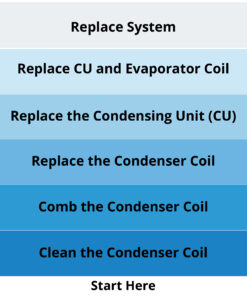
Repair options exist and should be ruled out before settling for a full-system replacement.
The methods for returning a system to pre-loss condition range from a minor repair all the way to a full-system replacement. More specifically, they include:
- Cleaning the condenser coil: In some cases, cleaning the condenser coil of storm debris may be all that’s required. However, high-powered hoses and bathroom cleaners can cause more harm than good. Cleaning should be handled by a professional.
- Combing the condenser coil: If the traditional tube and fin coil are dented or deformed, a trained technician may be able to use a fin comb to straighten them to proper position. This is a simple, inexpensive repair option.
- Replacing the condenser coil: If fins are torn, are micro-channel or spine fin, or are too old and cannot be combed, the next step is to purchase a new condenser coil.
- Replacing the condensing unit: If condenser coil is unavailable, a new condensing unit can be purchased.
- Replacing the condensing unit and evaporator coil: Though uncommon, policyholders may sometimes need to replace both the condensing unit and evaporator coil. However, this doesn’t necessitate a full system replacement, as the lineset and furnace would stay intact.
- Replacing the system: The rarest solution is to replace a full system after a hailstorm, though it may be necessary if it is an all-in-one system or if the condensing unit replacement would cause a SEER or refrigerant mismatch with the indoor equipment.
Other hail-impacted components may not require any action to be taken. A dented cabinet on a package unit or a dented vent cap can remain as-is if functionality isn’t impeded. On the other hand, individual elements that are damaged to the point of causing other system malfunctions, such as damaged fan blades and crushed vent caps, likely must be replaced.
Settling HVAC Claims With Reported Hail Damage
Extensive industry knowledge is needed to make these determinations. Without an objective assessment partner who can verify the cause of loss, evaluate the scope of damage, and provide market value recommendations for returning equipment to pre-loss condition, adjusters may be settling for unnecessary replacements.
When hail disrupts businesses and impacts policyholders, turn to HVACi. Our vetted technicians can provide support and the answers you need to confidently address claims with commercial and residential HVAC equipment. Submit an assignment to get started.

Don’t miss insurance-focused resources and webinars about property, perils, and trends impacting claims nationwide by signing up for The Savvy Adjuster Newsletter.

Be sure to also tune in to The Savvy Adjuster Podcast to hear more from the experts themselves.
Alpine Intel’s content is meant to inform and educate readers using general terms and descriptions. They do not replace expert evaluations that determine facts and details related to each unique claim.
Related Resources
Hail-Prone Commercial HVAC Equipment Guide
HVACi found that nearly half of the commercial HVAC claims included hail-damaged equipment, but more than 80% of the claimed systems could return to pre-loss condition through some sort of repair.
Commercial HVAC Systems Cheat Sheet
Adjusters, use this one-page reference sheet to gain a better understanding of commercial HVAC equipment – from system functions to common causes of loss.

HVAC Hail Claim Basics Guide
Though the outdoor equipment on commercial and residential HVAC systems is susceptible to being hit with hail and often claimed, there isn’t a guarantee the results will warrant a full replacement.