
Commercial Refrigeration Claims 101: Equipment Basics
Reliable commercial refrigeration systems are the backbone of businesses like restaurants and supermarkets, keeping operations running smoothly day after day. Their pivotal role also means they frequently appear in commercial property claims. When these systems fail, the urgency to make swift claims decisions and restore equipment to pre-loss condition is considerable. Loss of product and loss of business may be part of the claim that includes the refrigeration system itself.
For adjusters, having a clear understanding of how these systems work is essential for resolving related claims with greater confidence and efficiency. This article breaks down refrigeration system components, how they function, and which perils commonly impact them so that you can be better prepared for refrigeration system claims.
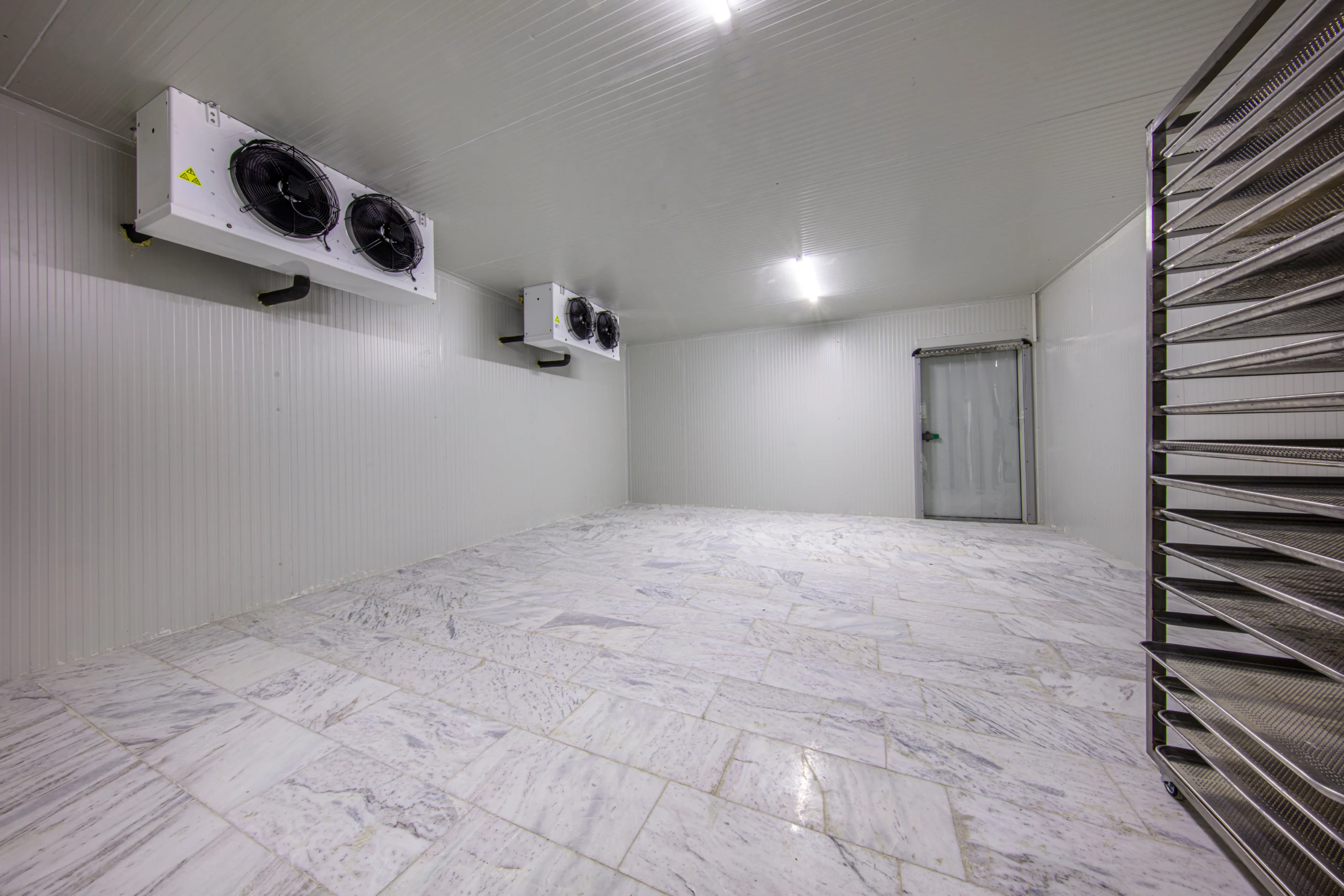
Many commercial policyholders rely on refrigeration systems like walk-in freezers, and any issues with this equipment can put daily operations on hold.
Types of Commercial Refrigeration Systems
Broadly, commercial refrigeration systems fall into two categories: self-contained units and remote cooling units.
Self-Contained Refrigeration Units
Self-contained refrigeration units house all their components within a single, compact enclosure. Examples include reach-in coolers and freezers, which serve as commercial counterparts to household refrigerators and freezers. Both are commonly found in environments where space is limited, but maintaining proper temperature control is essential, such as gas stations and convenience stores.
Remote Cooling Systems
Remote cooling systems are larger and more complex than self-contained units, as their cooling components are housed separately from the refrigerated space itself. Rack systems, for instance, are a common type of remote cooling system in grocery stores for large-scale refrigeration. They are designed to efficiently cool multiple display cases or storage areas, with components housed remotely. Walk-in coolers or freezers are also essential in restaurants, fast-food chains, and warehouses for storing bulk perishable or frozen inventory. These systems are built with heavy insulation and airtight seals on the doors to maintain optimal temperatures. Depending on the facility’s layout, walk-ins can be located indoors or outdoors.
Refrigeration System Components
Like split systems, refrigeration systems have a condensing unit and an evaporator. In remote cooling units, the condensing unit is separate from the main equipment, often installed outside on the ground or on a rooftop. For self-contained units, such as reach-in freezers, the condensing unit is typically located directly on top of the freezer box. Similar to split systems, the condensing unit includes a compressor, coil, and fan. However, unlike other HVAC systems, refrigeration condensing unit size is measured in horsepower rather than tonnage. When reviewing claim photos, it’s crucial to differentiate refrigeration condensing units from split HVAC systems. Refrigeration units are smaller, boxier, and designed for cooling compact spaces, with less pronounced coils. Refrigeration systems also don’t have to adhere to the same efficiency guidelines as other HVAC equipment.
Inside walk-in or reach-in freezers, you’ll find the unit cooler, also known as the evaporator. Evaporators are typically mounted either on the ceiling or high on a wall and are responsible for drawing warm air out of the freezer and cooling it to maintain the desired temperature. These components come in various sizes, typically expressed in British Thermal Units (BTUs) or by the number of fans they contain.
Watch this short video for a closer look at a commercial walk-in cooler and its essential components.
How Do Refrigeration Systems Work?
Again, like split systems, refrigeration systems operate using a refrigerant cycle to transfer heat. At the heart of this process are evaporator coils, which absorb heat from inside the freezer or cooler box. The captured heat is then transported by the refrigerant to the condenser through the lineset. This continuous cycle ensures effective temperature regulation.
An expansion valve controls the refrigerant flow, and the compressor converts low-pressure vapor refrigerant from the cooling side of the refrigeration cycle into a high-pressure gas on the condensing side of the refrigeration cycle.
Perils and Damages That Commonly Impact Refrigeration Systems
Several perils, including wind, hail, and high voltage surge often affect commercial refrigeration systems. Knowing more about these potential risks can help you better address related claims.
Wind and Hail Damages
Because condensing units are commonly mounted on top of outdoor walk-in units or rooftops for indoor walk-ins, they’re vulnerable to weather-related perils like wind and hail. However, confirmed hail damage is often repairable, and sometimes impacts are merely cosmetic. These units may experience bent coils or casing damage, but such losses that impact functionality can typically be resolved by replacing the coils and any affected casing, restoring the system to its pre-loss condition without full replacement.
High Voltage Surges
Electrical components in refrigeration systems, including disconnects, wiring, capacitors, control boards, and especially compressors, are susceptible to high voltage surges. HVAC experts can use a voltmeter to test compressors and verify whether high voltage surge is the cause of loss, allowing adjusters to make more informed settlement decisions.
Theft and Vandalism
Refrigeration systems are also targets for theft and vandalism due to their valuable copper coils and wiring. When these incidents occur, the equipment should be inspected thoroughly to determine which components are missing or damaged.
Wear and Tear
Refrigeration system condensing units are often installed on commercial rooftops and forgotten until something goes wrong. But without proper maintenance, these systems can fail due to wear and tear, which may be mistaken for another peril. Many claimed systems are also older than you may realize; the average age for refrigeration systems assessed by HVAC Investigators (HVACi) in 2024 was 23 years.

This condensing unit is part of a commercial walk-in freezer system that was determined to have failed due to wear and tear.
Settle Your Refrigeration System Claims With More Accuracy and Speed
When handling claims involving commercial refrigeration systems, it’s crucial to first verify the cause of loss and then determine what steps are needed to restore the equipment to its pre-loss condition, should coverage be afforded.
Consider repairability first and keep in mind that not all items in a claim may be damaged. Data from HVACi, part of Alpine Intel’s suite of services, showed that approximately 70% of commercial refrigeration systems assessed last year required no action or could be returned to pre-loss condition with a repair.
To make well-informed claims decisions with confidence, partner with HVACi. It is the nation’s leading provider of residential and commercial HVAC and refrigeration assessments and desktop pricing reviews, trusted to help insurance carriers settle their claims quickly and with a higher degree of accuracy. Submit an assignment now for help with any kind of HVAC and refrigeration claim.

Don’t miss insurance-focused resources and webinars about property, perils, and trends impacting claims nationwide by signing up for The Savvy Adjuster Newsletter.

Be sure to also tune in to The Savvy Adjuster Podcast to hear more from the experts themselves.
Alpine Intel’s content is meant to inform and educate readers using general terms and descriptions. They do not replace expert evaluations that determine facts and details related to each unique claim.
Related Resources

Commercial Electronic Equipment Claims Guide
Which electronically powered item is the most important? To commercial policyholders, all impact how their business runs, from office networking equipment to retail point of sale components.
Networking Equipment Basics Guide
Our guide breaks down various types of networking equipment, including routers, modems, wireless access points, and switches, that frequently appear in claims.
Adjuster Basics: HVAC and Refrigeration Equipment in Commercial Kitchens Guide
Learn about the types of HVAC and refrigeration equipment found in commercial kitchens, which perils affect them, and how they may show up in your claims.