Codes & Standards That Matter for Property Subrogation

Key Takeaways
This resource for attorneys and insurance professionals explains:
- How codes and standards inform defensible property subrogation claims
- Key resources Professional Engineers rely on and reference
- How applying these standards in real-world investigations supports objective, litigation-ready conclusions
When a section of Chlorinated Polyvinyl Chloride (CPVC) tubing separated from its fitting and led to water damage, the adjuster handling the resulting claim needed to determine what caused the failure to evaluate subrogation potential. They engaged Professional Engineers at Component Testing Laboratories (CTL) to perform product failure testing, knowing they’d be guided by established codes and standards.
For findings to withstand possible subrogation or legal proceedings, analysis should be grounded in sound scientific methodology and aligned with codes and standards from the start. Professional Engineers rely on trusted resources, including Underwriters Laboratories (UL) Standards, the Uniform Plumbing Code® (UPC), International Plumbing Code® (IPC), ASTM International (ASTM), and the National Electrical Code (NEC), to help support and defend their conclusions.
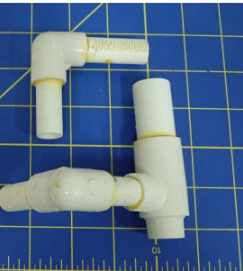
Referring to applicable codes and standards helped CTL Professional Engineers determine the cause of a leak in a CPVC tubing assembly during product failure testing.
Underwriters Laboratories Standards
UL is an international, independent organization dedicated to safety science. It specializes in testing, validating, and certifying products to confirm they comply with established safety and performance standards.
During the observation phase of a product failure investigation, Professional Engineers assess whether a product bears a valid UL Mark. According to UL, this mark indicates that a product “has been certified to meet scientific safety, quality, or security standards.” Because there are several types of UL Marks with distinct meanings, engineers must understand each one and recognize how the presence or absence of certification can affect a product’s integrity.
Engineers also rely on UL standards to define baseline requirements for specific product categories. If their analysis reveals the use of materials that do not meet these standards, it may indicate a manufacturing defect.
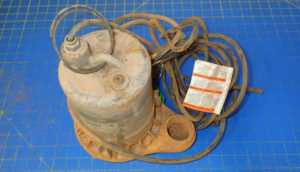
Referencing UL Standard 778 for motor-operated water pumps, CTL determined this submersible sump pump did not meet specifications during non-destructive product failure testing.
Uniform Plumbing Code and International Plumbing Code
The UPC, a model code developed by the International Association of Plumbing and Mechanical Officials (IAPMO) and recognized as an American National Standard, provides guidelines for the installation and inspection of plumbing systems. The IPC, created by the International Code Council, also sets minimum plumbing system standards.
Although both are updated every three years, they do not take effect until they are adopted by individual states. The IPC is the most widely adopted plumbing code in the U.S.
The UPC or IPC edition in effect at a loss location can serve as a key reference for Professional Engineers when evaluating whether plumbing components were properly installed. They can be especially crucial for understanding water damage claims in which plumbing equipment failed and led to property losses. If engineers identify evidence that the UPC or IPC was not followed during installation, the failure could ultimately be a result of an installation error, opening the door for potential subrogation.
ASTM International
ASTM is a nonprofit organization that develops consensus standards for materials, products, and systems. With global membership focused on quality and safety, its research and standards are widely recognized. Its standards also define performance criteria for materials such as iron, steel, plastics, and rubber. These criteria can be important for product failure investigations because they provide measurable benchmarks to assess whether a material performed as expected or contributed to a failure.
ASTM standards are also important because they define evidence spoliation and distinguish between destructive and non-destructive testing methods. Adhering to ASTM guidelines helps product failure experts mitigate the risk of spoliation and can strengthen the defensibility of findings in subrogation-related litigation.
National Electrical Code
The NEC is part of National Fire Protection Association (NFPA) 70, which NFPA describes as “an authoritative document addressing electrical installations in residential, commercial, and industrial settings.” This code is revised every three years. The 2026 edition has been released, but like the UPC and IPC, it must be adopted by individual states to go into effect. All 50 states follow some version of the NEC, though the edition varies. A couple are still using the 2008 NEC, while most have adopted the 2020 or 2023 editions.
Electrical engineers, for example, may refer to the NEC to answer key questions, such as: Was the subject electrical item properly installed? If not, did an installation error contribute to the failure? These experts often compare a product’s installation against the NEC requirements in effect at the loss location and may participate in joint investigations with certified fire investigators in claims involving electrical fires.
Applying Codes and Standards in a Real Product Failure Analysis
The value of these resources is best demonstrated through real-world product failure analysis.
Returning to the CPVC tubing example, the adjuster requested CTL perform non-destructive testing. A Professional Engineer found no leaks under simulated household pressure, confirming the failure occurred at the separated connection. Further inspection showed the socket lacked solvent.
The engineer consulted the UPC, which outlines proper procedures for forming solvent joints. The absence of solvent cement on the mating surfaces confirmed the joint had been improperly formed. For comparison, the engineer reviewed an ASTM-compliant solvent for this type of fitting and referred to the Plumber’s Installation Handbook, which states that a properly formed solvent-welded connection should be stronger than the pipe itself. Together, these trusted resources reinforced the conclusion that the failure resulted from an installation error due to missing solvent.
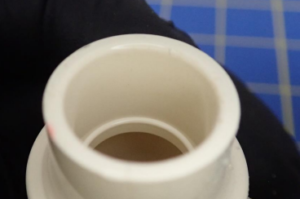
Per the UPC, the tubing’s socket connection was improperly formed due to a lack of solvent.
With CTL’s conclusions, the adjuster could make an informed decision regarding subrogation, knowing that the findings were reached using accepted product benchmarks and that the Professional Engineer could defend them if needed.
At CTL, part of Alpine Intel’s suite of services, we know that confidence is critical when deciding whether to pursue subrogation and the potential litigation that can accompany it. Our Professional Engineers deliver thorough, reliable, and top-of-class reports rooted in the scientific method and sound engineering principles, as well as these codes and standards, to help you make those decisions with certainty.
Submit an assignment to get the facts about product or component failures.

Don’t miss insurance-focused resources and webinars about property, perils, and trends impacting claims nationwide by signing up for The Savvy Adjuster Newsletter.

Be sure to also tune in to The Savvy Adjuster Podcast to hear more from the experts themselves.
Alpine Intel’s content is meant to inform and educate readers using general terms and descriptions. They do not replace expert evaluations that determine facts and details related to each unique claim.
Related Resources
Subrogation Insights: When To Investigate a Product Failure
This article explains the types of losses that are well-suited for product failure investigations, helping insurance professionals optimize their subrogation processes.
Subrogation Basics for Claims Adjusters Guide
The subrogation process can be challenging for adjusters due to legal complexities and the importance of preserving solid evidence. Gain insights into the fundamentals of subrogation with our guide.

Evidence Management Tips for Subrogation Attorneys Guide
Attorneys, learn three essential strategies to safeguard evidence and address spoliation concerns in subrogation cases involving product or component failures.