
4 Common Construction Site Fire Causes To Know

Every year, construction site fires disrupt projects and cause major financial losses. Between 2017 and 2021, local fire departments responded to approximately 4,440 fires annually in structures under construction, resulting in an average of $370 million in direct property damage, according to the 2024 “Fires in Structures Under Construction” report from the National Fire Protection Association (NFPA).
Understanding common causes of these fires can help insurance and legal professionals better navigate related losses. Electrical, cooking, and heating equipment, along with human actions, are often contributors. Learn more about these factors and why a certified fire investigator is needed to pinpoint the most plausible origin and cause.
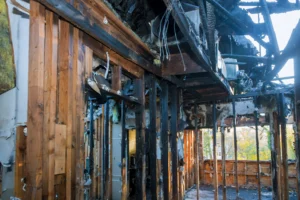
Construction site fires can lead to substantial losses, including extensive property damage and significant project delays.
Electrical Equipment
Electrical distribution and lighting equipment was the second most common cause of construction site fires during the five years studied by NFPA but accounted for a staggering 46% of direct property damage.
Some of these fires likely stemmed from fully installed electrical systems or equipment, while others could have been caused by equipment meant to be used in the short term. NFPA notes that temporary electrical wiring and lighting are frequently used on construction sites, but proper installation and maintenance are crucial—even if the equipment is only in place for a short time. These systems are often not up to permanent code standards or properly installed or maintained. When these protocols are neglected or improperly executed, electrical equipment can overheat or arc, increasing the risk of a fire.
Utilizing the scientific method, experienced fire investigators can determine whether a fire’s most plausible origin and cause are linked to an electrical malfunction, failure, or event. When this is the case, these experts may recommend a joint investigation with an electrical engineer who can hone in even further on the exact mechanism of failure.
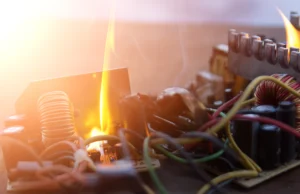
Just like in fully constructed homes or businesses, electrical equipment or wiring can arc on construction sites, leading to destructive fires.
Cooking Equipment
Cooking equipment poses a considerable fire risk in any setting. The U.S. Fire Administration identifies cooking fires as the leading cause of residential building fires in 2023, and the aforementioned 2017–2021 NFPA report reveals a similar trend on construction sites, where cooking equipment accounted for 19% of fires.
Those two statistics may have some overlap, considering 76% of structures that sustained fires while under construction were residential. But portable cooking equipment could contribute specifically to construction fires. Construction crews may use hot plates or small grills to prepare meals onsite. However, the NFPA strongly advises against their use, highlighting the unnecessary risks they introduce in an environment where fire suppression systems may be not yet be installed or operational and unfinished walls and doors can create hazardous compartments for fire to thrive.
Heating Equipment
To keep projects on track in colder months, construction crews sometimes use portable heaters to stay warm. But these can pose a serious fire risk on the worksite, just as they do in residential settings; the U.S. Fire Administration noted that approximately 32,000 home heating fires were reported in the U.S. in 2021. When placed too close to flammable materials, the heat from portable heaters specifically can quickly ignite a fire. On construction sites, where materials like wood framing or insulation are often scattered or unprotected by drywall, keeping heaters safely positioned can be a challenge for construction crews.
While many space heater fires are caused by user error, some originate from manufacturers’ defects. This is why additional research and testing are often necessary if investigators determine a space heater played a role in the fire’s ignition sequence. Conducting recall searches and product failure testing can help identify if a third party is responsible and whether there is potential to pursue subrogation.
Hot work activities such as welding, cutting, soldering, and grinding are also frequent on construction sites. These activities can generate heat and sparks that have a high risk of starting a fire and will often require special permits.
Human Acts
Fires classified as “intentionally set” were the fourth most common type of construction site fire in the NFPA report. Although less frequent than fires caused by cooking, electrical, or heating equipment, they resulted in property damage nearly as severe as electrical fires.
While the NFPA no longer requires investigators to classify fires as incendiary or arson (incidents that are intentionally set for different reasons), certain indicators uncovered during an investigation may suggest this type of origin. Recognizing these signs, such as evidence of multiple, non-related fires burning simultaneously, can help carriers and legal teams identify them in fire origin and cause reports. Even if there is an initial suspicion that a construction fire was intentionally set or began because of human action, such as not following proper safety standards, engaging a fire expert ensures that conclusions are reached through an unbiased process. These professionals are equipped to provide defensible findings and, if necessary, expert testimony in litigation.
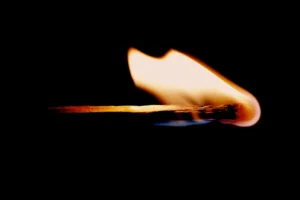
An incendiary fire cause shouldn’t be assumed or ruled out without an objective, systematic investigation performed by a certified fire investigator.
Why Construction Site Fires Require an Origin and Cause Investigation
The causes of construction site fires we’ve discussed are just a few of the more common ones; other factors, such as heavy machinery, can also spark these incidents. Also, incomplete compartmentation (room or house with exposed wood not under drywall) of a building can lead to rapid fire spread and may create misleading fire patterns or obscure the fire’s point of origin. Identifying the most plausible origin and cause of a fire is essential for making accurate settlement decisions, and only an experienced fire investigator can provide this level of expertise.
At National Fire Experts (NFE), investigators adhere to NFPA guidelines and standards to evaluate the evidence from any fire scene to provide an actionable, top-of-class report. As part of Alpine Intel’s suite of services, NFE can collaborate with Component Testing Laboratories (CTL) to securely transport and store evidence, conduct joint investigations with licensed electrical engineers, and deliver product failure testing that can reveal subrogation potential. Submit an assignment today to get reliable, expert insights into your fire claims.

Don’t miss insurance-focused resources and webinars about property, perils, and trends impacting claims nationwide by signing up for The Savvy Adjuster Newsletter.

Be sure to also tune in to The Savvy Adjuster Podcast to hear more from the experts themselves.
Alpine Intel’s content is meant to inform and educate readers using general terms and descriptions. They do not replace expert evaluations that determine facts and details related to each unique claim.
Related Resources

Apartment Fires: Causes and Investigations Guide
Learn common causes of apartment fires, how investigators approach assessments, and the characteristics that can introduce unique considerations to these claims.

Three Causes of Christmas Tree Fires
Christmas trees are a beloved holiday tradition, but even these brightly lit and colorful decorations have a dark side.
Uncovering Commercial Fire Causes and Trends
Commercial fire claims are often complex and require expert investigation. Discover common fire causes and how an assessment partner can help with these claims.