
Moisture-Related Drywall Losses

Moisture exposure can damage drywall, causing stains, cracking, and mold growth throughout a structure. Each of these conditions can help indicate where the water came from, if the drywall has been repeatedly getting wet, and whether water intrusion, humidity, or another source caused the reported losses.
Stains: An Early Sign of Moisture Exposure in Drywall
Stains are an early and noticeable sign of moisture exposure in drywall. Moisture in the air traps dust particles and can condense on cold surfaces, such as the drywall attached to exterior walls, wall studs, and ceiling joists. Drywall will typically contain only a faint discoloration if it is exposed to a one-time event or over a short period of time. However, the longer it is impacted by water, the stain can become darker and can form multiple rings. The stain’s color is an important indicator of the duration of moisture exposure; however, no evidence exists to provide a basis for the duration.
Paper-faced drywall is porous and will likely absorb liquid or vapor water if any is present. Once the drywall dries out, a ring will appear at the edge of the absorption area. The number of rings indicates how many events may have occurred, and the darkness of the rings is a sign of how much water was absorbed each time.
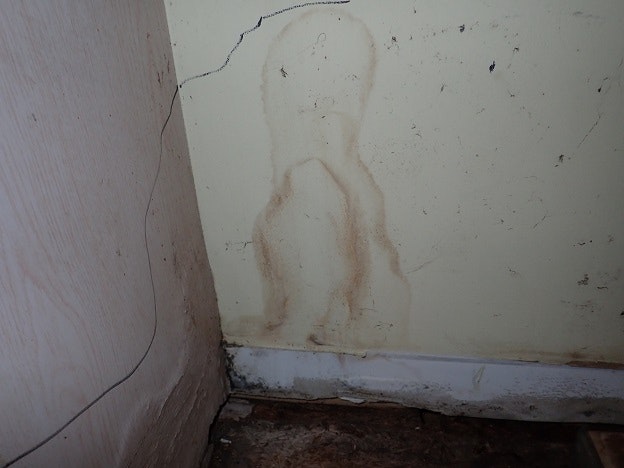
The dark, concentric stains on this drywall indicate that it has been exposed to moisture on at least two separate occasions.
Can Humidity Damage Drywall and Cause Joint Cracking?
Drywall’s sensitivity to moisture can also lead to joint cracking. During periods of high humidity, drywall absorbs vapor from the surrounding air and expands. Once the humidity decreases, the drywall dries and shrinks. Drywall typically expands by about 1/16 of an inch per 20 feet with a relative humidity change of roughly 30% unless control joints are present. Control joints can reduce the potential for cracking due to changes in humidity.
Joint cracking occurs where adjacent drywall panels meet. If such a crack is repaired with tape and finished with joint compound, it may rupture again if it undergoes further stress. This could be an indication that losses are a result of additional movement, construction defects, or pre-existing conditions.

These joint cracks in the drywall show evidence of historical repairs reopening after high seasonal humidity or movement.
Mold Growth, Humidity, and Drywall Losses
Mold is a general term that describes one or more of the hundreds of fungi that exist in the environment. As living organisms, fungi require nutrients, a favorable temperature, oxygen, and, most importantly, moisture to grow.
Because buildings and their contents provide food, comfortable temperatures, and air, the availability of water is key. Drywall’s paper facing is a particularly good source of food for a fungal colony, and its surface facilitates the colony’s spread.
While some fungi require liquid water, others can survive in areas with no liquid water present if the relative humidity (RH) is maintained at 65% or higher. Typically, fungal spores will germinate, and rapid growth can begin when RH levels are maintained at 80% or higher. Once established, the colony of fungi survives when moisture levels decrease by becoming dormant until favorable conditions return.
If drywall is exposed to moisture due to humidity, water intrusion, or another source, it provides an environment conducive to fungal growth. Mold’s ability to return later can compound the losses.

The extent of mold growth indicates that this drywall has been exposed to moisture over an extended period of time.
Drywall damage can be a serious loss, particularly when conditions could promote mold growth. It’s essential for policyholders and insurance or legal professionals to determine the next best steps based on objective findings concerning the source of drywall moisture exposure.
Donan Engineering, part of the Alpine Intel suite of services, is equipped to answer complex and challenging questions about property damage, including moisture-related drywall losses. Our licensed engineers conduct objective assessments to form expert opinions regarding the cause of loss and deliver actionable intelligence through peer-reviewed reports. Submit an assignment today.
Engineering services are provided by or subcontracted to Donan Engineering, LLC, Donan Engineering NC, PLLC, or Donan Forensic, LP.

Don’t miss insurance-focused resources and webinars about property, perils, and trends impacting claims nationwide by signing up for The Savvy Adjuster Newsletter.

Be sure to also tune in to The Savvy Adjuster Podcast to hear more from the experts themselves.
Alpine Intel’s content is meant to inform and educate readers using general terms and descriptions. They do not replace expert evaluations that determine facts and details related to each unique claim.
Related Resources
Essentials of Settling Water-Related HVAC Claims Webinar Recording
By the end of the webinar, you’ll know about water’s impact to split systems, ductwork, and package units, among other components.

Common Heating System Losses Guide
The guide delves into a few of the damages heating systems sustain, including thermal fatigue, puffbacks, malfunctioning low water cutoffs, and wear and tear.
The Ins and Outs of Hail-Related HVAC System Claims eBook
Hail-related claims can come in at any time of the year, and your insureds’ HVAC systems may be at risk. Keep this resource on hand to refer to for your next claim.