
Kitchen Range Fires: What the Evidence Tells Fire Investigators and You

The National Fire Protection Association (NFPA) reported that between 2017 and 2021, almost half of all home fires reported in the U.S. were linked to cooking. In the kitchen where heat, electricity, water, and grease come together to create a perfect storm of fire hazards, the most common cause of fires is unattended equipment. However, this isn’t the only factor that can spark a kitchen fire. That’s why a successful fire investigation hinges on attention to detail, and a fire investigator has a lot of evidence to consider when inspecting the aftermath of a range fire.
Mechanical, Electrical, or Human Intervention?
Fire investigators rely on the guidelines laid out in NFPA 921 to analyze a scene scientifically. An origin and cause investigation that leads to the kitchen as the room of origin must then determine the heat source, first material ignited, and ignition sequence of the fire. Because of the components in and around ranges, hypotheses about electrical or mechanical malfunctions must always be tested and eliminated. The leading cause of range fires is human activity.
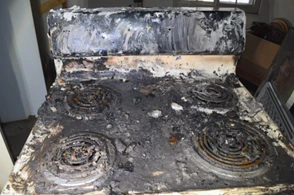
A fire investigation determines the heat source, first material ignited, and the ignition sequence of the fire.
Human activity is often involved in the fire cause, such as unattended cooking left on the range cook top, or some people stage a fire as a way to have cosmetic updates made to their kitchen. Fires often occur when someone puts something on the range cooktop to cook then falls asleep, gets distracted, or does not hear the smoke detector. In these cases, the fire can extend dramatically before being extinguished.
Identifying Indicators
At the fire loss site, burn patterns are a reliable directional indicator for fire investigators that can lead to the area of origin. Smoke and fire damage to the surrounding area might point to a specific burner as the point of origin. There may also be evidence of combustible materials on the range, such as cardboard or paper, that point to non-cooking causes of the fire. Thermal patterns can indicate whether a burner was on and whether cookware was involved in the fire, as they show which items were exposed to the highest temperature. The fire investigator will document all findings to test multiple hypotheses until evidence supports one.
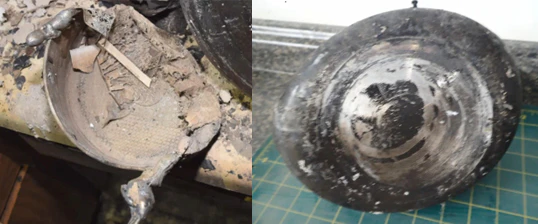
A pan without cooking residue (left) sustained only exposure damage, while the burn patterns on the bottom of the right pan indicate it was in use during the fire.
How the Evidence on the Range Can Tell the Story
NFPA 921 dictates that the brand, model, and serial number, as well as the date code should be documented and researched during the investigation. Unfortunately, product identification labels are often made of combustible material and damaged during the fire. However, ranges also have a date code stamped into the metal, which can provide vital information on the age of the appliance. This information is important because statutes of repose, which vary from state to state, can determine if the equipment is still within the time limit for subrogation potential.
On the range itself, heating elements and drip pans may have burn residue on one side or another as a directional indicator, as well as oxidation and distortion. Investigators must go beyond the range surface to determine the root cause of a fire. The interior electrical components should not be overlooked, and the control knobs are also often key evidence in range fires. Because they are often made of plastic and frequently melt when exposed to fire, an intact control knob is not always available for analysis. But even the remaining metal stems from the knobs can indicate whether a burner was on at the time of the fire, or these components can be tested at a laboratory to confirm their position.
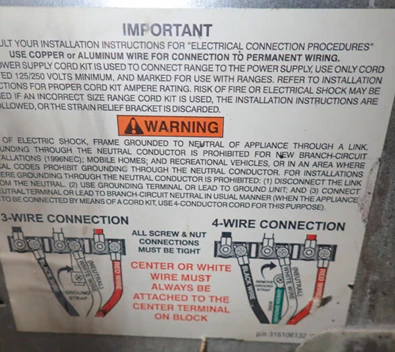
Instructions and warnings can help identify installation defects or misuse.
Experts Know What to Analyze in Fire Investigations
Technical expertise is a must when it comes to investigating range fires. There are a lot of intricate components that need to be analyzed, and reaching a documented, reliable conclusion requires technical know-how. Experts will also have access to product recalls, as well as similar, undamaged components for comparative analysis. While range fires may seem straightforward, the skills of a certified fire investigator ensure secure evidence, use of the scientific method, and reliable conclusions.
Submit an assignment to learn how we can help you with your origin and cause fire investigations.

Don’t miss insurance-focused resources and webinars about property, perils, and trends impacting claims nationwide by signing up for The Savvy Adjuster Newsletter.

Be sure to also tune in to The Savvy Adjuster Podcast to hear more from the experts themselves.
Alpine Intel’s content is meant to inform and educate readers using general terms and descriptions. They do not replace expert evaluations that determine facts and details related to each unique claim.
Related Resources

5 Questions to Ask After a Kitchen Fire
Kitchen fires are the most reported home fires, according to the National Fire Protection Association (NFPA).

Evidence in Vehicle Fire Claims Guide
Vehicle fire investigations include unique considerations. Here are a few things investigators consider when determining an accurate origin and cause.