
How Forensic Engineers Bring Clarity to Hail, Wind, and Roof Claims

Through this article, find out:
- Why property losses submitted from the same area or weather event may not have the same type of damage or scope of loss
- What to look for when trying to identify hail- and wind-related damage
- How on-site or desktop assessments from forensic engineers bring clarity to claims
Hail and wind damage may be left in the wake of severe storms, spurring an influx of property claims that vary in complexity and scope of loss—even in the same area or after the same weather-related event.
Those who seek an assessment from a licensed forensic engineer for each loss can better ensure accurate resolutions regardless of location or proximity to other damaged structures.
How and Why the Same Losses Might Be Filed From One Area
It isn’t uncommon for insurance professionals to receive reports of the same type of losses from a single neighborhood after a windstorm, hailstorm, or tornadic event. However, it’s important that each one is viewed as a unique incident with an objective assessment.
Treating them as identical damage could result in inaccurate conclusions by inadvertently assuming:
- The comparison property had an independent, scientific investigation
- Damaged components are of Like Kind and Quality
- Damaged components were the same age and condition
- The subject property warrants the same scope of repairs
- Identical construction methods, skills, and procedures were used during installation

After a hail event in one area, insurance professionals may receive several property claims. Each should be evaluated independently to help prevent the possibility of misattributing damage.
Regardless of what spurred a reported loss, insurance professionals who turn to licensed engineers for an on-site or desktop assessment are better positioned to resolve each accurately and fairly.
How To Identify Hail and Wind Damage After Severe Storms
Licensed forensic engineers have a solid understanding of how wind and hail can impact structures and the expertise to differentiate between various types of loss.
Identifying Wind Damage
Wind damage isn’t necessarily consistent from neighborhood to neighborhood, let alone home to home. The type of house, type and quality of construction, and distance from a wind event, for instance, all influence the severity of wind-related damage, along with a structure’s stability prior to the event and its ability to withstand wind loads.
Indicators of high winds include:
- Collateral damage such as downed fences, detached shutters, downed gutters, displaced soffits and siding, or any other non-structural item around a building
Indicators of wind-related roof damage include:
- Creased, missing, torn, or detached asphalt shingles
- Impact damage from windborne debris
- Lifted, peeled back, or bent metal roofing panels
Identifying Hail Damage
Some property owners may believe all shingle surface abnormalities are proof of roof hail damage. Hail damage to asphalt shingles is defined as an identifiable mark caused by hail that has measurably reduced the integrity or functionality of the overall shingle, where the shingle was sound prior to the impact.
However, the roof’s age, material, and location compared to the direction of the reported hail all factor into whether integrity or functionality was impacted, which differentiates hail damage from hail impacts.
Forensic engineers also consider collateral indicators. Damage to downspouts and vent covers, for example, can offer insight into the size, direction, and density of hailstones.
Indicators of hail impacting a property can be identified through:
- Indentations on soft metals
- Clean spots on weather-stained surfaces
- Roof impacts that align with the directionality of the hail
Hail damage can be identified through:
- Bruises that extend through the entire thickness of the shingle, typically on the most vulnerable parts of the roof, where shingles are not firmly backed.
- Distinct blemishes exposing the asphalt layer below the granulated layer.
- Granule loss spots that are associated with bruising of the fiberglass mat or a fracture of the shingle.
Licensed Forensic Engineers Bring Precision To Weather-Related Losses
Those who need to verify cause of loss and scope of damage for weather-related losses should seek clarity and unbiased analysis.
Forensic engineers evaluate reported damage in the context of the whole structure alongside collateral indicators, repair or replacement history, and reputable weather data for the loss location. They can do this through on-site or desktop assessments.
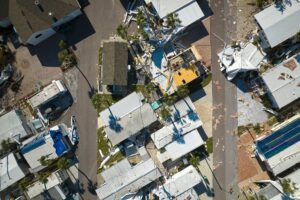
Property losses reported after severe weather can benefit from a licensed forensic engineer’s structural assessment, whether it occurs on-site or via desktop review.
Familiarity with the tools needed to research weather and property history and the ability to differentiate between pre-existing and wind- and hail-related damage means licensed forensic engineers can deliver unbiased reports that explain their findings. Such investigations provide the information needed to make decisions based on current industry standards and best practices.
Donan Engineering, part of the Alpine Intel suite of services, leverages the latest in technology and decades of experience to provide scientific insight into a variety of property losses from wind, lightning, hail, fire, flood, water, and more. Its licensed forensic engineers can document the facts and provide clients with the information they need following severe storms. Submit an assignment today.
Engineering services are provided by or subcontracted to Donan Engineering, LLC, Donan Engineering NC, PLLC, or Donan Forensic, LP.

Don’t miss insurance-focused resources and webinars about property, perils, and trends impacting claims nationwide by signing up for The Savvy Adjuster Newsletter.

Be sure to also tune in to The Savvy Adjuster Podcast to hear more from the experts themselves.
Alpine Intel’s content is meant to inform and educate readers using general terms and descriptions. They do not replace expert evaluations that determine facts and details related to each unique claim.
Related Resources
Hail and Wind HVAC Claims Webinar Recording
We at HVACi have already done the heavy studying, and our experts have put together a webinar on hail and wind HVAC claims for insurance adjusters.
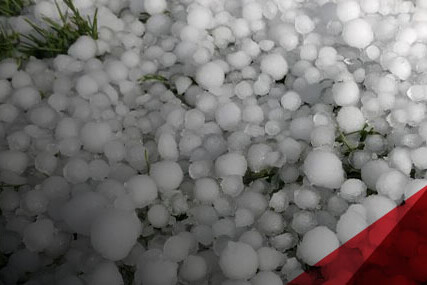
Impacts to HVAC Systems Frequently Appearing in Wind and Hail Claims Guide
Find out why our expert team is least likely to recommend full replacements for these perils and which repair solutions are often more appropriate.
HVAC Wind and Hail Claim Resource Library
Here are tools to help you, as an adjuster, settle HVAC and Refrigeration claims with reported hail and wind losses more confidently and accurately.