
How Weather-Related Events Impact Residential Low-Slope Roofs

In this article, you’ll learn how:
- A residential low-slope roof differs from a steep-slope roof, including types of materials used
- Precipitation, wind, and hail can impact residential low-slope roofs
- Licensed forensic engineers conduct assessments that lead to expert opinions regarding cause of loss for low-slope roof damage
Residential low-slope roofs respond differently to weather-related events than other roof types. Understanding where these roofs are commonly found and how damage may appear can help insurance professionals and policyholders evaluate reported losses and determine when an engineering assessment may be warranted.
What Qualifies as a Low-Slope Roof on a Residential Structure?
Roof slope is expressed by how many inches of elevation (rise) are gained in 12 inches to the left or right (run). Residential steep-slope roofs have a rise-over-run ratio greater than 3:12 and are more visibly angular, as seen on most conventional single-family residential houses. In comparison, residential low-slope roofs typically have a rise-over-run ratio of less than 3:12 to as little as 0.25:12. Low-slope roofs pitched less than 1:12 are often referred to as “flat” roofs, which is a misnomer because they are not actually flat and are designed with positive slope to facilitate drainage and inhibit ponding.
Residential low-slope roofs commonly appear on multi-family housing structures, such as condominiums, row houses, apartment complexes, or townhomes. On single-family properties, they may connect porches or garages to a steep-slope roof on the main part of the structure. They also are common on standard homes in the southwest region.
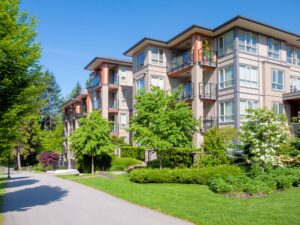
Apartment complexes are among the property types that may have residential low-slope roofs.
Common Low-Slope Roofing Materials
Lesser slopes slow the roof’s water-shedding performance, resulting in different material requirements. Single-ply roofing materials, such as ethylene propylene diene terpolymer (EPDM), polyvinyl chloride (PVC), or thermoplastic polyolefin (TPO) membranes, are common for residential properties with low-slope roofs. They’re also used in commercial roofing.
EPDM is a durable synthetic rubber roofing material, while PVC and TPO are thermoplastic roof systems.
Where Are Residential Low-Slope Roofs Popular?
Climate, geography, and weather patterns can dictate where residential low-slope roofs are most prevalent. Low-slope roofs are popular in the southwest region because of its dry climate and low precipitation. Wet and dry seasons make low-slope roofs favorable in tropical areas as well.
How Vulnerable Are Residential Low-Slope Roofs To Weather-Related Damage?
Residential low-slope roofs tend to be more energy-efficient and easier to repair. However, they have a lower life expectancy and can be vulnerable to precipitation, wind, and hail.
Precipitation-Related Damage
Since they allow for minimal drainage by design, residential low-slope roofs can be prone to ice dams, snow loads, or ponding water from excessive rain, sleet, or extended periods of snowfall.
Ice dams—blockages to roof drainage caused by frozen runoff—can occur anywhere on the roof membrane. After they form, meltwater pools behind the dam until the ice dam melts or is removed. Ice dams can exacerbate water intrusion through existing openings in the membrane that may shed water under normal drainage conditions. Water that infiltrates a home could damage walls, ceilings, and insulation. Continuous seepage may structurally weaken the home or create an ideal environment for microbial growth.
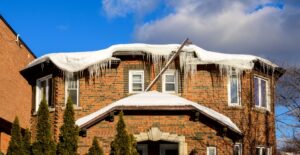
Apartment buildings with low-slope roofs can experience ice dams that may lead to roof damage or water intrusion.
Common indicators include:
- Icicles on the edge of the roof
- Ice behind gutters
- Water damage after the fact
- Ice on the exterior siding or soffit
Snow loads, the downward force on a building’s roof from the weight of accumulated ice and snow, add external pressure to the roof. This can make the roof more susceptible to structural failure.
Common indicators include:
- Sagging trusses
- Exterior walls leaning outward
- Flat roof sag
- Collapse
- Ponding water or leaks
Ponding water that remains on a low-slope roof membrane for more than 48 hours can lead to damage, even if the membrane met waterproofing conditions on installation. Pre-existing small cracks in the top coating, bare spots, blistering, or other defects create openings for water to enter the interior of a structure.
Licensed forensic engineers have the skills to identify the source of the water intrusion, establish the cause of any damage to the roof covering, and to determine the extent of exposure on the interior.
Hail Damage
For indentations or other markings to be considered hail damage, roof membranes must have identifiable marks from hail that significantly reduce the integrity or functionality of the roof covering that weren’t evident prior to the hail event.
Hail damage commonly presents as fractures or tears completely through the membrane or as semi-circular membrane tears. But it can also appear as circular or elliptical marks with spider-web-like cracking.
Whether the roof was built with EPDM or thermoplastic material, collateral indicators are identical and include impact marks on:
- Exterior metal appurtenances, such as gutters and downspouts
- Exterior wood surfaces, window wraps, and screens
- Heating, ventilation, and air conditioning (HVAC) condenser fins
- Metal roof appurtenances, such as vents and various caps
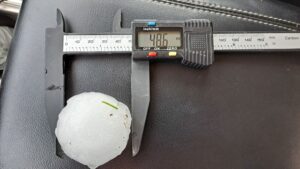
Licensed forensic engineers may seek reputable weather data to confirm the presence of hail and the size of reported hailstones when assessing a structure for related damage.
Forensic engineers put these indicators into context with weather data research that can help determine the size of the hailstones, the direction from which they originated, and how many fell per unit area.
Wind Damage
Wind damage can manifest in several ways depending on wind strength, building orientation, the roof’s condition, and the roof’s installation method.
One of the most common forms of wind damage to low-slope roofs occurs when sections are lifted, peeled back, or both. This loss typically starts on the windward side, and the damage can start at flashing and attachment points.
Wind-driven debris impacts may also occur, which could cause damage to the roof, allow water intrusion, or lead to other losses. Licensed forensic engineers may identify noticeable penetrations to the roof covering that could suggest wind led to this damage.
Benefits of Partnering With a Licensed Forensic Engineer
Forensic engineers provide vital assessments when homeowners or insurance professionals need an expert opinion regarding residential low-slope roof losses.
With weather-related events, licensed forensic engineers may also assess the whole property to characterize the event and how it might have affected the structure. For instance, if excessive snowfall preceded a partial roof collapse, forensic engineers would evaluate internal and external elements of the property, rather than just the area of collapse, to determine whether indicators of snow load damage were present. They also seek data from local weather centers and conduct independent research to support whether elements in the reported weather-related event could have impacted the structure on or near the date of loss.
These assessments are then peer-reviewed to ensure accuracy and can be referred to at any time.
Donan Engineering, part of the Alpine Intel suite of services, leverages the latest in technology and decades of experience to provide scientific insight into a variety of causes of loss, including snow, ice, wind, lightning, hail, fire, flood, water, and more. Submit an assignment today.
Engineering services are provided by or subcontracted to Donan Engineering, LLC, Donan Engineering NC, PLLC, or Donan Forensic, LP.

Don’t miss insurance-focused resources and webinars about property, perils, and trends impacting claims nationwide by signing up for The Savvy Adjuster Newsletter.

Be sure to also tune in to The Savvy Adjuster Podcast to hear more from the experts themselves.
Alpine Intel’s content is meant to inform and educate readers using general terms and descriptions. They do not replace expert evaluations that determine facts and details related to each unique claim.
Related Resources
Weather-Related Damage to Medical Equipment
Explore potential consequences of damaged medical equipment, how weather events can lead to downtime, and how to address claims that include this complex machinery.
How Non-Weather-Related Losses Impact Buildings
Learn about non-weather-related perils and why they might initially appear in a claim related to a weather event.
Low-Slope Commercial Roofing: A Technical Guide for Adjusters eBook
Read this eBook to learn the basics of low-slope commercial roofs, common deficiencies to be aware of, and when to partner with a forensic engineer.