
Increased Claim Risk: Why Trees Fail During Spring and Summer Storms

Spring and summer weather-related perils can weaken a tree’s structural integrity—sometimes causing immediate failure or creating hidden damage that may lead to a later fall. Both can result in property damage.
Adjusters who handle tree-related property damage claims after these seasonal storms or other weather events will benefit from understanding how the health of a tree influences its ability to remain rooted and how certain weather-related perils damage trees or cause them to fail.
Tree Failure Risks During Spring and Summer Weather
The location and health of a tree factor into its resistance to spring and summer storm-related perils including heavy rain, lightning, and severe wind.
For example, trees that grow near water are at risk of failure from the natural saturation that occurs, but storms can exacerbate the issue and oversaturate the area. Similarly, trees in open areas are more vulnerable to wind because there is less protection than more dense locations. Trees are also in danger of failing if they have decay, poor root systems, or bad form.
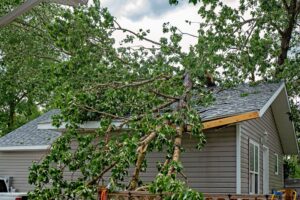
Tree failure may occur during storms, causing the tree to land on, and possibly damage, homes or other property.
Decay, a common sign of poor health, makes trees more susceptible to weather-related perils. Indications of decay include holes or cracks in bark, cavities, and dead branches. These elements could break off or snap due to the pressure of wind gusts or a lightning strike hitting the tree.
A poor root system decreases the stability of the entire tree and increases the likelihood of failure during flooding, high winds, or intense rain. Dieback or a leaning trunk could suggest root damage existed prior to a failure.
Bad form, or leaning (sometimes a standalone sign of poor health), may contribute to the instability of an entire tree or just branches and limbs. This leaves it more prone to breaking amid severe storms.
Any of these singular issues, or a combination of them, alongside weather-related perils, could cause limbs to break or trees to fall:
- On power lines, causing high-voltage surge damage
- On a home, causing structural damage
- On HVAC systems, cars, or other external property, causing damage
Spring and Summer Weather-Related Perils That May Cause Trees To Fail
Adjusters should know how weather-related perils that can impact roofing materials, windows, and other building components also weaken healthy trees to the point of failure and cause even more property damage.
If lightning strikes a tree, it may cause water and sap to boil, “generating steam and causing bark and wood fibers to explode,” according to the Alabama A&M and Auburn Universities Extension. This occurs because of the high temperatures—up to 50,000 degrees Fahrenheit—that a single bolt of lightning contains. Other results are the trunk splitting, bark stripping, or root and tissue damage, which impact tree health.
The same tree could be hit more than once, with the lightning taking different paths through a single branch or a set of branches, or the strike could start at the crown and travel to the roots.
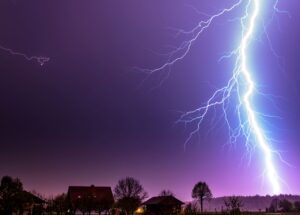
Lightning, which often occurs during spring storms, can strike trees, sometimes causing enough damage for them to fail.
Other perils, like wind, can impact large and small trees alike. Small, healthy trees may fail when speeds reach 55 to 63 miles per hour (10 on the Beaufort scale), according to the National Weather Service. For context, winds only need to reach 47 to 54 mph (9 on the Beaufort scale) to start causing damage to buildings such as chimney pots and slates being removed.
However, just because the season has changed doesn’t mean winter-weather-related perils are in the rearview. Snow and ice elicit as much of a concern (or more) heading into spring with temperature increases possibly leading to snowmelt or flooding, which could saturate the ground surrounding trees and weaken their root structure.
Knowing the risks associated with fluctuations in weather can help adjusters better prepare for tree-related damage claims they need to resolve.
Removing Failed Trees and Related Debris
Regardless of what causes a tree to fail, insurance professionals should contact their reputable tree care partner as soon as possible after a spring or summer storm event in which extensive tree-damage-related claims are anticipated.
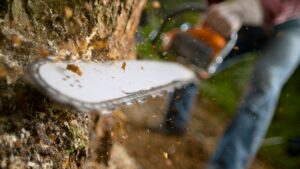
Tree care specialists, like those in HMI’s vendors network, will quickly and safely remove trees and debris following storms, prioritizing emergency removals.
Insurance professionals should look for licensed, insured, and certified experts who quickly dismantle and remove failed trees and debris in accordance with safety guidance from industry organizations. They also prioritize emergency removals, in which tree or debris lands on a home or prevents access to the property, and provide consistent marketing pricing, detailed invoicing, and exceptional customer service.
HMI, which specializes in tree services and is part of Alpine Intel’s suite of services, has credentialed experts who can provide 24/7 emergency support alongside tree removal invoice reviews, expert outdoor property consulting, and disaster response solutions for the insurance and risk management industry.
Its experts also deliver cause of loss analysis, inventory of damaged plants, and replacement, repair, and removal cost estimates for damaged trees and landscaping. If you’re ready to use their services, submit an assignment today.

Don’t miss insurance-focused resources and webinars about property, perils, and trends impacting claims nationwide by signing up for The Savvy Adjuster Newsletter.

Be sure to also tune in to The Savvy Adjuster Podcast to hear more from the experts themselves.
Alpine Intel’s content is meant to inform and educate readers using general terms and descriptions. They do not replace expert evaluations that determine facts and details related to each unique claim.
Related Resources

A Homeowner’s Guide to Preparing Your House for Spring Storms
Help your policyholders protect their homes from spring storms with our comprehensive guide of practical preparation steps to minimize damage from hail, wind, water, and lightning.
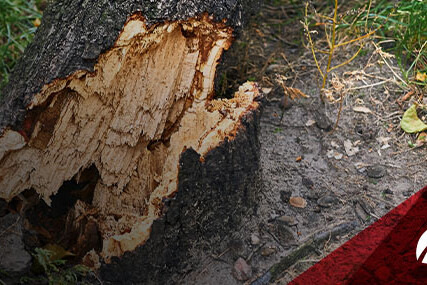
Identifying Risk Factors of Tree Failure Guide
This guide allows adjusters to explore potential indicators of tree damage or failure so they can confidently resolve claims that involve a fallen tree or debris.

Root of the Problem: What Causes Trees To Fall
Discover what causes trees to fall, as well as signs a tree might be at risk of falling, and how to navigate the aftermath of a downed tree.