
6 Basic HVAC System Terms Every Adjuster Should Know
Settling a claim with HVAC equipment shouldn’t feel like you need to read a manufacturer’s manual or have another lesson in thermodynamics. Understanding six key terms related to these complex systems can help adjusters settle claims related to them more confidently and accurately.
1. HVAC
Technical jargon for any industry can turn into alphabet soup. Though most frequently referred to as HVAC, it stands for Heating, Ventilation, and Air Conditioning. This describes what the equipment does to deliver preferred temperatures and air quality to a space.
It’s often not clear that air conditioning is the process of cooling air through the transfer of heat from warmer air via refrigerant. During the heat transfer process, humidity condenses on the cold evaporator coil and is drained away, resulting in air that is both cooler and drier.
2. Split System (vs. Package Unit)
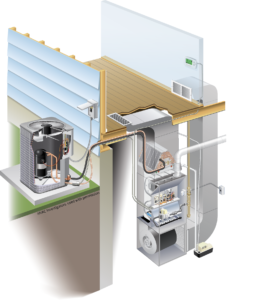 The difference between a split system, shown here, and a package unit is whether the HVAC components are separate or all together.
Traditional HVAC equipment has multiple important system types – most notably, the condensing unit and air handler or furnace. Split systems and package units transfer heat via refrigerant traveling through the lineset in a closed loop, but a furnace normally burns some type of gas to generate heat. Air is circulated through ductwork.
In a split system, which is the most common type of residential HVAC system, the condensing unit is outside while the air handler or furnace is inside. Package units, more frequently used in commercial applications, have the main components housed in one box kept outside.
Refrigerant – R-410A or R-22
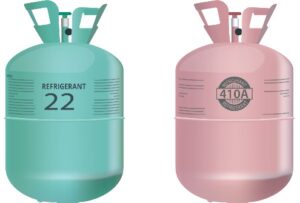 Refrigerant regulations have been changing, including the phaseout of virgin R-22.
Refrigerant, which absorbs heat when the system is in cooling mode, is constantly moving and changing from gas to a liquid and back through closed loops.
R-22 was the most widely used refrigerant until the Montreal Protocol on Substances that Deplete the Ozone Layer, an international agreement, impacted the use of R-22 and other ozone-depleting substances. As of Jan. 1, 2020, virgin R-22 can no longer be manufactured or imported into the United States, though reclaimed R-22 can be used to maintain and repair existing HVAC systems.
R-410A replaced R-22 as the primary refrigerant in HVAC equipment. However, due to its high global warming potential, its production is now also being phased down as part of global efforts under the Kigali Amendment to the Montreal Protocol. ASHRAE Standard 34 has designated refrigerants in the A2L safety classification as replacements for R-22 and R-410A. These refrigerants have a low global warming potential, low toxicity, and mild flammability. The most popular selections are R-454B and R-32.
R-22, R-410A, and the new A2L refrigerants are not interchangeable. If a condensing unit used R-22 and is being replaced with equipment that uses R-410A, the policyholder would need to replace the condensing unit and evaporator coil and flush the lineset to make it compatible with the existing furnace. A full replacement would be required if there was no furnace or if the unit was a heat pump. The same is true of a split system that used R-410A and is being replaced by equipment that uses an A2L refrigerant.
3. Condenser Coils
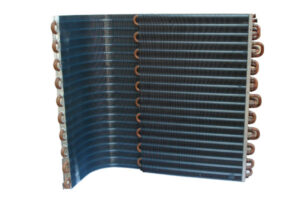 Traditional condenser coils have thin aluminum fins surrounding copper or aluminum tubing.
Condenser coils are wrapped around the outside of a condensing unit in a split system and one or two package unit sides. After absorbing heat from the indoor unit, refrigerant being pumped by the compressor travels through the condenser coil tubes as a hot, high-pressure vapor. Heat is transferred to the surrounding air through the coils, and the refrigerant becomes a warm, high-pressure liquid to restart the heat absorption cycle.
In traditional coils, copper or aluminum tubes carry refrigerant and are surrounded by thin aluminum fins that can easily be bent, dented, or flattened. Package units may use microchannel coils, which have rigid aluminum ribbons in between horizontal channels that carry the refrigerant and are more difficult to damage.
Seasonal Energy Efficiency Ratio (SEER)
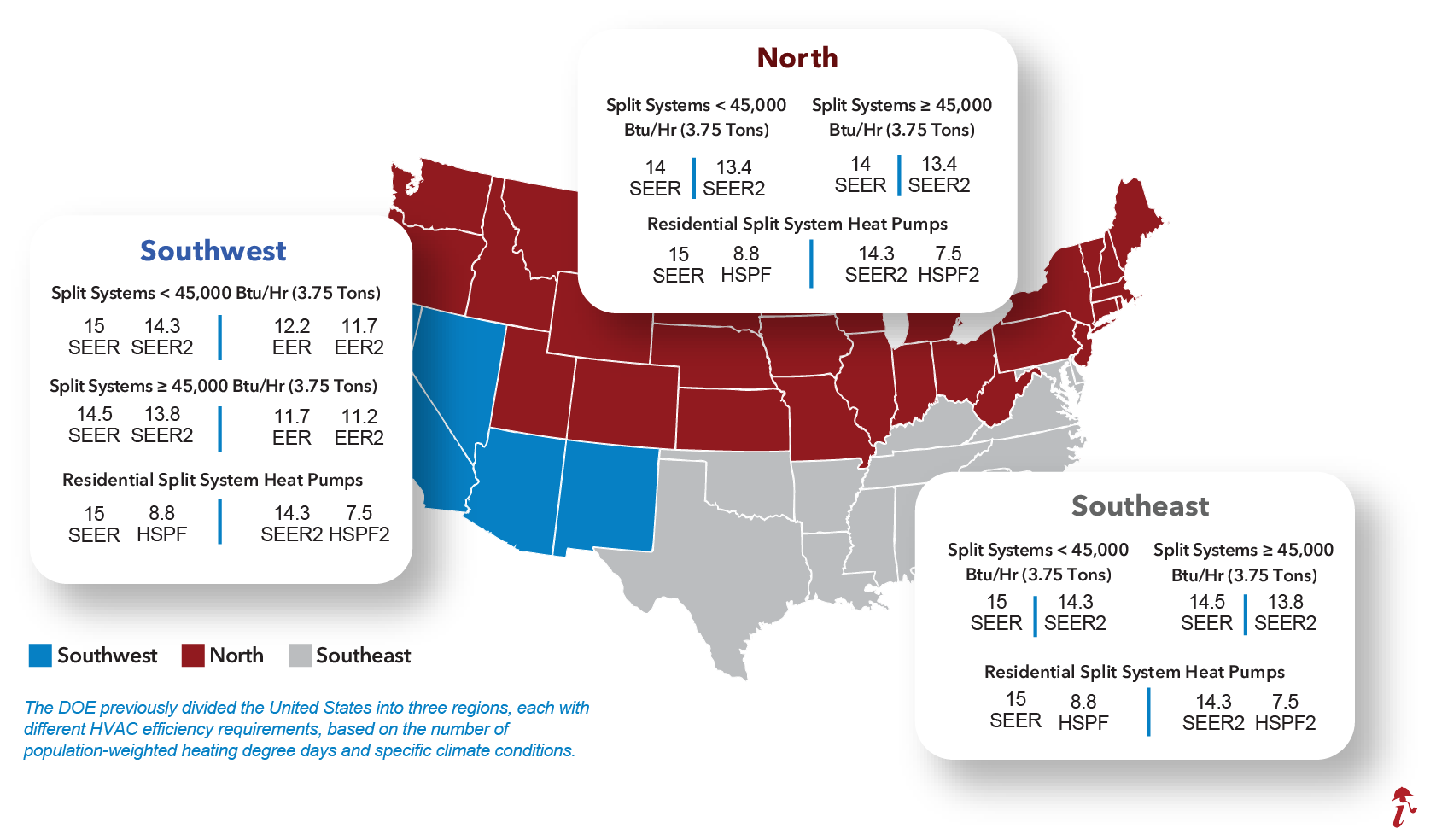
The U.S. Department of Energy has set minimum Seasonal Energy Efficiency Ratio standards for HVAC equipment based on location.
The U.S. Department of Energy analyzes HVAC system efficiency and sets minimum standards based on climates throughout the country. The Seasonal Energy Efficiency Ratio (SEER) measures cooling efficiency and is the ratio of the total heat removed from a conditioned space during the annual cooling season to the total energy an HVAC system consumed during that time. More efficient systems have a higher SEER rating.
The most recent changes to minimum efficiency requirements for specific HVAC equipment took effect in January 2023 and account for new testing procedures and the drive for more efficient systems. In addition to the SEER rating, there is now a SEER2 rating to account for the updated testing methods. While the regulations don’t impact policyholder split systems that need minor repairs, it may affect claims with HVAC systems that require more major repairs such as a new condensing unit. Indoor and outdoor equipment must be compatible to ensure system efficiency and proper function.
4. Heat Pump vs. Furnace
Furnaces are forced-air systems that are a residential property’s primary heating source. Air is warmed by a heat source, including burning natural gas, propane, or oil, and then that warm air is sent through the ductwork and supply registers.
Heat pumps are condensing units that can operate in heating and cooling modes through a reversing valve. Unlike a furnace, heat pumps don’t generate heat but transfer it like in the cooling process. Heat is absorbed in the refrigerant from the outside ambient air and travels to the compressor, which raises the temperature significantly before it’s delivered to the inside coil. There it gives off the heat that’s used to warm the space. Heat pumps are used in conjunction with air handlers, which have electric heat strips to supplement additional heat when necessary.
Need More Help with Components?
For another look at HVAC system components, insurance professionals can receive copies of our Package Unit Glossary, Split System Glossary, Heat Pump Glossary, and Boiler Glossary, which have labeled schematics with short descriptions to help adjusters.
The HVACi team is full of experts who are ready to help carriers settle claims with HVAC and Refrigeration equipment. Use just the facts to determine cause of loss, scope of damage, and best repairs and replacement processes to return your policyholders’ equipment to pre-loss condition. To obtain your comprehensive, data-driven assessment report, submit an assignment.

Don’t miss insurance-focused resources and webinars about property, perils, and trends impacting claims nationwide by signing up for The Savvy Adjuster Newsletter.

Be sure to also tune in to The Savvy Adjuster Podcast to hear more from the experts themselves.
Alpine Intel’s content is meant to inform and educate readers using general terms and descriptions. They do not replace expert evaluations that determine facts and details related to each unique claim.
Related Resources
Adjuster Course In HVAC Refrigerant
The ban on the production and importation of virgin R-22, frequently used in HVAC systems, took effect in 2020 following a years-long phase out of these refrigerants.

Hail-Prone Commercial HVAC Equipment Guide
HVACi found that nearly half of the commercial HVAC claims included hail-damaged equipment, but more than 80% of the claimed systems could return to pre-loss condition through some sort of repair.

HVAC Hail Claim Basics Guide
Though the outdoor equipment on commercial and residential HVAC systems is susceptible to being hit with hail and often claimed, there isn’t a guarantee the results will warrant a full replacement.